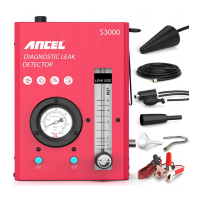
Generic Operation
1.Mount the hook on to the unit.
2.Mount the shop air adapter to the unit (For the model without built-in air pump inside).
3.Plug the power cord into the socket.
4.Screw on the smoke hose to the unit.
5.Fill (mineral Oil based) smoke oil into the unit from the refill port on the top.
Note: The oil level shall not exceed the level gauge.
6.Connect shop air supply (For the model without built-in air pump inside).
7.Connect 12V vehicle power.
8.Introduce shop air to the unit (For the model without built-in air pump inside).
9.Turn the Flow Dial (if equipped) anti-clockwise to open the air flow.
10.Switch on the power or the mode selector button, then the unit will start to work.
11.Introduce smoke into the system.
12.The system will be ready for leak check in 2 minutes. Use a bright light torch or working lamp to assist.
13.After test, switch off the power or the mode selector button, then the unit will start to work.
14.Collect the Smoke Hose and the Power Cord with the Velcro Straps for storage.
15.Hang the unit or make it stand in UPRIGHT position only. Do NOT lay it down.
Knowledge for Fuel Vapor Recovery System (EVAP)
1.According to the Environmental Protection Agency, the EVAP system is the most neglected of all
the emission systems in an automobile. A leak as small as 0.020” diameter can allow over 30 times
the allowable hydrocarbons into the atmosphere then is currently acceptable through the exhaust.
Additionally, EVAP system leaks can be a major cause of check engine lights occurring. In the past,
EVAP related problems have been difficult to locate and repair. These can now be quickly diagnosed
and repaired, becoming a profitable ticket for service facilities.
2.There are several acceptable methods of inspecting the EVAP system. Basically we need to close
any vent solenoids, fill the system with smoke, and look for the smoke escaping at the leak. Since
these systems vary in different vehicles and have evolved over the years, we will attempt to describe
operating guidelines that should be helpful in inspecting these EVAP systems.
3.Beginning with the 1996 model year, U.S. Vehicles have been produced with an EVAP Service Port
to access this system. The port is usually located under the hood, but may be located else were on the
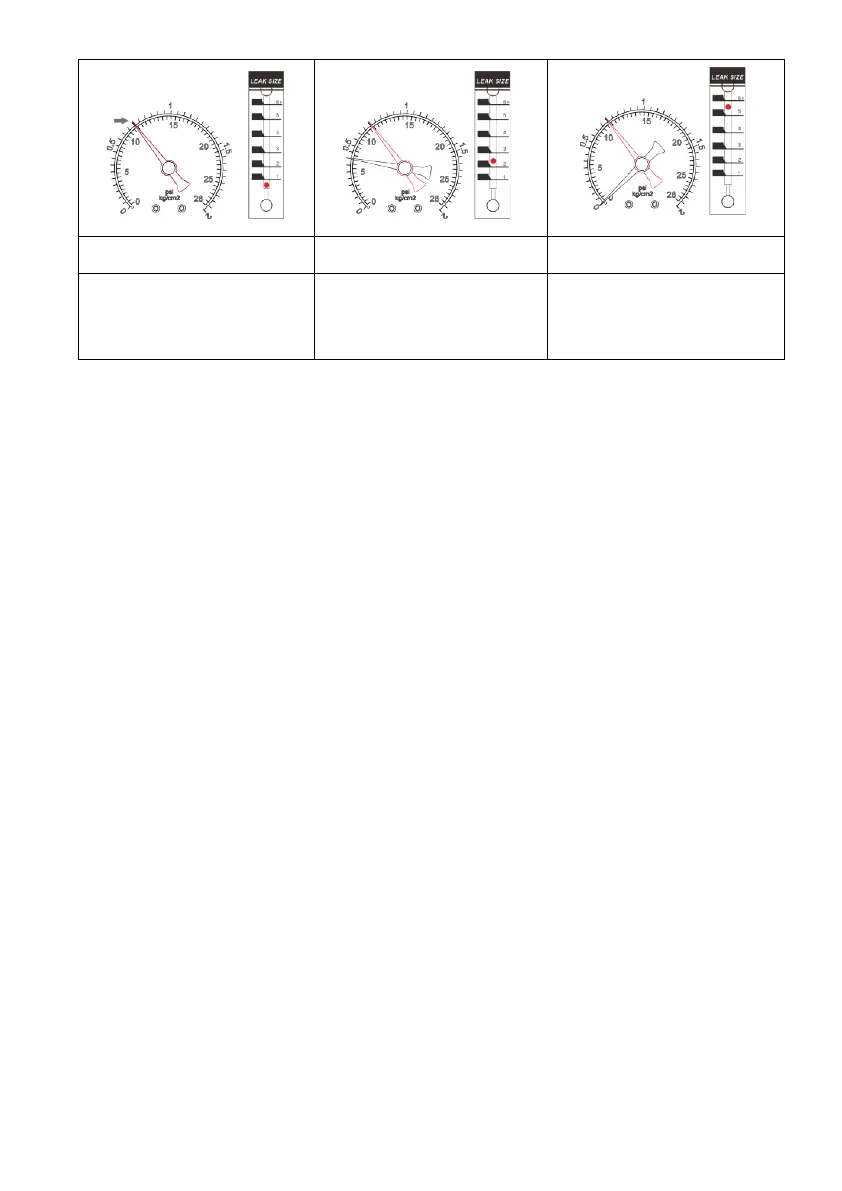
No Leak Small Leak Massive Leak
Flow Meter drop to
‘0’ and pressure reading
raise to Max.
Flow Meter stay between
0.1 to 0.5LPM.
Flow Meter raise and
pressure reading drop to ‘0’.


 To Next Page
 Loading...