EasyManua.ls Logo

ARCAIR K4000 - User Manual

ARCAIR K4000
32 pages
Print Icon
To Next Page IconTo Next Page
Loading...
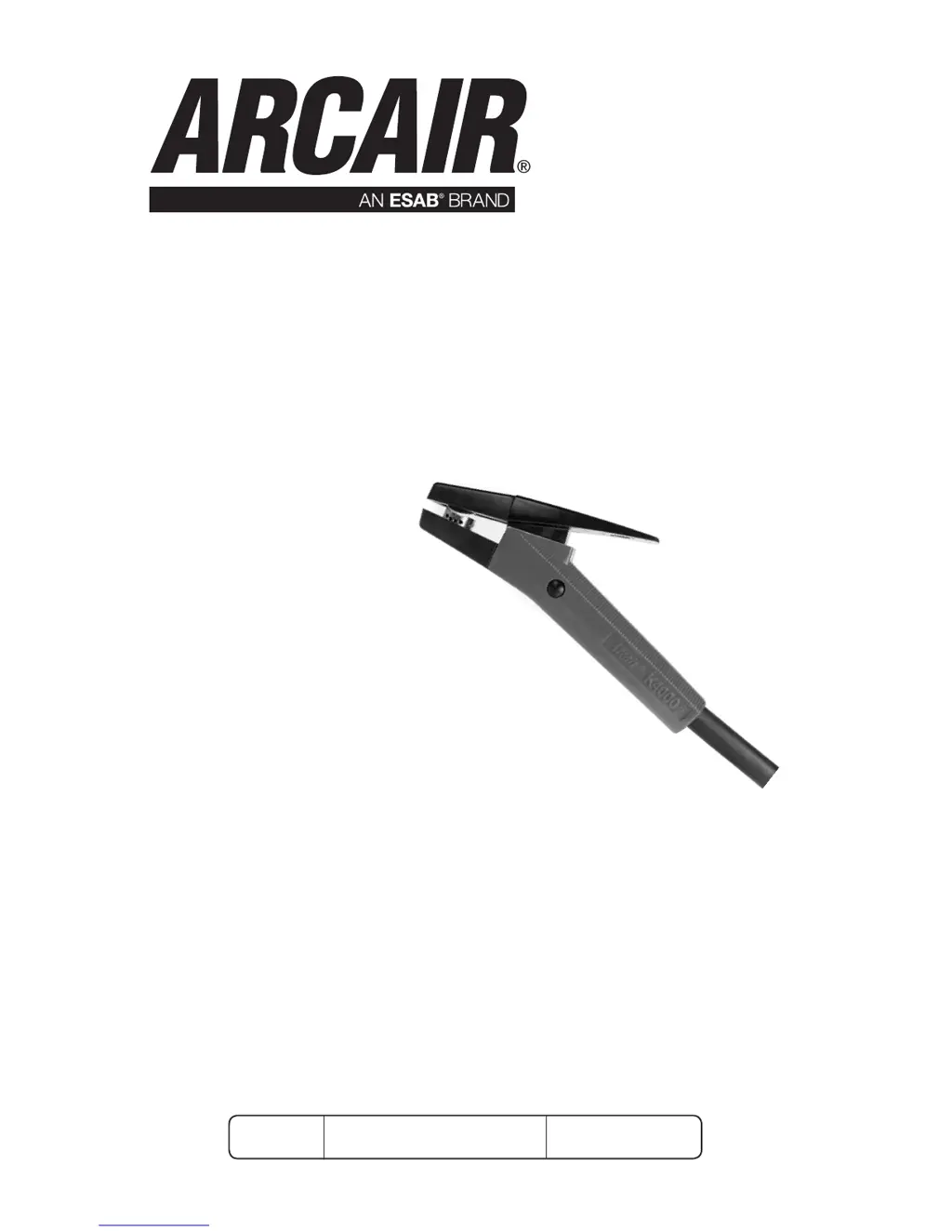
K4000
®
K3000
Art# A-13068
English
Operating
Manual
Revision: AC Issue Date: June 15, 2016 Manual No.: 89250012
AIR CARBON-ARC
MANUAL GOUGING TORCHES

Questions and Answers

  • C
    Colin CraigJul 27, 2025
    How to prevent large free-carbon deposit at the beginning of the groove with ARCAIR Tools?
    • A
      alexbellJul 27, 2025
      To prevent large free-carbon deposits when using ARCAIR Tools, ensure you turn on the air jet before striking the arc, making sure the air flows between the electrode and the workpiece. Also, verify that the carbon rod is properly seated in the groove within the torch head.
  • J
    Jessica FuentesAug 1, 2025
    Why is the arc unsteady when using ARCAIR Tools?
    • R
      Raymond FitzgeraldAug 1, 2025
      If you experience an unsteady arc with ARCAIR Tools, resulting in slow travel speed, it might be due to insufficient amperage for the electrode diameter. While the lowest recommended amperage might work, a mid-range amperage is generally better. If you cannot obtain the desired amperage, consider using a smaller diameter electrode or connecting two or more welding power supplies in parallel.
  • A
    Anna LeeAug 6, 2025
    What to do if slag adheres to the edges of the groove with ARCAIR Tools?
    • I
      irileyAug 6, 2025
      If you notice slag adhering to the edges of the groove when using ARCAIR Tools, ensure you maintain proper air pressure and flow rate. The air hose feeding the concentric cable assembly needs a minimum hose ID of 3/8" (9.5 mm) for manual torches and 1/2" (12.7 mm) for automatic torches. Direct the air jet parallel to the gouge area, avoiding favoring one side unless you want to minimize slag on that specific side.
  • S
    Samuel JohnsonAug 11, 2025
    What to do if there is intermittent arc action resulting in an irregular groove surface with ARCAIR Tools?
    • J
      Jeffery LeeAug 11, 2025
      If you're experiencing intermittent arc action with ARCAIR Tools, leading to an irregular groove surface, ensure that your travel speed isn't too slow during manual gouging. Stand comfortably, allowing your arms to move freely without your gloves dragging on the workpiece. For mechanized equipment, consult Table 4 (Page 4-24) for proper operating conditions. Also, inspect ground clamps and leads to ensure a proper connection.
  • L
    lewisrebeccaAug 15, 2025
    Why is the groove erratic, with the arc wandering from side to side and the electrode heating up rapidly with ARCAIR Tools?
    • A
      Allison NielsenAug 16, 2025
      If you observe erratic groove formation with ARCAIR Tools, where the arc wanders and the electrode heats up rapidly, it's likely due to using DCEN (electrode negative). The gouging process should be performed with DCEP (Electrode positive) whenever possible. Direct current electrodes should be used with DCEP (electrode positive) on all metals, except for a few copper alloys such as Superston and Nialite.
  • R
    robert65Aug 21, 2025
    What causes free carbon deposits at varying groove intervals when gouging with ARCAIR Tools?
    • J
      Jane NguyenAug 21, 2025
      If you're getting free carbon deposits at varying groove intervals during gouging, or at various spots on the washed surface during pad-washing with ARCAIR Tools, it's likely due to a shorted electrode on the workpiece. Maintain a proper arc gap and use an electrode-to-work angle of 15° to 70°.

Summary

Safety Warnings and Precautions

Introduction to Air Carbon-Arc Gouging

Air Carbon-Arc Cutting and Gouging Process

Explanation of the physical metal removal process using an electric arc and air jet.

History of Air Carbon-Arc Gouging

Trace the development of air carbon-arc gouging from its origins in the 1940s.

Applications of Arcair Torches

Overview of industries and situations where Arcair torches are effectively used.

Enhanced Connection Design

Details on the improved boot design for power and air connections on K-Series torches.

Safety and Health Precautions

Safe Installation, Use, and Maintenance

Instructions for safe installation, operation, and maintenance to prevent injury or death.

Electrode Safety Guidelines

Precautions related to handling and using carbon electrodes, including electrical shock risks.

Ventilation and Gas Hazards

Information on managing smoke, fumes, gases, and potential toxic phosgene formation.

Personal Protective Equipment (PPE)

Requirements for hearing protection, eye protection, and skin protection from arc rays and heat.

Fire and Burn Hazard Prevention

Measures to prevent fires and explosions caused by sparks, slag, and hot materials.

Using This Manual

Receipt and Inspection of Equipment

Procedure for checking equipment upon receipt and reporting any shipping damage.

Installation Procedures

Connecting Power Cable and Air Hose to Connector

Step-by-step guide to attach the DC welding power cable and air hose to the connector.

Connecting Twist Lock Power Cable

Instructions for connecting the DC welding power cable using the twist lock mechanism.

Connecting to Welding Power Supplies

Guidance on connecting the torch assembly to DC or AC welding power sources.

Troubleshooting Common Issues

Free Carbon Deposits and Gouge Quality

Diagnosing and resolving issues with free carbon deposits at the start or during gouging.

Arc Instability and Travel Speed Control

Addressing unsteady arcs and the impact of travel speed on groove quality.

Erratic Arc and Electrode Heating

Troubleshooting erratic grooves and rapid electrode heating due to process setup.

Intermittent Arc and Ground Connection Issues

Solutions for intermittent arcs, jerky motions, and poor ground connections causing irregular grooves.

Slag Ejection and Adhesion Management

Resolving slag adhering to groove edges by ensuring proper air pressure and hose ID.

Replacement Parts and Kits

Torch Replacement Parts

List of replacement parts for the K3000™ and K4000® torch bodies.

Swivel Cable Replacement Parts

List of replacement parts for the K3000™ and K4000® swivel cable assemblies.

Power & Air Hook-Up Kit Components

Components and part numbers for the Power & Air Hook-Up Kit.

Statement of Warranty

ARCAIR K4000 Specifications

General IconGeneral
BrandARCAIR
ModelK4000
CategoryTools
LanguageEnglish

Related product manuals