- 2 -
Preparations for Use (continued)
WARNING, never begin welding without first checking to see if the correct front
and rear protection plates are in place (see table 7 for part numbers). Failure to
protect your welding filter may cause damage and subsequently become a safety
hazard should the UV/IR protection be compromised from spatter or cracked
from impact. This type of damage is due to poor maintenance and/or abuse and
will void warranty.
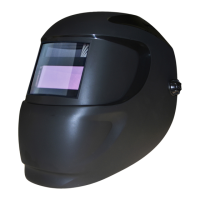
The ratchet headgear is fully adjustable at both the brow and crown. While placing the
helmet on your head, push in and turn the adjusting knob on the ratchet headgear to
ensure a comfortable fit. The ratchet is designed to lock in place when released. The
height of the helmet can be adjusted by increasing or decreasing the length of the
crown strap. When making this adjustment remember to line your eyes up as centrally
to the viewing area as possible. Proper alignment enables the best view possible.
To test your
f
f
i
i
l
l
t
t
e
e
r
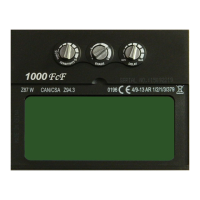
r, prior to welding, direct the front of the filter to a bright source of light
then, using your fingers, rapidly cover and uncover the sensors. The filter will darken
momentarily. Another means of testing is to utilize a torch striker or TV or VCR remote.
These devices will also momentarily darken the filter. Once you are sure that the filter is
working properly you are now ready to begin welding.
WARNING, other safety precautions such as protective clothing, adequate
ventilation, breathing protection (such as a Compact Air PAPR or equal), fire
extinguisher, and protection for co-workers, should also be considered.
Technical Information
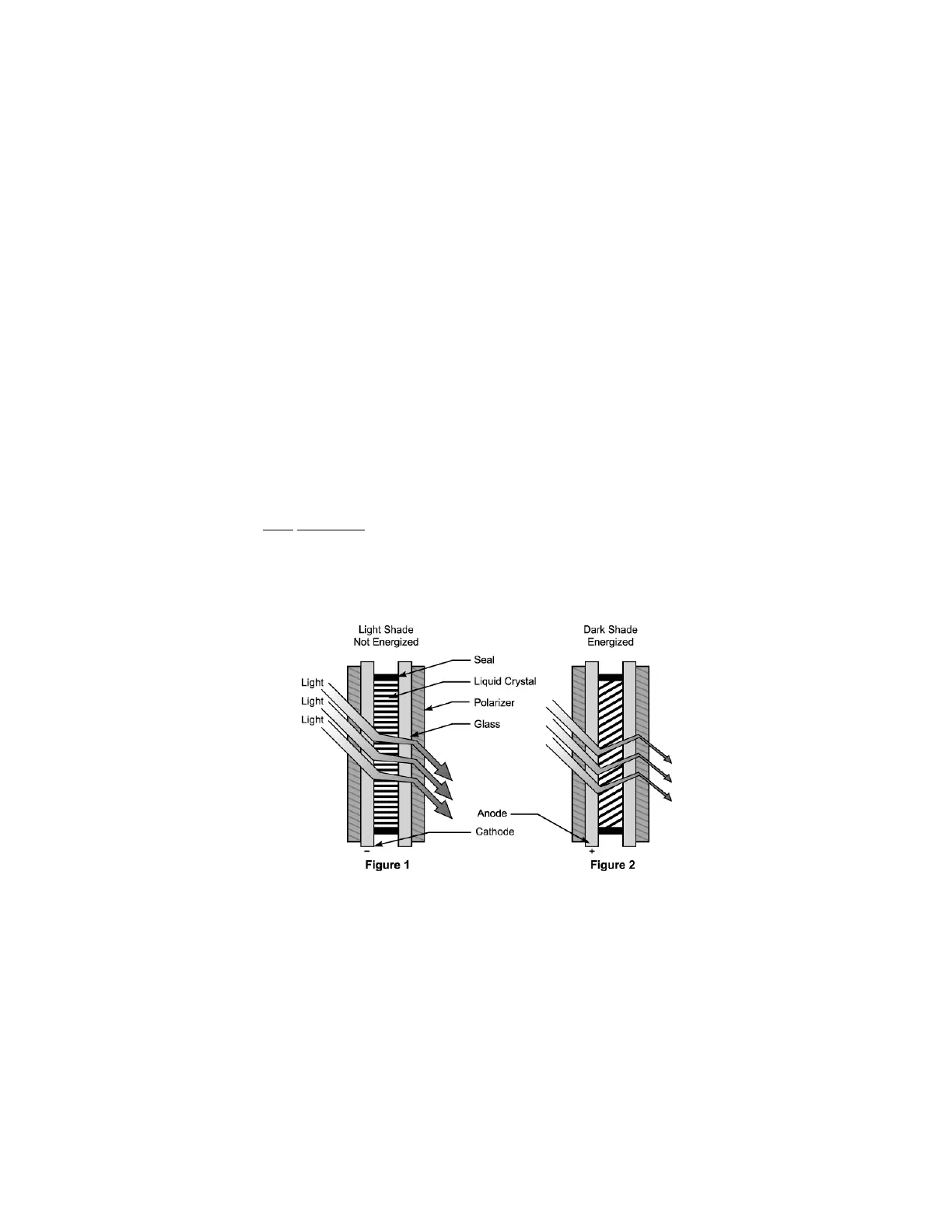
Passive welding filters have consistent shade darkness throughout the filter. The
shading of a passive filter remains constant even when viewed at an angle to the filter’s
surface. Auto-darkening filters utilize a shutter type of LCD to decrease light
penetration when energized. All electronic welding filters exhibit a characteristic known
as angle dependency
. This characteristic may make the lens appear to be darker in the
center and lighter toward the outer edges when the lens is viewed at an angle not
perpendicular to the filter’s surface or not perpendicular to the arc (see Figure 1).
(Figure 1)



 To Next Page