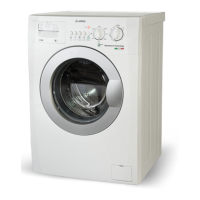
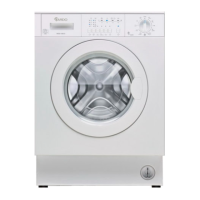
SM753
Connecting to the mains electricity supply
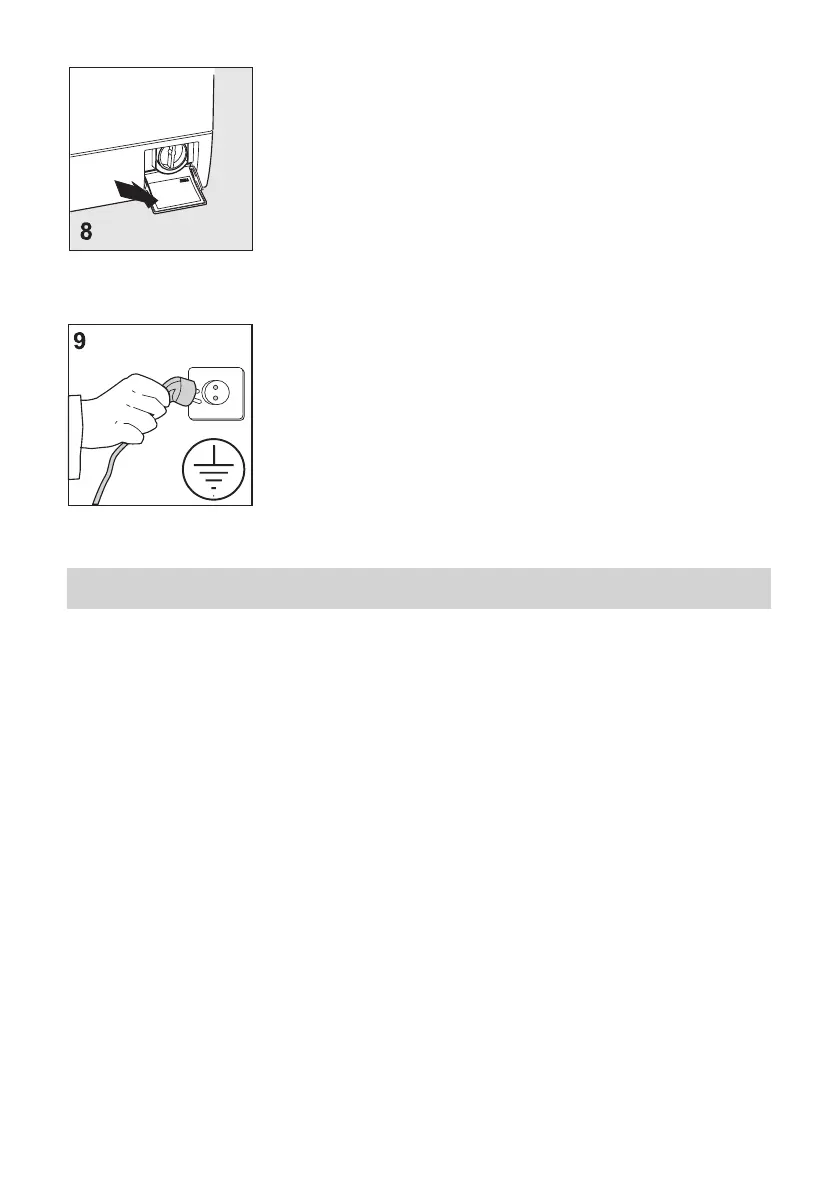
➘ Make sure that the voltage specified in the technical data,
written on the rating plate mounted on the inside of the
filter door, corresponds to the mains voltage [fig. 8].
➘ Trip-switches, electric wiring and mains sockets must pos-
sess characteristics that enable them to support the maxi-
mum load indicated on the rating plate.
➘ The mains socket to which the washing machine is con-
nected must be earthed. If not, the manufacturer will not be
held responsible for any incidents which may occur [fig. 9].
➘ If the mains socket to which the washing machine is con-
nected does not work or is unsuitable, it must be replaced
by a qualified electrician.
➘ The washing machine must not be connected to the mains
supply through intermediate devices such as extension
leads or multiple socket adapters.
➘ During maintenance work, the washing machine plug must
be disconnected from the mains supply.
➘ Never insert or remove the electric plug with wet hands.
➘ If the power cable is damaged in any way, please contact
the technical service department.
➘ Position the apparatus so that the plug can be accessed
and disconnected easily in case of need.
HOW TO REMOVE STAINS
Some stains cannot be removed by just washing in a washing machine. Before trying to
remove any type of stain by hand, first try the removal procedure on a small area of hidden
fabric starting from the edge of the stain and working inwards, this will prevent a dark ring
from forming around the site of the stain. A few methods for removing stains are reported
below.
••
••
•
WAX:
scrape the wax using a blunt point in order not to damage the fabric. Then, with
the fabric placed between two pieces of absorbent paper, run a hot iron over the
stain.
••
••
•
BALL-POINT PENS AND FELT-TIP PENS:
clean using a soft cloth soaked in ethyl alcohol. Take
care not to spread the mark.
••
••
•
DAMP AND MOULD:
if the fabric supports the use of bleach, perform a wash cycle adding
bleach to the appropriate compartment in the dispenser [see table of programmes].
Otherwise, soak the soiled part in hydrogen peroxide (strength 10) and leave for 10
to 15 minutes.
••
••
•
SCORCH MARKS CAUSED BY IRONING:
follow the instructions for mould and damp.
••
••
•
RUST:
use products specially designed for rust stains, following the manufacturer’s
instructions written on the packet.
••
••
•
CHEWING GUM:
rub ice over the mark, scrape away as much as possible and then rub
with a cotton cloth soaked in acetone (alternatively, use nail varnish remover).
••
••
•
PAINT:
do not allow the paint to dry. Rub the area with the solvent recommended by
5


 To Next Page