Need help?
Do you have a question about the Ariston TVM 70 and is the answer not in the manual?
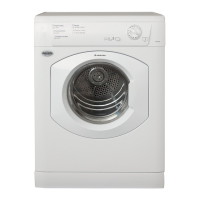
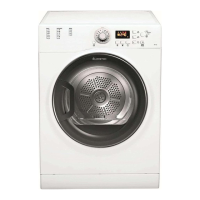
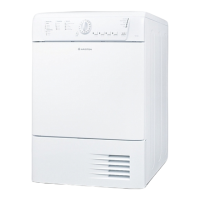
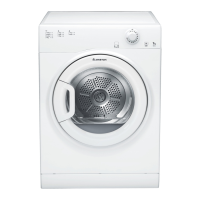
This document serves as an instruction booklet for the Ariston TVM 70 Tumble Dryer, providing comprehensive guidance on its installation, operation, maintenance, and troubleshooting.
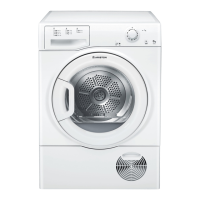
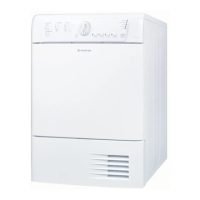
The Ariston TVM 70 Tumble Dryer is designed for domestic use to gently dry laundry by circulating heated air. It takes in cold, clean, and relatively dry air, heats it, and passes it through the fabric to facilitate the drying process. Damp air is then expelled at the rear through a ventilation hose. The dryer features a drum where laundry is placed for drying, a control panel for setting drying parameters, and a filter to collect lint and fluff.
The tumble dryer offers a straightforward user experience. To begin, the user plugs the dryer into an electrical socket and sorts laundry according to fabric type, ensuring pockets are empty, buttons are secure, and zips and belts are fastened. It's crucial to wring out garments to remove as much water as possible before loading, as dripping wet items should not be placed in the dryer. The dryer has a maximum load capacity of 7 kg for natural fibres and 3 kg for synthetic fibres, and overloading is discouraged as it can reduce drying performance.
The control panel includes a TIMER knob, a HEAT button, and a START button. The TIMER knob is used to set the desired drying time by rotating it clockwise, referencing the Drying Guide table for appropriate times based on fabric type. The HEAT button allows for temperature customisation. Once the laundry is loaded, the door is closed, and the START button is pressed to initiate the drying cycle. During the cycle, users can check on their laundry and remove dry items, resuming the cycle by closing the door and pressing START again. The dryer incorporates a final COOL TUMBLE phase to cool fabrics before the programme completes. After drying, the laundry is removed, the filter is cleaned, and the dryer is unplugged.
The drying times are approximate and can vary based on several factors, including the amount of water retained by items after the spin cycle, fabric type, load size, heat setting, and room temperature. Bulky items may require special care, including periodic shaking and repositioning during the drying cycle. It's important not to over-dry items, as natural dampness helps keep fabrics soft and fluffy.
The dryer is equipped with a mobile ventilation system, requiring a ventilation hose to be securely fastened to the ventilation hole at the rear. This hose should ideally be connected to an outlet near the dryer or passed through a partially-opened window. The hose should not exceed 2.4 metres in length, should be shaken frequently to remove lint and water deposits, and must not be crushed. It's vital to ensure the hose does not point towards the air inlet and that the air inlet vents are not obstructed. For a fixed ventilation system, a specific ventilation system for windows or doors, available from retailers, can be used. If installing a wall ventilation hole, it should be to the left of the dryer, short, straight, pointing downwards, and regularly checked for fluff accumulation.
Regular maintenance is crucial for the optimal performance and longevity of the tumble dryer. The most important maintenance task is cleaning the filter after each drying cycle. The filter, located behind the dryer seal, collects lint and fluff. A clogged filter can severely impede airflow, leading to longer drying times, increased energy consumption, and potential damage to the dryer. The filter can be cleaned by rinsing it under running water or using a vacuum cleaner. After cleaning, it must be correctly replaced and pushed fully home before the dryer is used again.
The drum should be manually rotated after each cycle to remove any small items that might have been left inside. For cleaning the drum itself, abrasive materials, steel wool, or stainless steel cleaning agents should be avoided. A coloured film may appear on the stainless steel drum due to water or cleaning agents, but this does not affect the dryer's performance.
The external metal, plastic, and rubber parts of the tumble dryer can be cleaned with a damp cloth. Solvents or abrasives should not be used. Periodically, the vent hose and other parts of the venting system should be checked and cleared of any accumulated fluff and lint. For any electrical or mechanical issues, the dryer should be checked by authorised technical personnel.
Before any cleaning or maintenance operations, or when the dryer is not in use, it should be disconnected from the power supply.
The instruction booklet highlights numerous safety warnings. The appliance is designed for home use and should not be touched with bare feet or wet hands. Children aged 8 and above, and persons with reduced physical, sensory or mental capabilities, can use the appliance if supervised and instructed on safe use. Children under 3 should be kept away unless continuously supervised. The dryer must be installed correctly with proper ventilation, ensuring air intake and outlet vents are never obstructed. The vent tube outlet should never be directed towards the air intake, and the dryer should not recycle exhaust air. It should not be used on carpeting that obstructs the base air entry. The filter must always be securely in place during operation.
Overloading the dryer and drying dripping wet items are prohibited. Clothing labels should always be checked. Large, bulky items and acrylic fibres at high temperatures should not be tumble dried. The dryer should not be turned off while warm items are still inside. Lint should not be allowed to collect around the dryer, and climbing on the dryer is unsafe. Electrical standards and requirements must be followed during installation, and only original spare parts should be used.
To minimise fire risk, only items washed with detergent and water, rinsed, and spun should be dried. Garments treated with chemical products, or items spotted/soaked with vegetable/cooking oils, petrol/gasoline, dry cleaning solvents, or other flammable substances, pose a fire hazard and should not be tumble dried. If such items must be dried, they should first be washed in hot water with extra detergent and not piled or stacked while hot. Items containing foam rubber or similar rubber-like materials, metal reinforcements, rubber/plastic articles (e.g., shower caps, waterproof covers, polythene, paper), or rubber-backed articles should not be tumble dried. Fabric softeners should only be used if specifically recommended by the manufacturer. All objects must be removed from pockets. The dryer should never be stopped before the end of the drying cycle unless all items are quickly removed and spread out to dissipate heat.
The room where the dryer is installed must not be damp and should be adequately ventilated. The dryer should not be installed in a cupboard or behind a lockable/sliding door or a door with a hinge on the opposite side. The appliance's rear surface must be placed against a wall. Electrical connections require dry hands, an earthed socket capable of handling the dryer's maximum power output, and a power supply voltage within the indicated range. Extension leads and multiple plug adaptors should not be used. The power supply cable should not be pulled, bent, or squashed. If the plug is not suitable, a qualified technician should be contacted. The dryer's electrical wire and plug must be within reach after installation. Damaged supply cords must be replaced by a service agent.
The dryer should be installed level for correct operation, checking side-to-side and front-to-back levelling. Before first use, the inside of the drum should be cleaned to remove any accumulated dirt from transportation.
The booklet includes a troubleshooting guide for common issues. If the dryer does not start, possible causes include an improperly inserted plug, a power cut, a blown fuse, an extension cord issue, incorrect TIMER knob setting, or the START button not being pressed or pressed with the door open. If drying times are too long, this could be due to a dirty filter, incorrect temperature setting, wrong programme selection, blocked ventilation hose or air inlet, obstructed fixed ventilation flap, overly wet items, or an overloaded dryer.
If problems persist, users are advised to turn off the dryer and contact the Service Centre. When calling, they should provide their name, address, post code, telephone number, type of problem, date of purchase, appliance model (Mod.), and dryer serial number (S/N), which can be found on the data label inside the door. The dryer is a complex machine, and self-repair or repair by unauthorised persons can cause harm and invalidate the warranty. Therefore, an authorised technician should be consulted for problems.
The document also addresses environmental protection, stating a commitment to using recycled quality components to reduce costs and minimise material wastage. Packaging materials should be disposed of according to local regulations for recycling. For old household appliances, European Directive 2012/19/EC (WEEE) guidelines state that they should not be disposed of with normal urban waste. Instead, they should be collected separately for re-use and recycling of materials, preventing damage to public health and the environment. The crossed-out wheeled bin symbol on products reminds owners of separate waste collection obligations. Local authorities or appliance dealers can provide further information on correct disposal. To minimise injury risk, the door and plug should be removed, and the power supply cord cut flush with the appliance before disposal.
The appliance complies with European Directives LVD 2014/35/EU, EMC 2014/30/EU, and RoHS 2011/65/EU.
 General
| Drying capacity | 7 kg |
|---|---|
| Dryer type | Vented |
| Energy Efficiency Class | C |
| Color | White |
| Dimensions (H x W x D) | 850 x 595 x 584 mm |

 To Next Page