During Transportation to the Subscriber Home
• Transport the cable terminal in its shipping box or an equally padded
container.
• Do not expose the terminal to rain or moisture.
During Installation
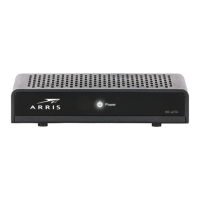
• Do not place the terminal in an enclosed area where the cooling vents are
blocked or impede the flow of air through the ventilation openings.
• Install the terminal so that its position does not interfere with its proper
ventilation. For example, do not place the terminal on a bed, sofa, rug, or
similar surface that could block the ventilation openings.
• Install the terminal so that there is a minimum of two inches of space
between surrounding surfaces and the top, left, and right sides of the
terminal to ensure proper ventilation.
• Install the terminal away from heat sources such as radiators, heat registers
and stoves. Installation of the terminal near consumer electronics devices,
such as stereo receiver/amplifiers and televisions, is permitted as long as the
air surrounding the terminal does not exceed 40 ºC (104 ºF).
• Place the terminal on a flat surface not prone to vibration or impact.
• Do not place the terminal on top of another electronic device
• Do not install the terminal in an area where condensation occurs.
• To prevent the temporary loss of guide data and cause a temporarily non-
responding terminal, do not plug the AC power cord into a switched power
outlet.
FCC COMPLIANCE
Note: This equipment has been tested and found to comply with the limits for a
Class B digital device, pursuant to part 15 of the FCC Rules. These limits are
designed to provide reasonable protection against harmful interference in a
residential installation. This equipment generates, uses, and can radiate radio
frequency energy and, if not installed and used in accordance with the
instructions, may cause harmful interference to radio communications. However,
there is no guarantee that interference will not occur in a particular installation. If
this equipment does cause harmful interference to radio or television reception,
which can be determined by turning the equipment off and on, the user is
encouraged to try to correct the interference by one or more of the following
measures:
• Reorient or relocate the receiving antenna.
• Increase the separation between the equipment and receiver.
• Connect the equipment into an outlet on a circuit different from that to which
the receiver is connected.
• Consult the dealer or an experienced radio/TV technician for help.


 To Next Page
 Loading...