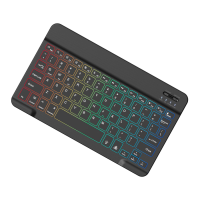
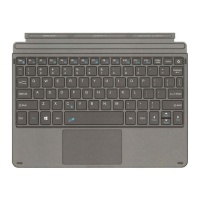
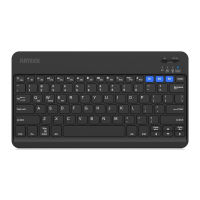
This document describes a Bluetooth keyboard, model HB098, designed for use with Android, Windows, and iOS tablets and laptops. It is a cordless keyboard that offers a range of features for convenient and versatile use across various devices.
The keyboard's primary function is to provide a physical input method for devices that support Bluetooth connectivity. It utilizes a built-in Broadcom Bluetooth 3.0 module, ensuring a stable and efficient wireless connection. This allows users to type comfortably and accurately, enhancing productivity and user experience compared to on-screen keyboards. The wireless nature of the keyboard provides freedom of movement, with an operating distance of up to 10 meters from the connected device.
One of the key usage features is its broad compatibility. The HB098 keyboard is suitable for a wide array of devices, including Android tablets, Windows laptops, iOS tablets, desktops, and various smartphones. This versatility makes it a practical accessory for users who operate multiple types of devices. The keyboard boasts a modern, slim design with a brushed steel backside, giving it a sleek and premium aesthetic. Its chocolate keycaps, combined with a scissors structure, are engineered to provide a good tactile feel, making typing a comfortable experience. Furthermore, the keyboard is designed to be lightweight, contributing to its portability, and features quiet keystrokes, which is beneficial in shared or quiet environments. It is also water-proof and dust-proof, adding to its durability and making it suitable for various settings.
The keyboard incorporates an energy-saving sleep mode to conserve battery life. If left inactive for 10 minutes, the keyboard will automatically enter sleep mode, and its power indicator light will turn off. To reactivate the keyboard from sleep mode, users simply need to press any key and wait for approximately 3 seconds for it to reconnect and become operational again. This automatic power management helps extend the time between charges, ensuring the keyboard is ready for use when needed.
For pairing the keyboard with a device, a straightforward process is outlined. First, the user turns on the keyboard's power toggle switch, which illuminates the state indicator light for 10 seconds before it turns off. Next, the user presses the "FN+C" buttons simultaneously on the keyboard, causing the indicator light to blink, signaling that it is in pairing mode. The user then activates Bluetooth settings on their device, which should automatically detect "Bluetooth 3.0 Keyboard." Once selected, the device connects to the keyboard. Upon successful connection, the device will indicate that Bluetooth is connected, and the keyboard's state indicator light will turn off, confirming the pairing. For other Bluetooth-enabled devices, users are advised to verify Bluetooth Standard and compatibility before attempting to connect.
The keyboard also features special keys for enhanced functionality, particularly for Android systems. Long-pressing the "Fn" key in combination with F1-F12 and insert keys allows access to multimedia functions, streamlining control over media playback and other system features. The keyboard case itself is noted for being made from steel with a high-grade finish, similar to many popular devices, contributing to its robust feel and appearance. Additionally, a set of four rubber feet are pre-applied to the corners of the keyboard case. These feet serve a practical purpose: they help prevent scratching of the high-grade finish of the keyboard case, protecting it from wear and tear during use.
Maintenance features for the keyboard are also provided. For cleaning, the silicone keyboard can be wiped with water, alcohol, or an alcohol-based disinfectant, making it easy to keep hygienic and free from grime. Safety cautions are also outlined to ensure the longevity and proper functioning of the device. Users are advised to keep the keyboard away from sharp objects to prevent damage, avoid placing heavy objects on top of it, and refrain from microwaving the item. It is also important not to force or distort the keyboard and to keep it away from oil, chemicals, or any other organic liquids, as these substances can potentially damage the device.
Troubleshooting steps are included for common issues, specifically for when the keyboard is unable to connect. Users should first ensure that the power switch is in the "on" position. They should also verify that the keyboard is within the specified operating distance of the device. Checking that the Bluetooth setting on the device is activated is another crucial step. Finally, users should confirm that the wireless keyboard is both connected to and paired with their device, as these are distinct stages in the connection process.
The document also details the proper disposal of the keyboard's battery at its end of life. This involves inserting a screwdriver between the plastic top and metal case at either the top or bottom of the keyboard and prying up the plastic top to remove it completely. This action will destroy the keyboard. The top is then turned over, and any tape securing the battery is removed. The battery is then separated from the circuit board. The battery should be disposed of according to local laws, and the remaining keyboard parts should be recycled. This guidance ensures environmentally responsible disposal of the product components.



 To Next Page
 General