The flue temperature will be approximately 85 degrees C and should be kept at least 25 mm clear of any
combustible surface.
4/ Joining flue sections.
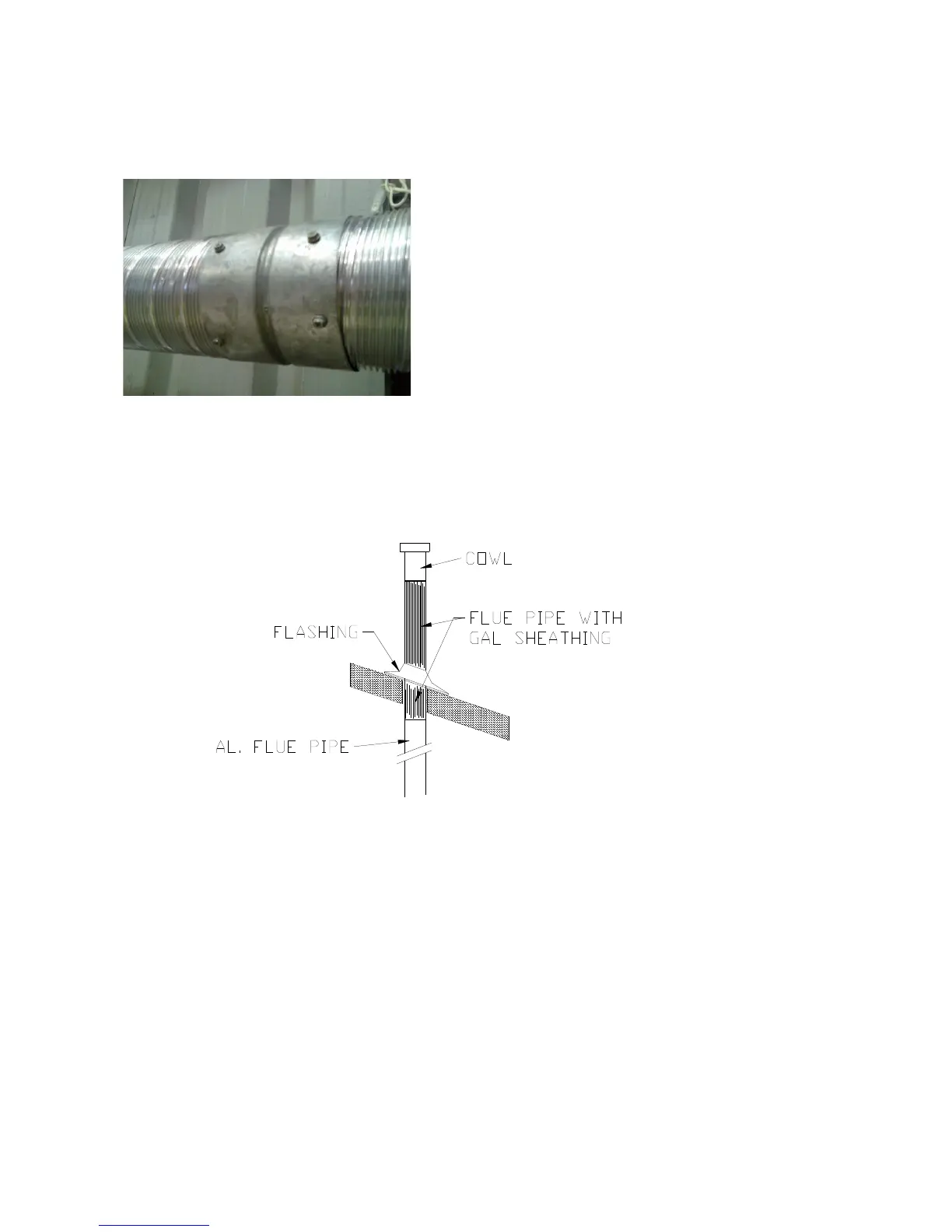
Supplied with the flue is a special joiner piece. To join the flues insert a bead of silicon into both ends of the joiner .
Push the flue into the end of the joiner piece. Secure the flue with pop rivets. Repeat for the second flue pipe
connection.
5/ Rooftop terminations.
All flue exiting the roof must be shielded with the gal cover. Extra lengths of gal can be supplied. Decktite fittings
/ flashings must be attached to the galvanised flue cover. Brace flue in high wind applications.
Locate flue cowl onto reduced end of the gal outer covering / flue pipe. Attach with rivets / screws to hold into
place.
6/ Wall terminations.
Ensure location is suitable as flue gases exit all around cowl and may blow back onto walls, eaves, features
causing discolouration or mould and moisture issues. Condensation will occur around the flue exit area and
condensation may drip from the flue outlet.
All flues exiting the wall must be shielded with the gal cover. Extra lengths of gal can be supplied. Decktite
fittings / flashings / wall exiting covers must be attached to the galvanised flue cover.
For long extensions of flue exiting the wall bracing may be required in high wind applications.
Locate flue cowl onto reduced end of the gal outer covering / flue pipe. Attach with rivets / screws to hold into
place. Ensure a drain hole in the cowl is facing down.
The flue pipe must slope slightly towards the cowl for the last horizontal run (approx 2 deg) to allow condensation
to drain.


 To Next Page