Need help?
Do you have a question about the AUDAC CS85 and is the answer not in the manual?
Critical safety instructions regarding amplifier output, hazardous environments, structural support, mounting methods, and vibrations.
Precautions against electric shock, hazardous environments, distorted sound operation, and physical stress on the speaker.
Guide to making a hole, positioning the speaker, securing it, and attaching the grille using provided gums.
Instructions for connecting speaker cables to the correct socket, matching impedance, and common/desired power tapping.
Guidance on using correct polarities (Red: Negative/common, Black: Positive) for speaker cables in multi-speaker setups.
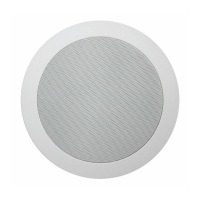
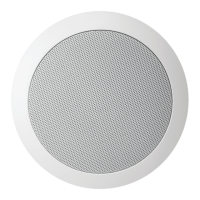
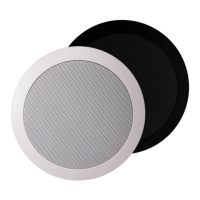
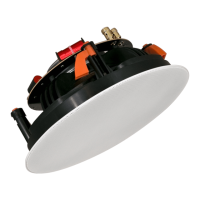
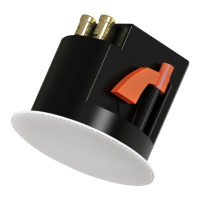
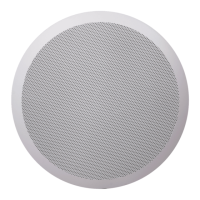
This document serves as a user manual and installation guide for the AUDAC CS85 Ceiling Speaker, a professional audio equipment designed for built-in ceiling or wall installation. It provides essential information for safe and proper handling, installation, and connection of the speaker.
The primary function of the AUDAC CS85 is to deliver audio output as part of a professional sound system. It is designed to be discreetly integrated into ceilings or walls, making it suitable for environments where aesthetics and sound quality are both important. The speaker is intended for use in various professional audio applications, ensuring clear and consistent sound reproduction.
The CS85 speaker is designed for straightforward integration into an existing audio setup. Its built-in nature means it becomes a permanent fixture once installed, providing a clean and unobtrusive look. The manual emphasizes the importance of matching the speaker's impedance with the amplifier's output to ensure optimal performance and prevent damage. This is a critical step for any audio system, ensuring that the amplifier and speaker work in harmony.
The speaker's design allows for flexible power tapping, indicated by different impedance options (1600 Ohm/6W, 3300 Ohm/3W, 6600 Ohm/1.5W). This feature enables users to adjust the power output of the speaker to suit specific room sizes or audio requirements, providing versatility in system design. The ability to select different power tap settings means the speaker can be used effectively in various zones within a larger audio installation, each potentially requiring different sound levels.
When connecting multiple speakers in the same location, the manual provides clear guidance on cable polarity (Red: Negative or common, Black: Positive). This ensures correct phase alignment, which is crucial for maintaining sound quality and preventing audio cancellation issues when multiple speakers are operating simultaneously. Adhering to these polarity guidelines is essential for achieving a cohesive and balanced sound field.
The speaker is designed to be part of a larger audio system, and the manual highlights the importance of ensuring that the total rated input of all connected speakers does not exceed the amplifier's output. This is a fundamental principle in audio system design, preventing amplifier overload and potential damage to both the amplifier and the speakers. Proper system matching ensures longevity and reliable performance of the entire audio setup.
The installation process for the CS85 is designed to be relatively simple, with clear instructions provided. The first step involves creating a circular hole with a diameter of 240mm. The manual suggests using the carton from the packaging as a template, which is a practical tip to ensure accuracy and ease of installation. This detail indicates a user-friendly approach to the physical setup.
Once the hole is prepared, the grille is removed from the speaker, and the speaker body is inserted into the opening. The speaker is then secured by tightening screws, which engage clamps to firmly hold the speaker in place against the ceiling or wall. This clamping mechanism ensures a secure and stable installation, preventing the speaker from dislodging over time.
A unique feature mentioned for installation is the use of "gums" (likely referring to rubber or foam strips) that are placed on the sides of the grille before it is reattached to the speaker. These gums serve a crucial purpose: they prevent the grille from falling down. This small but significant detail enhances the long-term reliability of the installation, ensuring the aesthetic integrity of the speaker remains intact.
The manual emphasizes several crucial warnings and cautions that, while primarily focused on safety and preventing damage, also contribute to the long-term maintenance and reliability of the speaker. Adhering to these guidelines can significantly extend the lifespan of the device and ensure consistent performance.
One of the most important maintenance aspects is ensuring the correct amplifier output voltage and impedance are used. Exceeding these limits can lead to "fire or other failures," highlighting the critical role of proper system matching in preventing damage. This implies that regular checks of the amplifier settings and speaker connections are a form of preventative maintenance.
The manual strongly advises against installing the speaker in locations exposed to constant vibrations. Vibrations can damage the mounting points, potentially causing the speaker to fall down. This suggests that during installation, careful consideration of the environment is necessary, and if vibrations are unavoidable, additional measures to secure the speaker might be required to prevent premature wear and tear on the mounting hardware.
Avoiding the operation of the speaker for extended periods at "distorted sound" is another key maintenance recommendation. Distorted sound often indicates that the amplifier is being overdriven or that the speaker is struggling to reproduce the audio signal, which can cause "irreparable damage" to the speaker. Users are implicitly encouraged to monitor sound quality and adjust volume levels or amplifier settings to prevent distortion, thereby preserving the speaker's components.
The caution against installing the speaker in locations exposed to solvents, acids, smoke, and heaters is also a maintenance-related instruction. Exposure to these elements can lead to "speaker failure, fire or electric shock." This highlights the importance of environmental control to protect the speaker's materials and electronic components from degradation, ensuring its operational integrity over time.
Finally, the warning to "attach a safety wire to the speaker when the speaker is mounted high above the ground" is a critical safety and maintenance feature. This redundant safety measure ensures that even if the primary mounting mechanism fails, the speaker will not fall, preventing injury and damage to the speaker itself. This is particularly important for installations in public or high-traffic areas where safety is paramount. While not a direct maintenance task, it's a preventative measure that contributes to the overall safety and longevity of the installation.
 General
| Type | 2-way in-ceiling speaker |
|---|---|
| Power Handling (RMS) | 60 W |
| Max Power | 120 W |
| Impedance | 8 Ω |
| Woofer Size | 8 inch |
| Tweeter Size | 1 inch |
| Weight | 2.5 kg |
| Enclosure | ABS |
| Grille | Steel grille |
| Mounting | Ceiling |
| Connectors | Spring-loaded terminals |

 To Next Page