EasyManua.ls Logo

Austro Engine AE50R - User Manual

Default Icon
68 pages
Print Icon
To Next Page IconTo Next Page
Loading...
ENGINE MANUAL
Operation / Maintenance / Installation
AE50R
AE50RA
AE50RAB
Doc. No. : E1.01.01 – E
Revision : 6
Date of Revision : 10 March 2011
The technical information contained in this document has been approved under the
authority of DOA No. EASA.21J.399 in conjunction with the Mandatory Design
Change MDC E1 - 116.
Affected Pages:
Chapter Page
all all
Instruction:
- Replace the affected pages of the original manual with the
pages contained in this revision.
Austro Engine GmbH
Rudolf - Diesel – Straße 11
A – 2700 Wiener Neustadt
Austria

Questions and Answers

  • S
    stacyboydAug 4, 2025
    What to do if my Austro Engine cannot develop full power?
    • S
      Sarah BrownAug 4, 2025
      If your Austro Engine isn't reaching its full power, there are several potential causes: * The throttle might not be opening completely, in which case you should adjust the throttle linkage. * There may be an issue with the spark plug, HT lead, or plug cap. Check or replace these components. * Increased exhaust back pressure could be the culprit, so investigate the exhaust system and replace if necessary. * A loss of compression could also be the reason, requiring further investigation. * A blocked induction filter should be cleaned or replaced. * Low fuel pressure can prevent full power, so investigate the fuel system and replace the fuel filter if needed.
  • C
    Christopher SextonAug 12, 2025
    What to do if the Austro Engine liquid coolant overheats on medium and high power?
    • C
      Christina GarciaAug 12, 2025
      If the liquid coolant in your Austro Engine overheats at medium and high power, consider these potential causes: * A restricted radiator core, which needs to be rectified. * A constricted radiator hose, which also needs to be rectified. * A water pump drive failure, suggesting the pump needs an overhaul. * Air in the system, which requires venting or bleeding. * A coolant leak, which needs to be fixed.
  • J
    Jennifer RobersonAug 19, 2025
    What to do if Austro Engine misfires on one spark plug?
    • Y
      ychristensenAug 19, 2025
      If your Austro Engine is misfiring on one spark plug, here's what you can check: * A dirty plug cap or terminal, which should be cleaned or replaced. * A wiring fault, such as wiring to earth or an open circuit. * A faulty spark plug, which should be cleaned or replaced. * An HT fault, indicated by arcing, so check or replace the spark plug, HT lead, and plug cap. * The CDI Unit, which requires an operational check.
  • S
    Scott DelgadoAug 27, 2025
    Why are there excessive rotor cooling outlet temperatures in my Austro Engine?
    • C
      Christina FoxAug 27, 2025
      Excessive rotor cooling outlet temperatures in your Austro Engine can be caused by: * Excessive back pressure in the outlet duct, which needs to be rectified before continuing to run the engine. * A blocked rotor air inlet filter, which should be cleaned or replaced. * A slipping or broken fan belt, which should be adjusted or replaced. * Bearing failure: replace assembly. * Stuck side seals: investigate outlet for black carbon deposits. * Investigate possible exhaust leakage within the engine bay area.

Summary

5.0 GENERAL ENGINE DATA

5.1 Description

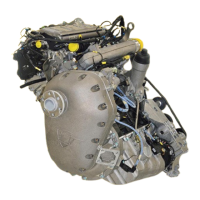
Provides a general description of the Wankel type rotary engine.

6.0 OPERATING DATA; LIMITATIONS

6.1 Maximum Take - off Rating

Specifies maximum take-off power, RPM, fuel consumption, and exhaust back pressure.

6.2 Maximum Continuous Rating

Details maximum continuous power, RPM, and fuel consumption.

6.3 Operating Limitations

Outlines operational limits for engine RPM and ambient temperatures.

8.0 DESCRIPTOPN OF SYSTEMS

8.4 Fuel System

8.5 Cooling System

9.0 OPERATING THE ENGINE

9.1 Starting Procedure and Warm-up

Provides a step-by-step guide for starting the engine and the warm-up process.

10.0 ENGINE EMERGENCY PROCEDURES

10.1 Fan Belt Failure

Procedure for fan belt failure, including temperature monitoring and engine shutdown.

10.1.3 Low Oil in the Tank

Guidance for low oil situations, including RPM reduction and flight time limits.

10.1.4 Low Fuel Pressure

Response to low fuel pressure, including throttle adjustment and temperature monitoring.

10.1.6 Water Temperature

Procedure for high water cooling temperature, emphasizing engine shutdown.

11.0 MAINTENANCE NOTES

12.0 SCHEDULED MAINTENANCE

12.1 Maintenance Schedule

Outlines the scheduled maintenance tasks based on engine hours and time intervals.

13.0 COOLING SYSTEM

13.4 Coolant System Pressure Test

14.0 ENGINE INTERNAL INSPECTION

15.0 GROUND RUN

15.1 Pre-start Checks Outside Aircraft

Lists pre-start checks to be performed on the aircraft and engine externally.

15.2 Pre - start Checks Inside Aircraft

Lists pre-start checks to be performed inside the aircraft cockpit.

15.3 Ground Run

Procedure for starting the engine and performing initial ground run checks.

16.0 MAINTENANCE AND OVERHAUL

17.0 TROUBLE SHOOTING

17.1 General

Provides general notes and cautions for troubleshooting engine issues.

17.2 Rough Idle

Identifies potential causes and checks for rough idle conditions.

17.3 Engine Misfires on One Spark Plug

Troubleshooting steps for engine misfires affecting a single spark plug.

17.4 Engine Cannot Develop Full Power

Troubleshooting steps for issues preventing the engine from reaching full power.

17.5 Excessive Rotor Cooling Outlet Temperatures

Diagnosing and rectifying issues causing high rotor cooling outlet temperatures.

17.6 Liquid Coolant Overheats on Medium and High Power

Troubleshooting steps for liquid coolant overheating during operation.

18.0 NOTES FOR INSTALLERS OF ENGINES

18.3 Cooling System

18.5 Procedure for Setting Carburettor

18.5.1 Basic Settings

Provides the initial sequence and basic settings for the engine's carburettor.

18.5.2 Setting the L screw system

Details the procedure for setting the low-speed mixture control (L screw) on the carburettor.

18.5.3 Setting the H Screw

Details the procedure for setting the high-speed mixture control (H screw) on the carburettor.

18.6 Oil System

18.7 Electrical System

18.8. Ignition

Austro Engine AE50R Specifications

General IconGeneral
Engine TypeRotary
Number of Rotors1
Displacement294 cc
Power Output55 hp
Fuel TypeAvgas 100LL
Cooling SystemLiquid-cooled

Related product manuals