Need help?
Do you have a question about the Avaya IPBS1 and is the answer not in the manual?
Lists related documents for further information on Avaya IP-DECT systems.
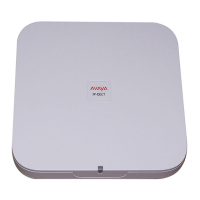
Details the IPBS1 base station, including its versions and overview.
Provides an overview of the IPBS1 with integrated antennas, including box contents and power distribution.
Describes the IPBS1 with external antennas, covering box contents and comparing it to the internal version.
Details the IPBS2 base station, including available versions and backward compatibility.
Describes the IPBS2 with internal antenna, listing available models for IP Office.
Details the IPBS2 with external antennas, referencing internal antenna information.
Describes the IPBL IP-DECT Gateway, listing its available version.
Explains the power supply options for the IPBL and its components.
Lists the available versions of the DECT Base Station (BS3x0).
Details the DB1 TDM-DECT Base Station, including its versions and compatibility.
Provides guidelines on handling equipment to prevent damage from electrostatic discharge.
Covers safety standards for IP-DECT Base Station, DECT Base Station BS3x0, DB1, and IPBL.
Details FCC and Industry Canada compliance statements for the devices.
Defines key terms related to IP security, including SSL/TLS, PKI, and certificates.
Introduces secure system planning and secure web access (https) for IP-DECT devices.
Explains certificate management tasks for TLS, including trust relationships and handling options.
Details administrative functions for HTTP, Certificates, and Secure RTP configuration.
Provides recommendations for base station cabling, including cable type and length.
Step-by-step instructions for fixing the mounting bracket to a wall.
Instructions for mounting the bracket on poles or beams using straps or metal bands.
Guides on connecting external antennas to IPBS2 and DB1 devices.
Instructions on correct cable length and RJ45 modular jack connection for IPBS, BS3x0, and DB1.
Details on connecting base station data and power cables, including AC-adapter usage.
Explains Power over Ethernet (PoE) for IPBS, including power allocation and feed methods.
Describes powering BS3x0 and DB1 via the IPBL using EPP and data pairs.
Outlines the main steps for installing the IPBL in a 19-inch rack, including cabling and connections.
Details on pinning data cables for the IPBL, including synchronization cable connections.
Provides information on RFP cables connecting the IPBL with RFPs and cable pinning.
Explains LAN cable requirements for the IPBL, including connection to switches.
Lists the system requirements and web browser specifications for IP-DECT configuration.
Provides methods to determine the IP address for accessing the IPBS/IPBL GUI.
Details how to determine IP addresses when a DHCP server is present in the network.
Guides on changing the default administrator username and password for security.
Explains how to access the GUI, login pages, and different user access levels.
Describes the roles and login procedure for User Administrators.
Details how to log in as a System Administrator and manage accounts.
Provides steps for creating, viewing, modifying, and deleting User Administrators.
Instructions on switching the IP-DECT GUI from basic to advanced view.
Describes the process of anonymous registration for handsets in an IP-DECT system.
Details the steps for individual registration of handsets using authentication codes.
Explains how to log out and log in users, particularly for shared handsets.
Describes general configurations and settings for IPBS/IPBL devices.
Instructions on assigning a descriptive name to IPBS/IPBL devices.
Guides on configuring an IPBS/IPBL to act as a Kerberos server for centralized authentication.
Steps to configure IPBS/IPBL as a client in a small existing system with a Kerberos server.
Details on configuring IPBS/IPBL as a client in a large system with many clients.
Steps for configuring IPBS/IPBL as a client in a new IP-DECT system.
Explains how to set up cross-realm authentication for users via Active Directory.
Guides on setting up a secondary Kerberos server for redundancy in the IP-DECT system.
Information on managing certificates within the IP-DECT system for IP Security.
Describes setting up a trust list for third-party certificates used in TLS connections.
Details the options for device certificates: default, self-signed, or CA-signed.
Instructions for creating and configuring self-signed certificates for devices.
Guides on creating a Certificate Signing Request (CSR) for device certificates.
Explains how provisioning simplifies IP-DECT user management via IP-PBX.
Covers LAN configuration settings including DHCP mode, IP address, and VLAN.
Instructions for setting static IP addresses for Master and Standby Master devices.
Details on configuring VLAN settings and priority for IP-DECT devices.
Guides on enabling Rapid Spanning Tree Protocol (RSTP) for IPBLs.
Steps for setting up an IPBS/IPBL as an LDAP server for joint user databases.
Instructions for configuring LDAP replicators for data replication between servers.
Covers various DECT system configurations including name, password, and subscription methods.
Guides on changing the system name and password for the IP-DECT Master.
Information on selecting the operating frequency band for IPBS/IPBL devices.
Instructions on enabling or disabling carriers for North American and other frequency bands.
Details on selecting preferred coders and frame length for conversation quality.
Guides on configuring supplementary services like call handling and feature codes.
Explains how to set the IPBS/IPBL mode (Master, Standby, Mirror, Deployment).
Instructions for configuring gatekeeper settings on the Master, including Master ID and PBX.
Guides on configuring primary and redundant trunks for connecting to PBXs.
Explains how to configure multiple primary trunks for load balancing call setups.
Instructions on enabling or disabling the radio functionality of IPBS/IPBL devices.
Details on configuring radio settings centrally via the Master device.
Guides on configuring IP settings, including ToS priority and RTP ports.
Explains how to view IP routing settings.
Describes the Lightweight Directory Access Protocol (LDAP) for joint user databases.
Explains how IPBS devices synchronize using the DECT air interface.
Guides on configuring an IPBS to act as a sync master for other IPBSs.
Instructions for configuring messaging services, likely for AIWS2 integration.
Details on setting up network regions by configuring Master Base Stations.
Provides information on managing devices within the IP-DECT system.
Explains how the Master searches for Device Managers on the network.
Guides on configuring automatic firmware updates for IPBS/IPBL devices via a web server.
Details methods for collecting logs via TCP, Syslog, and HTTP/HTTPS.
Instructions for specifying URLs that require authentication for HTTP client access.
Provides an overview of SNMP framework components and agent configuration.
Guides on importing phonebook entries from an IPO PBX to the central phonebook.
Describes how to view all registered users and administrators in the system.
Guides on searching for registered users by name or extension number.
Instructions on adding user administrators to the IP-DECT system.
Provides information about devices in the IP-DECT system, specifically radios.
Steps for deleting radios from the static registration list.
Details on retrieving logs from connected DB1s via the IPBL.
Explains how logging is halted during major events and how to restart it.
Provides a wire map of the synchronization ring and how to locate broken links.
Describes situations that increment the sync lost counter and their impact.
Overview of DECT synchronization status, including sync tree and status indicators.
Provides details on sync regions, including statistics and counters.
Lists potential disturbances, such as alien DECT systems with strong signals.
Shows traffic information for the IP-DECT system and individual radios.
Guides on downloading and saving IPBS/IPBL configurations for backup or deployment.
Instructions for loading and activating previously saved configurations.
Details methods for updating firmware using an update server or manually.
Guides on updating the boot file using an update server or manually.
Instructions for updating RFP firmware on IPBL devices.
Explains how IPBS/IPBL generates logs for supervision and troubleshooting.
Details tracing traffic information on the LAN for troubleshooting purposes.
Describes the ping function to determine response time and analyze connections.
Guides on using the Gwload tool to upload firmware when the device is unreachable.
Instructions on performing hardware resets using the reset button on IPBS and IPBL.
Lists possible fault codes, their descriptions, and severity levels.
Describes tests for base station operation and coverage area verification.
Guides on evaluating coverage area test results and adjusting equipment.
Overview of automatic update process based on web server information.
Details on setting UP1 parameters for retrieving maintenance command files.
Guides on using UP0 commands for firmware and boot code updates.
Instructions on loading configuration files onto IP-DECT devices.
Steps to configure Microsoft IIS as an update server for device configurations and firmware.
Guides on creating certificates, including self-signed and CA-signed options.
Step-by-step instructions for installing certificates in web browsers like Internet Explorer.
Lists requirements for using vendor-specific DHCP options.
Guides on selectively disabling the DHCP client for specific configurations.
Discusses issues related to VLAN ID handling in DHCP configurations.
 General
| Brand | Avaya |
|---|---|
| Model | IPBS1 |
| Category | Accessories |
| Language | English |

 To Next Page