Need help?
Do you have a question about the Avolites Titan One and is the answer not in the manual?
Guide to assigning DMX addresses and fixture types to console buttons.
Instructions on selecting fixtures and setting attributes using wheels and buttons.
How to record looks into cues and timed sequences (chases).
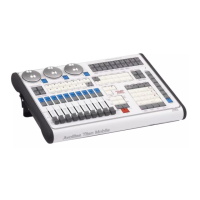
Overview of the console's physical controls and screen layout for operation.
Details on connecting the Titan Mobile panel to a PC and installing software.
How to configure and utilize workspace windows for efficient control and display.
Procedures for saving, loading, importing, and backing up show files.
Process of assigning fixture types and DMX addresses to console buttons.
Selecting fixtures and controlling attributes (dimmer, color, etc.) using physical controls.
Storing and defining fixture states (color, position) in reusable palettes.
Applying stored palette values to selected fixtures for quick programming.
Using the Shape Generator and Pixel Mapper to create animated lighting effects.
Recording and storing a specific lighting look or state as a cue.
Playing back, managing, and controlling cues via faders and playback options.
Programming sequences of steps (cues) that run automatically or with user input.
Firing, controlling speed, and managing chase playback.
Programming sequences of cues with individual timings and tracking behavior.
Running, pausing, skipping, and killing cue lists.
Managing playbacks, backing up shows, and using master faders.
Configuring Wi-Fi and network settings to enable remote control via mobile devices.
Using the Avolites Remote app to control fixtures, palettes, and cues from a mobile device.
Accessing and configuring console-wide settings like TitanNet, network, and user preferences.
Configuring DMX output lines, nodes, and Art-Net systems for fixture control.
Procedures for reinstalling the console software using a recovery stick.
Obtaining and installing fixture personality files from the Avolites website.
Configuring network settings, including IP addresses, for console communication.
Step-by-step guide for downloading and installing the console software.
 General
| Connectivity | USB |
|---|---|
| Software | Titan PC Suite |
| DMX Outputs | 1 |
| Power Requirements | USB Powered |
| Operating System | Windows PC |
| Compatibility | Compatible with Windows 7, 8, 10 |
| Ethernet Ports | 0 |

 To Next Page