13
OPERATION INSTRUCTIONS
LEAK CHECK
1. Make 2-3 oz. of leak check soluon (one part liquid dishwashing detergent and three parts
water).
2. Apply several drops of soluon where hose aaches to regulator.
3. Apply several drops of soluon where regulator connects to cylinder.
4. Make sure all pao heater and light valves are OFF.
5. Turn cylinder valve ON.
If bubbles appear at any connecon, there is a leak.
1. Turn cylinder valve OFF.
2. If leak is at hose/regulator connecon: ghten connecon and perform another leak test. If
bubbles connue appearing, the hose should be returned to the place of purchase.
3. If leak is at regulator/cylinder valve connecon: disconnect, reconnect, and perform another
leak check. If you connue to see bubbles aer several aempts, cylinder valve is defecve
and should be returned to cylinder’s place of purchase. If NO bubbles appear at any
connecon, the connecons are secure. NOTE: Whenever gas connecons are loosened or
removed, you must perform a complete leak test.
4. Complete installaon.
13
OPERATION INSTRUCTIONS
Leak Check
1. Make 2-3 oz. of leak check solution (one part liquid dishwashing detergent and three parts water).
2. Apply several drops of solution where hose attaches to regulator.
3. Apply several drops of solution where regulator connects to cylinder.
4. Make sure all patio heater and light valves are OFF.
5. Turn cylinder valve ON.
If bubbles appear at any connection, there is a leak.
1. Turn cylinder valve OFF.
2. If leak is at hose/regulator connection: tighten connection and perform another leak test. If bubbles
continue appearing, the hose should be returned to the place of purchase.
3. If leak is at regulator/cylinder valve connection: disconnect, reconnect, and perform another leak
check. If you continue to see bubbles after several attempts, cylinder valve is defective and should be
returned to cylinder’s place of purchase.
If NO bubbles appear at any connection, the connections are secure.
NOTE: Whenever gas connections are loosened or removed, you must perform a complete leak test.
4. Complete installation.
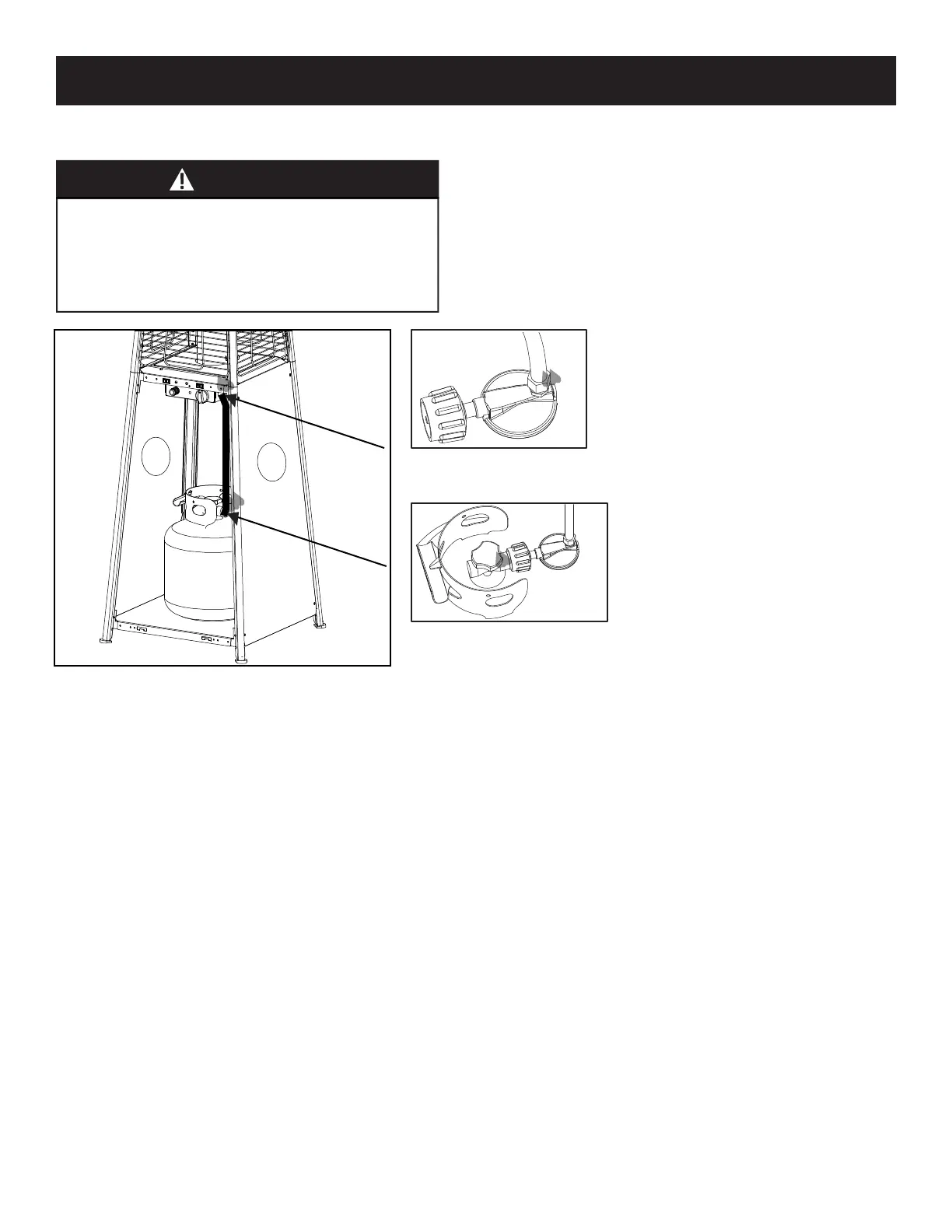
Regulator / Cylinder
connection
Hose / Regulator
connection
WARNING
• Perform all leak tests outdoors.
• Extinguish all open flames.
• NEVER leak test when smoking.
• Do not use the heater until all connections have been
leak tested and do not leak.
• Perform all leak tests outdoors.
• Exnguish all open ames.
• NEVER leak test when smoking.
• Do not use the heater unl all connecons have been
leak tested and do not leak.
WARNING
13
OPERATION INSTRUCTIONS
Leak Check
1. Make 2-3 oz. of leak check solution (one part liquid dishwashing detergent and three parts water).
2. Apply several drops of solution where hose attaches to regulator.
3. Apply several drops of solution where regulator connects to cylinder.
4. Make sure all patio heater and light valves are OFF.
5. Turn cylinder valve ON.
If bubbles appear at any connection, there is a leak.
1. Turn cylinder valve OFF.
2. If leak is at hose/regulator connection: tighten connection and perform another leak test. If bubbles
continue appearing, the hose should be returned to the place of purchase.
3. If leak is at regulator/cylinder valve connection: disconnect, reconnect, and perform another leak
check. If you continue to see bubbles after several attempts, cylinder valve is defective and should be
returned to cylinder’s place of purchase.
If NO bubbles appear at any connection, the connections are secure.
NOTE: Whenever gas connections are loosened or removed, you must perform a complete leak test.
4. Complete installation.
Regulator / Cylinder
connection
Hose / Regulator
connection
WARNING
• Perform all leak tests outdoors.
• Extinguish all open flames.
• NEVER leak test when smoking.
• Do not use the heater until all connections have been
leak tested and do not leak.


 To Next Page
 Loading...