46
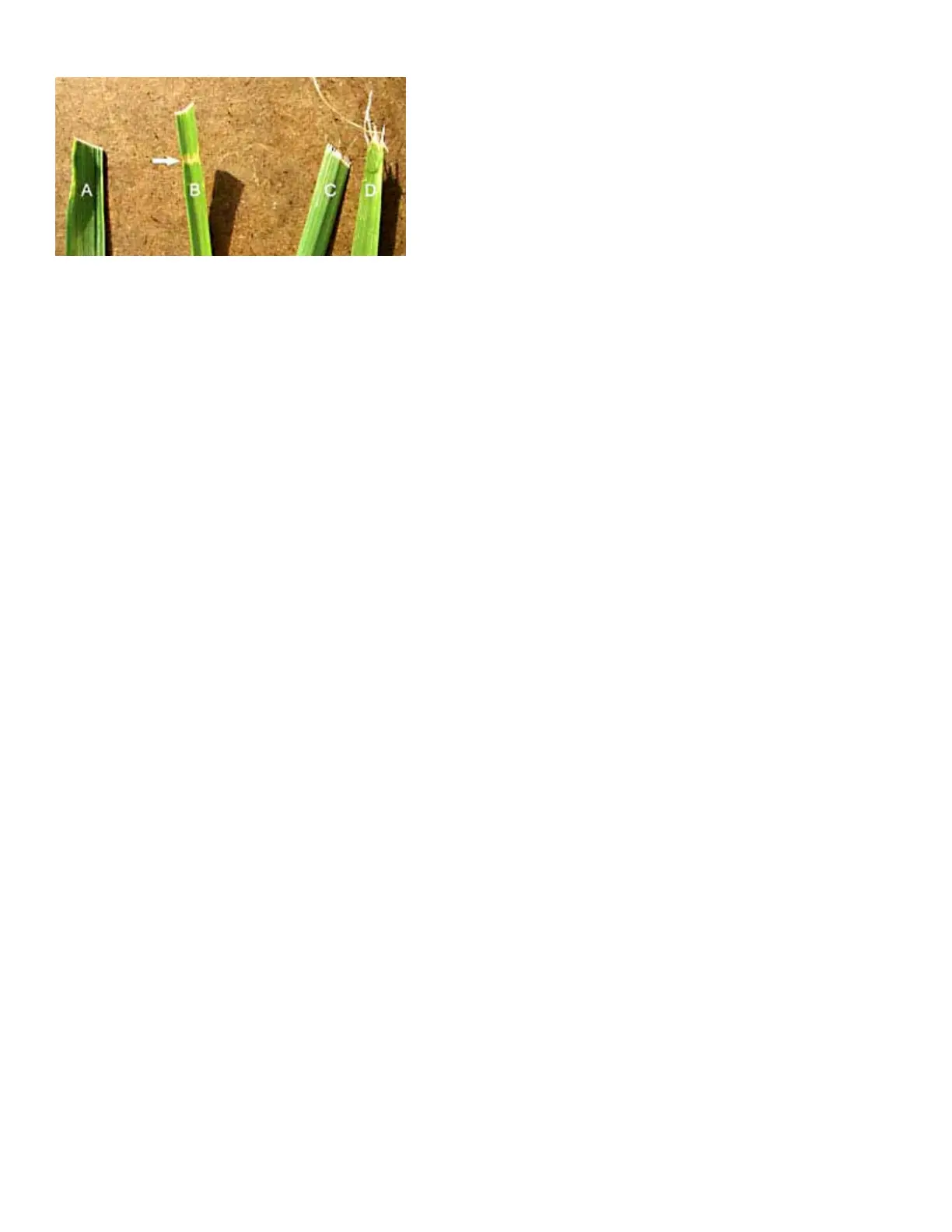
• Leaf blade A demonstrates what a leaf blade should look like after mowing with a
sharp blade.
• Leaf blade B demonstrates a leaf blade that was injured by a dull mower blade.
• Leaf blade C was cut by the mower but indicates that the mower blade is not
sharp enough. The shredded white tissue protruding from the leaf blades C and D
is the vascular tissue of the plant.
• Leaf blade D has been mown for quite some time with a dull mower blade.
To bag or mulch?
Grass clippings do not contribute to thatch buildup or increase the chances of disease. If
you mow your lawn at the right height, without removing any more than 1/3 of it's total
height, clippings will quickly breakdown without a trace. These clippings contribute
additional nitrogen and other nutrients to the soil and supply it with additional organic
materials. Clippings from a 1000 sq. ft. lawn can add as much as 1 - 2 pounds of
nitrogen back into the soil.
If you have a compost pile, then you may want to bag your clippings occasionally to add
much needed green-matter to the compost pile. Make sure it is mixed thoroughly with
brown matter to avoid a strong ammonia odor. DO NOT COMPOST CLIPPINGS after
applying any weed control or weed-feed type product. Before adding clippings to the
compost pile wait at least 3 mowings after these products have been applied.




 To Previous Page