BAE 10DCF ©2017
4
BAE AUDIO – 10DCF
OPERATION
The 10DC can be fed from a wide range of Line output devices anywhere from -20dBu to +30dBu making it
very versatile with many sources. Both the Compression and Limiter circuits are completely independent and
can be used separately or together via the illuminated push-buttons that corresponds to each side. For point of
reference, analog level of 0dBu is equal to 0.775 volts (RMS).
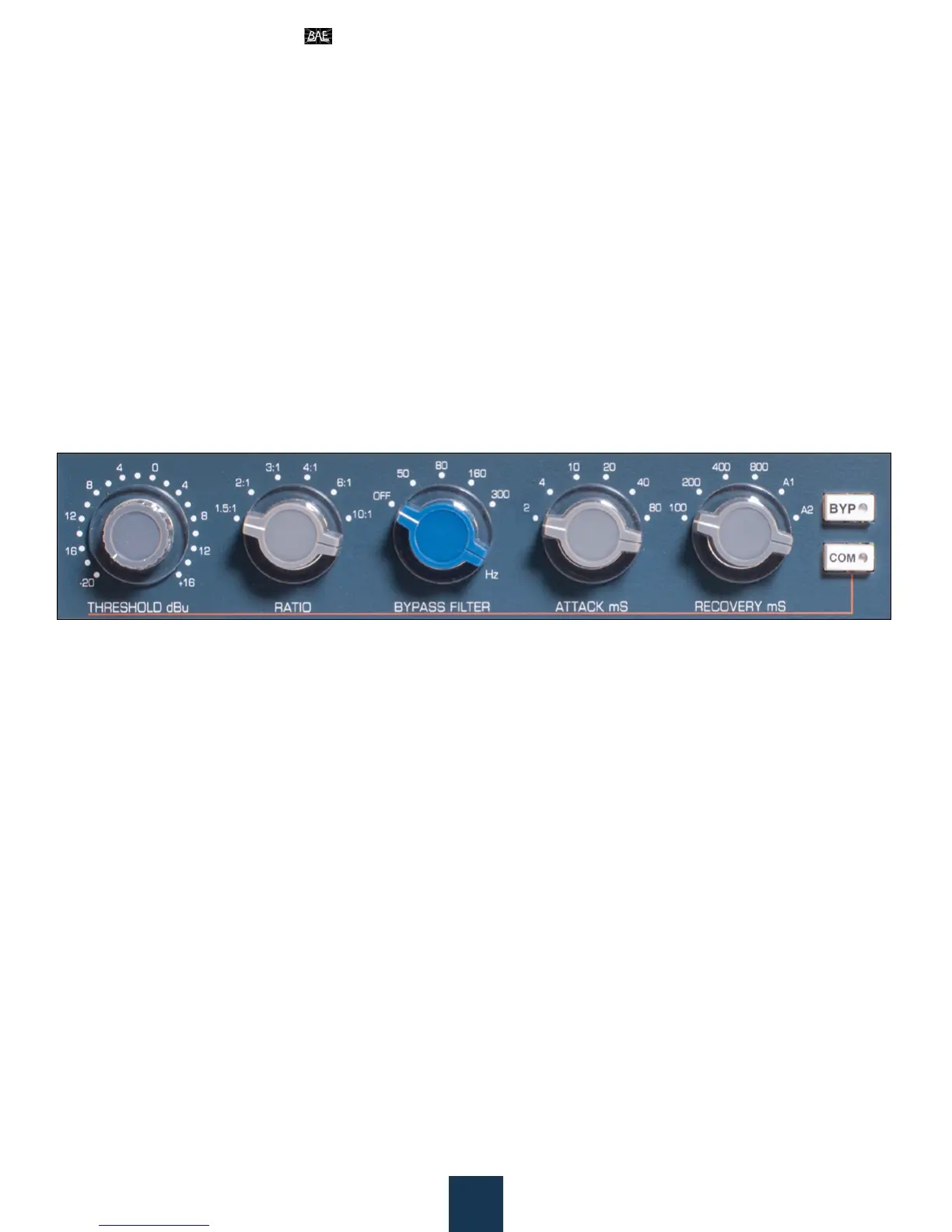
BYPASS
This is a hard bypass which simply connects your input XLR to your output XLR. The input XLR does terminate
to the input transformer so it’s equivalent to connecting your XLR’s together with a 10kΩ oating load.
THRESHOLD:
This sets the audio level at where the signal begins its compression. It covers a range from -20dBu to +16dBu in
2dB steps. Usually, this is the control to set rst just to get a feel of where your levels are, and then revisit again
once you are more sure of the amount of compression needed.
RATIO:
This selects the ratio between input and output levels for audio signals that have gone above the level set by the
compression threshold. It has six selections from 1:5:1 to 10:1 giving you the right amount of compression from
a subtle “kiss” to something more heavy-handed.
ATTACK:
A well-received feature to this style of compressor, the ATTACK control sets the amount of time it takes for the
10DC to begin compressing the signal once it is above the threshold. It is selectable in six steps from 2mS for
fast response to peaks to 80mS for very slow response to retain the dynamics before compression takes control.
For example, drums can sound more dynamic and alive with the right setting.
RECOVERY:
This control sets how fast the compression circuit returns the input signal to its original level. It has six settings
- the rst four are the static settings from 100mS to 800mS, and the last two are automatic settings, A1 and A2
respectively. The static functions follows the envelope of the program material in a xed time release during
compression. The automatic functions derive the attack and recovery times from the input signal’s change where
composite control is needed. As program material enters the circuit, it responds with rapid recovery for isolated
peaks and a slower recovery after prolonged high levels. See specications above for recovery times.
COMPRESSOR


 To Next Page
 Loading...