| 26 |
EN
3 Technical Characteristics
3.1 Technical specifications
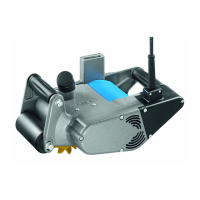
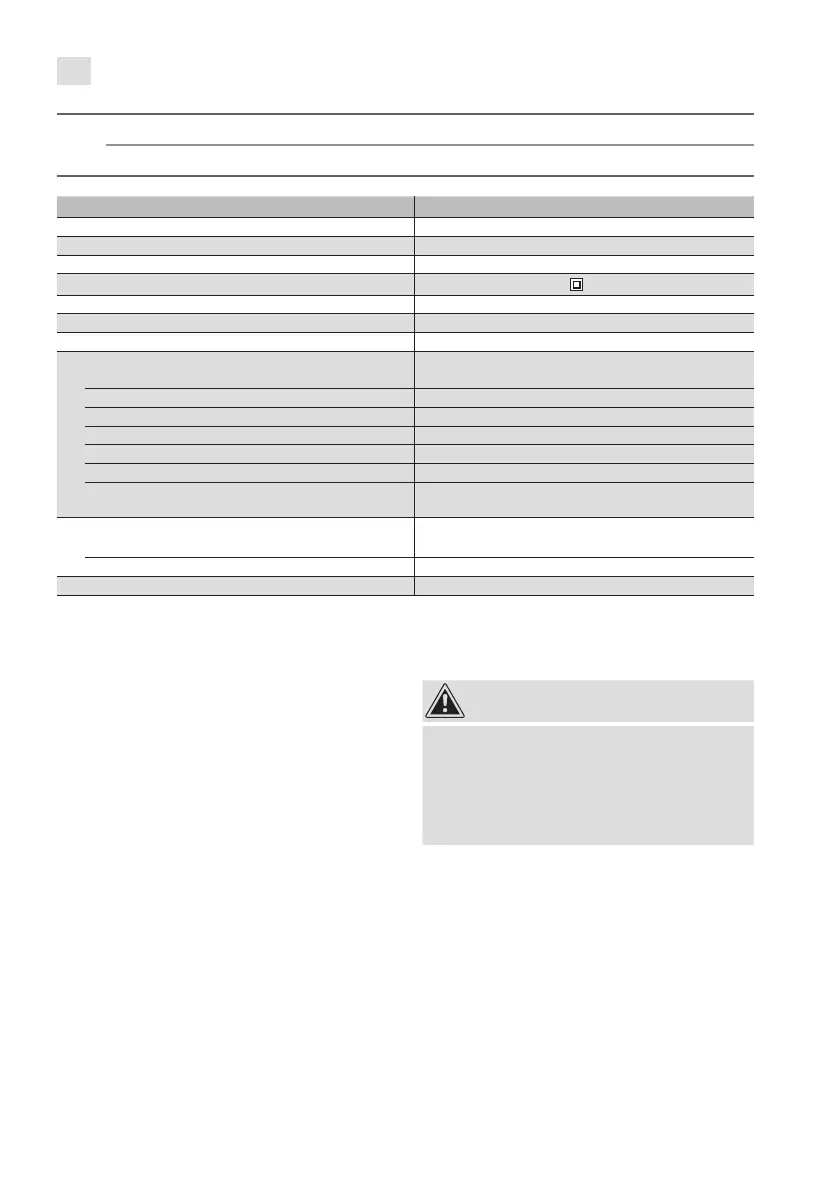
Wall chaser type BMF 501
Manufacturer Maschinenfabrik OTTO BAIER GmbH
Operating voltage (V / Hz) ~230 / 50 / 60
Power consumption (watt) 1400
Protection class
/ II
Speed (min
-1
) 2150
Cutting width (mm) 13 – 30
Cutting depth (mm) 23 – 38
Weight (kg)
Machine
1)
6.5
Euro cutter 20 0.15
Euro cutter 25 0.15
Cutter 4 0.15
Cutter 318 0.15
Cutter 67 0.20
Cutter 67 for sand-lime
(calcium silicate) brick
0.20
Sound measurement
2)
K = 3 dB
L
pA
(sound pressure) dB (A) 94
L
WA
(sound power) dB (A) 103
Vibration measurement:
3)
K = 1.5 m/s
2
6.4
1)
Weight without insert tool and connection cable.
2)
Measured values for noise determined according to EN 60745. Wear hearing protection!
3)
Total vibration values (vector sum in three directions) determined according to EN 60745
The vibration emission values given in this instruc-
tion manual have been measured according to a
method of measurement standardised in EN 60745
and can be used for comparison between electric
tools. They are also suitable for a preliminary esti-
mate of the vibratory stresses.
The vibration emission values given represent the
main applications of the electric tool. If the electr
ic
tool is used for other applications, with different in-
sert tools or are used insufficiently serviced, this
can increase the vibratory stresses over the whole
work period. For a precise estimate of the vibra-
tion emission values, the times during which the tool
is switched off or is running but not actually in use
should also be taken into account. This can reduce
the vibration stresses over the whole work period
significantly.
WARNING
Health risk due to vibrations.
Additional safety measures should be taken to
protect the user, e.g. wearing anti-vibration pro-
tective gloves, correct maintenance of electric
tools and insert tools, keeping the hands warm
and good organisation of the work sequences.


 To Next Page
 Loading...