EasyManua.ls Logo

Banjo MFM220 - User Manual

Banjo MFM220
15 pages
Print Icon
To Next Page IconTo Next Page
Loading...
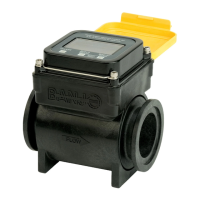
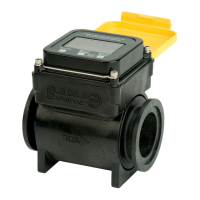
The 2" Flow Meter Series are a full-bore, plastic-bodied electromagnetic
ow meter designed for ow and usage monitoring applications in 2" pipe.
The polypropylene ow tube oers corrosion resistance to a wide range of
chemicals. Its light weight and clamp anges allow it to be easily installed
or removed from the pipe for inspection. There are multiple congurations.
With no moving parts, the magmeter permits unobstructed ow,
minimizing ow disturbances. The 2" Meter Series can be used in
piping congurations where there is little space between the meter
and valve. The 2" Meter Series, like other magmeters, are resistant to
wear from debris. Since there are no bearings or propeller to wear out,
downtime and maintenance are kept to a minimum. Because there are no
mechanical parts in the ow stream, the meter tolerates high ows without
damage. Please note that ow does not automatically turn the meter on.
The hinged, polyethylene cover protects from dust and UV rays, while
permitting easy access to the LCD ow rate and total display. The
electronics housing is made of rugged powder-coated die-cast aluminum.
Flow rate and total can be displayed in a variety of units, customer-
selected and factory-set.
The 2" Meter Series are used for tracking ow rates and total ow in
usage monitoring applications. These would include wells, industrial
wastewater, leach mining discharge, cooling tower deduct metering, turf
and landscape applications, and other water reclamation operations.
When changing the batteries, the 2" is designed to retain the internal
settings and ow total.
The DC ow meters are externally powered via a 5-pin connector cable
(20ft/6m) which also provides pulse output for use with a variety of
displays and controls for remote reading, data logging, pulse-to-analog
conversion, and telemetry applications.
The standard ow meters are a battery-operated unit for use when
pulse output is not required. The batteries are user replaceable with an
approximate 1-year life under continuous use, or more depending on
the duty cycle. The ow meters shut o after 15 minutes of inactivity to
preserve battery life.
MFM220 & MFM220DC
Plastic-Bodied Magmeter
APPLICATIONS
Usage monitoring, such as:
• Industrial wastewater discharge monitoring
• Cooling tower deduct metering
• Heap leach mining discharge monitoring
• Well monitoring
• Turf and landscape water monitoring
• Agriculture liquid monitoring
FEATURES
• Simple as a mechanical meter
• No moving parts
• Minimal straight pipe required
• Battery powered
• Built-in rate & total indicator
• Corrosion resistant
Unobstructed Flow
150 Banjo Drive Crawfordsville, IN 47933
ph: 765-362-7367 fax: 800-458-0232
www.banjocorp.com
Manual# FMM2000
* Will not read petroleum
based liquids.
Question and Answer IconNeed help?

Do you have a question about the Banjo MFM220 and is the answer not in the manual?

Summary

Product Overview

Instructions

Installation Orientation

Proper flowmeter placement for optimal performance and vertical installation considerations.

Interface Operation

How to interact with the flow meter's photoeyes for various functions.

Battery Replacement

Step-by-step guide for replacing the internal AA batteries.

Flow Rate Accuracy

Details on the meter's flow rate measurement accuracy across different flow ranges.

Cleaning and Maintenance

Recommended procedure for cleaning the meter and its electrodes.

Error Code Explanation

Explanation of the "-EP-" error message indicating an idle system.

Piping Requirements

Recommended straight pipe lengths before and after the flow meter.

Cover Rotation

Instructions on how to rotate the meter's protective cover for better viewing.

Features and Dimensions

Product Features

Detailed description of the meter's physical and functional features.

Dimensional Specifications

Provides the physical measurements and dimensions of the flow meter.

Specifications

Installation

Piping Conditions

Recommendations for straight pipe lengths before and after the meter for optimal installation.

Connection Steps

Visual and textual guide for connecting the meter using gaskets and clamps.

Position

Recommended Position

Recommended meter orientation to prevent sediment or bubble issues.

Less Ideal Position

Less ideal orientations where air/sediment can affect accuracy.

Piping and Electrical

Straight Pipe Recommendations

Reiteration of recommended straight pipe lengths before and after the meter.

Electrical and Cable Connections

Guide to electrical connections, cable pinouts, and grounding for operation.

Maintenance and Troubleshooting

Maintenance and Repair

Notes that only batteries are user-serviceable.

Battery Replacement

Detailed steps for replacing the batteries.

Troubleshooting Guide

Lists common problems, probable causes, and solutions.

Overview

The Banjo MFM220 & MFM220DC Plastic-Bodied Magmeter is a 2-inch, full-bore, plastic-bodied electromagnetic flow meter designed for flow and usage monitoring applications in 2-inch pipe systems. Its primary function is to track flow rates and total flow in various monitoring scenarios.

Function Description:

The MFM220 & MFM220DC series operates on electromagnetic principles, meaning it has no moving parts in the flow stream. This design minimizes flow disturbances, reduces wear from debris, and eliminates the need for bearings or propellers that can wear out, thereby decreasing downtime and maintenance. The meter tolerates high flows without damage. It is suitable for use in piping configurations with limited space between the meter and valves.

The device features a built-in rate and total indicator, displaying flow rate and accumulated total on an LCD screen. These readings can be configured to display in various units, which are customer-selected and factory-set. The meter is designed to retain internal settings and flow total even when batteries are changed.

Important Technical Specifications:

  • Pipe Size: 2" Full Port
  • Fittings: Flange Clamps
  • Pressure: 150 PSI or 10.3 bar working pressure @ 70°F
  • Operating Temperature Range: 10° to 130°F (-12° to 54°C)
  • Accuracy:
    • +/-1% of reading from 100% to 10% of full scale
    • +/-3% of reading from 10% to 10% of full scale to cut off => 2% to 10%
  • Flow Range:
    • Minimum: 6 gallons per minute (22.7 liters per second)
    • Maximum: 300 gallons per minute (1135.6 liters per second)
  • Materials:
    • Body: Glass-filled polypropylene
    • Electrodes: 316 stainless steel
    • Electronics Housing: Die cast aluminum, powder-coated
    • Display Cover: Polyethylene
  • Display:
    • Type: Rate and Total indicator
    • Digits: 6
    • Units: Gallons/Minute, Liters/Minute (customer-selected and factory-set)
  • Power (Standard Flow Meters): 6 AA alkaline cells, user replaceable. Approximate life: 1 year under continuous use; 3 years when dry. The meter shuts off after 15 minutes of inactivity to preserve battery life.
  • Power (DC Flow Meters): Externally powered via a 5-pin connector cable (20ft/6m).
  • Pulse Output (DC Flow Meters):
    • Signal: Current sinking pulse, opto isolate, 32 Vdc max at 10 mA max.
    • Standard Pulse Rate: 1 unit/pulse out, pulse width of 10 ms depending on unit selection.
    • High Frequency: 30 Pulse per unit, pulse width 1.1 ms, min-max frequency, 3-150 HZ.
    • Note: Using an unregulated power supply >18 Vdc may damage the meter due to AC line input voltage fluctuation.
  • Empty Pipe Detection: Hardware/software, conductivity-based.
  • Conductivity: >20 microSiemens.
  • Environmental: NEMA 4X standard; -40° to 176°F (-40° to 80° C) storage.
  • Electrical Connection: 5 pin male circular connector, mates to industry standard cable (20ft/6m).
  • Corrosion Resistance: The polypropylene flow tube offers resistance to a wide range of chemicals.
  • Weight: Lightweight, with clamp flanges for easy installation/removal.
  • Limitations: Will not read petroleum-based liquids.

Usage Features:

  • Applications: The meter is suitable for a wide range of usage monitoring applications, including industrial wastewater discharge monitoring, cooling tower deduct metering, heap leach mining discharge monitoring, well monitoring, turf and landscape water monitoring, and agriculture liquid monitoring.
  • Installation:
    • The flowmeter should be rotated to approximately a 45-degree angle during installation to improve performance. Vertical installation is possible if flow is sufficient to fill the pipe.
    • It is recommended to have at least 20 inches of straight pipe before and after the flow meter for optimal performance.
    • Installation involves positioning a gasket, placing an adapter against the gasket, opening screw clamps to clear flanges, and then placing screw clamps over both adapter and meter flanges before tightening.
    • The meter is an all-position device, meaning it can be installed vertically or horizontally, with the register up, down, or angled. However, certain positions are preferable to prevent issues with entrained air or solids affecting accuracy. A recommended position involves rotating the meter so electrodes are moved from the top, allowing intermittent air bubbles to miss the electrodes and keeping electrodes free from sediment build-up. Less ideal positions may lead to air bubbles and sediment on electrodes, affecting accuracy.
  • Display Interaction:
    • The hinged, polyethylene cover protects the LCD display from dust and UV rays while allowing easy access.
    • The meter features three photoeyes on its face, which are activated by holding a finger over them for 2-4 seconds (they are not buttons).
    • To reset the running total, hold a finger over both the "batch reset" and "batch/total" photoeyes.
    • To switch units from gallons to liters, hold a finger over the first and third photoeyes simultaneously.
    • The display shows "EP" as an error message when the system is idle and no fluid is traveling through it.
    • A "lo bat" indicator appears when battery voltage drops, signaling the need for battery replacement within four weeks.
  • Cover Rotation: The cover can be rotated 90° by removing four cover bolts and carefully rotating it. For 180° rotation, the four cover bolts, six AA batteries, and two screws holding the battery holder must be removed, allowing the battery holder and cover to be rotated together. Care must be taken not to pull or pinch connecting wires during rotation.

Maintenance Features:

  • Battery Replacement: For battery-operated units, six AA alkaline cells are required. To replace them, remove the four cover bolts, gently remove the top cover, and then remove the foam retainer covering the battery tray. Replace the old batteries, ensuring correct polarity, then reassemble. It is advisable to change batteries yearly.
  • Cleaning: It is recommended to thoroughly clean the meter and its electrodes at least once a year by gently rubbing the electrodes with emery cloth.
  • Troubleshooting:
    • Blank Display: Probable cause is dead or misinstalled batteries. Solution: Check polarity, replace batteries.
    • Reading "-EP-": Probable cause is an empty or partly filled pipe, or excessive air pockets/foaming. Solution: Rearrange piping to ensure a full pipe.
    • Flow but no flow rate reading: Probable cause is heavily coated electrodes. Solution: Remove meter and wipe electrodes.
  • Serviceable Parts: The only user-serviceable parts in the 2" Series meters are the batteries.

Banjo MFM220 Specifications

General IconGeneral
BrandBanjo
ModelMFM220
CategoryMeasuring Instruments
LanguageEnglish

Related product manuals