New Important Information:
New Important Information:
New Important Information:
•
Contrast media should be warmed to body temperature prior to power injection.
Warning: Failure to warm contrast media to body temperature prior to power injection may result in
catheter failure.
•
Vigorously flush the PowerPICC*SV catheter using a 10 mL or larger syringe and sterile normal
saline prior to and immediately following the completion of power injection studies. If using a multi-
lumen catheter, flush all lumens. In addition, lock each lumen of the catheter with heparinized saline.
Usually one mL per lumen is adequate. This will ensure the patency of the PowerPICC*SV catheter
and prevent damage to the catheter. Resistance to flushing may indicate partial or complete catheter
occlusion. Do not proceed with power injection study until occlusion has been cleared.
Warning: Failure to ensure patency of the catheter prior to power injection studies may result in cath-
eter failure.
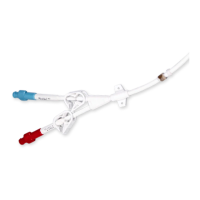
• Useonlylumensmarked“PowerInjectable”forpowerinjectionofcontrastmedia.
Warning: Use of lumens notmarked“PowerInjectable”forpowerinjectionofcontrastmediamay
cause failure of the catheter.
•
Do not exceed the maximum power injection flow rate.
Warning:Powerinjectormachinepressurelimitingfeaturemaynotpreventoverpressurizationofan
occluded catheter, which may lead to catheter failure.
Warning: Exceeding the maximum power injection flow rate or setting the maximum power injector
pressure limit above 300 psi, may result in catheter failure and/or catheter tip displacement.
• Warning:PowerPICC*SV catheter indication for power injection of contrast media implies the catheter’s
ability to withstand the procedure, but does not imply appropriateness of the procedure for a particular
patient. A suitably trained clinician is responsible for evaluating the health status of a patient as it per-
tains to a power injection procedure.
Power Injection Procedure
1. Remove the injection/needleless cap from the PowerPICC*SV catheter.
2. Attach a 10 mL or larger syringe filled with sterile normal saline.
3. Aspirate for adequate blood return and vigorously flush the catheter with the full 10 mL of sterile normal saline.
Warning: Failure to ensure patency of the catheter prior to power injection studies may result in catheter failure.
4. Detach syringe.
5. Attach the power injection device to the PowerPICC*SV catheter per manufacturer’s recommendations.
6. Contrast media should be warmed to body temperature prior to power injection.
Warning: Failure to warm contrast media to body temperature prior to power injection may result in catheter failure.
7. Useonlylumensmarked“PowerInjectable”forpowerinjectionofcontrastmedia.
Warning: Use of lumens notmarked“PowerInjectable”forpowerinjectionofcontrastmediamaycausefailureofthecatheter.
8. Complete power injection study taking care not to exceed the flow rate limits. Do not exceed the maximum power injection
flow rate.
Warning:Powerinjectormachinepressurelimitingfeaturemaynotpreventoverpressurizationofanoccludedcatheter,which
may lead to catheter failure.
Warning: Exceeding the maximum power injection flow rate or setting the maximum power injector pressure limit above 300
psi, may result in catheter failure and/or catheter tip displacement.
9. Disconnect the power injection device.
10. Replace the injection/needleless cap on the PowerPICC*SV catheter.
11. Flush the PowerPICC*SV catheter with 10 mL of sterile normal saline, using a 10 mL or larger syringe. If using a multi-
lumen catheter, flush all lumens. In addition, lock each lumen of the catheter with heparinized saline. Usually one mL per
lumen is adequate.
Product Description
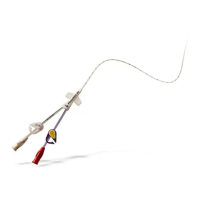
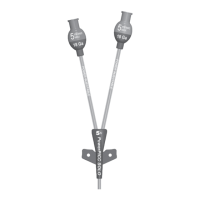
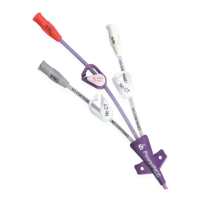
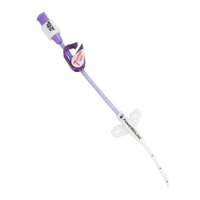
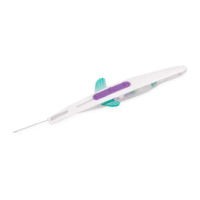
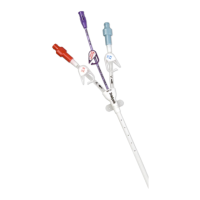
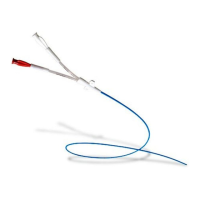
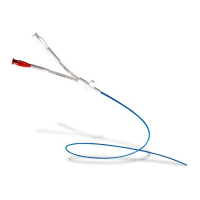
A family of peripherally inserted central catheters made from specially formulated and processed medical grade materials.
PowerPICC*SVcatheters have a kink resistant reverse tapered design. Catheters are packaged in a tray with accessories neces-
sary for a percutaneous microintroducer introduction (Seldinger technique).
Contents are supplied sterile. Sterilized by ethylene oxide. DO NOT RESTERILIZE.




 To Next Page