10-15
®
FIRE PREVENTION (continued...)
FIRE
EXTINGUISHER
NOTICE
Fig-01
(typical gauge)
FIRE EXTINGUISHER
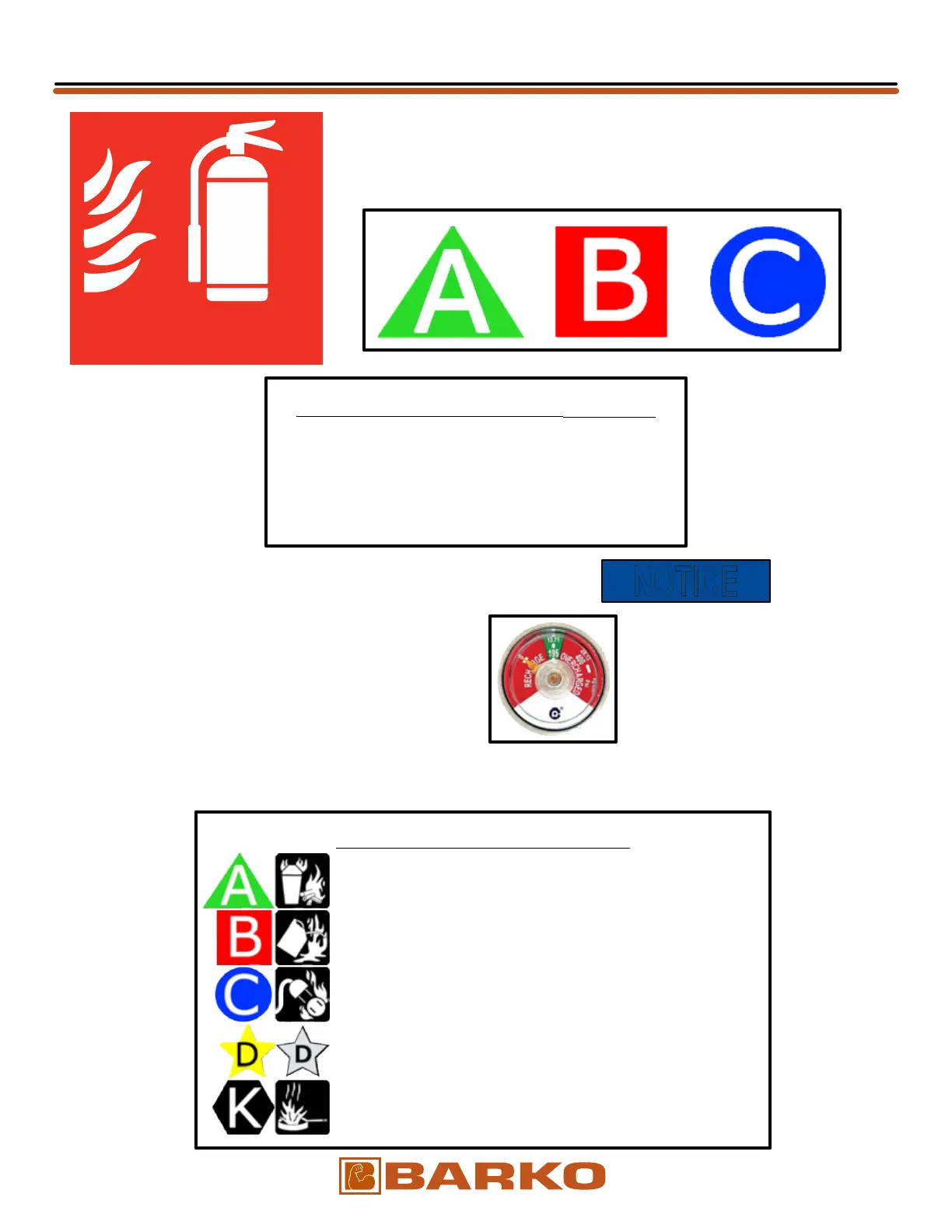
Make sure you have the proper fire extinguisher that is labeled A (wood,
trash), B (gas, grease, oil, paint) and C (electrical).
FIRE & FIRE EXTINGUISHER TYPES
IN CASE OF A FIRE REMEMBER P-A-S-S
Ÿ P PULL the pin
Ÿ A AIM at the base of the fire
Ÿ S SQUEEZE the lever
Ÿ S SWEEP extinguisher from side to side
FIRE EXTINGUISHER SERVICE AND INSPECTION
Ÿ Recharge (bring to authorized server) fire
extinguisher immediately after any use.
Ÿ Partial discharge may cause the fire extinguisher to
leak.
Ÿ Inspect monthly for possible damage.
Ÿ Check the plastic seal wire to be intact.
Ÿ Make sure the label instructions are clean (visible).
Ÿ Check the needle indicator for designated pressure
levels.
The green area is the "charged
zone". During cold temperatures the
indicator may read on the low side of
the green. During hot temperatures it
may read high in the green. A true
reading may be checked by placing
the fire extinguisher in a normal room
temperature of 70 degrees for several
hours. See Fig-01.
TYPE A
Ÿ fires involving solid materials such as wood, paper or
textiles
TYPE B
Ÿ fires involving flammable liquids such as petrol, diesel
or oils
TYPE C
Ÿ fires involving live electrical apparatus
TYPE D
Ÿ fires involving metals
TYPE K
Ÿ fires involving cooking oils such as in deep-fat fryers
07/12/2018
Updated
OPERATOR’S



 To Next Page