7
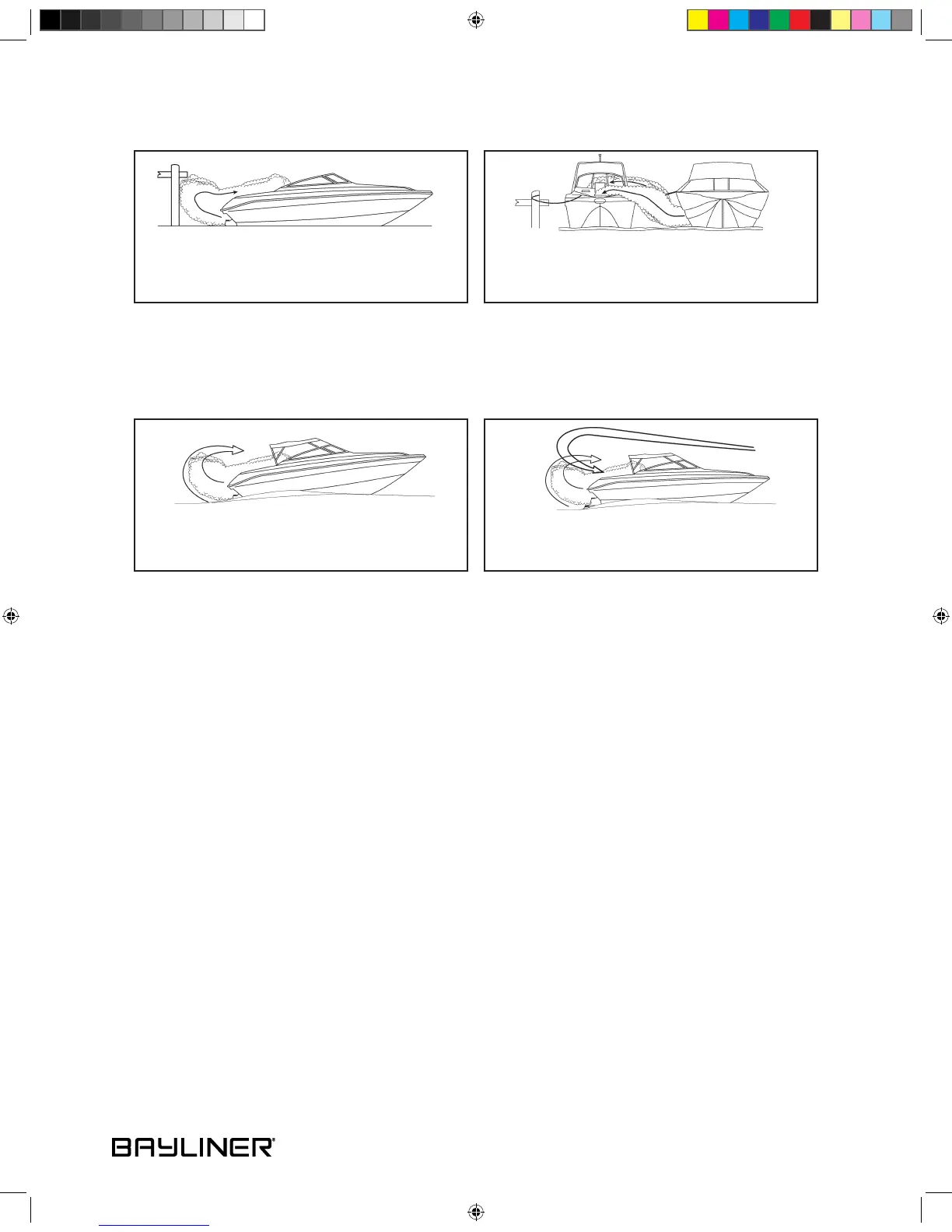
Where and How CO Can Accumulate
Stationary conditions that increase CO accumulations include:
A. Using engine, generator, or other fuel
burning device when boat is moored
in a conned space.
B. Mooring too close to another boat that
is using its engine, generator, or other
fuel burning device.
To correct stationary situations A and/or B:
• Close all windows, portlights and hatches.
• If possible, move your boat away from source of CO.
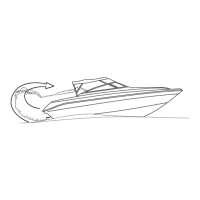
Running conditions that increase CO accumulations include:
D. Running boat without through ventilation
(station wagon effect).
C. Running boat with trim angle of bow
too high.
To correct running situations C and/or D:
• Trim bow down.
• Open windows and canvas.
• When possible, run boat so that prevailing winds help dissipate exhaust.
How to Protect Yourself and Others From CO
• Know where and how CO may accumulate in and around your boat (see above).
• Always maintain fresh air circulation throughout your boat.
• Know where your engine and generator exhaust outlets are located and keep everyone away from
these areas.
• Never sit on, or hang onto, the back deck or transom platform while the engine is running.
• Never enter the areas under transom platforms where exhaust outlets are located.
• Although CO can be present without the smell of exhaust fumes, if exhaust fumes are detected on
your boat, take immediate action to dissipate these fumes.
• Treat symptoms of seasickness as possible CO poisoning. Get the person into fresh air immediately.
Seek medical attention—unless you’re sure it’s not CO.
• Follow the checklists provided on the next page.
• Get a Vessel Safety Check.
For information on how to get a free VESSEL SAFETY CHECK, visit www.vesselsafetycheck.org or
contact your local U.S. Coast Guard Auxiliary or U.S. Power Squadrons:
• U.S. Coast Guard Auxiliary: 1-800-368-5647 or www.cgaux.org
• U.S. Power Squadrons: 1-888-FOR-USPS (1-888-367-8777) or www.usps.org
Bayliner_16_Element_2013.indd 7 10/16/2013 4:37:48 PM



 To Next Page