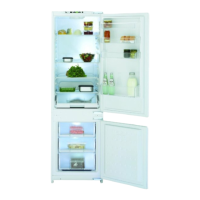
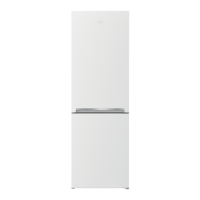
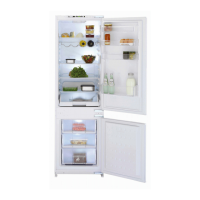
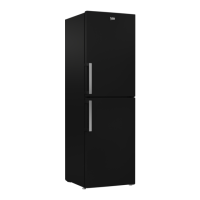
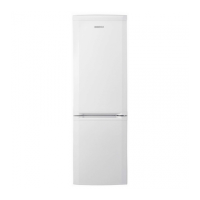
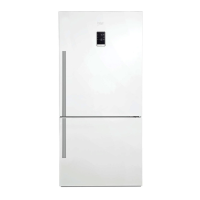
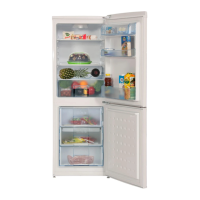
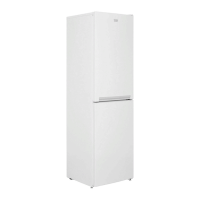
This document is a user manual for Beko refrigerators, covering various models including CCFM1582W, CRFG1582W, CFG1582S, CFG1582B, CFG1582W, CJFF1582W, CJFF1582PS, CCFM3582W, CFG3582B, CFG3582W, CFG3582S, CJFF3582W, CRFG3582W, and CFG1501B. It provides essential information for safe operation, installation, usage, and maintenance of the appliance.
Function Description
The Beko refrigerator is designed for the short-term storage of fresh food and drinks in its fridge compartment and for storing and freezing edible foodstuffs in its freezer compartment. It features a temperature setting control to regulate the internal temperature, allowing users to adjust cooling based on their needs and ambient conditions. The appliance incorporates a "Freezer Guard" feature in some models, ensuring that frozen food in the freezer will not defrost even if the ambient temperature falls as low as -15 °C, making it suitable for installation in a garage or unheated room. The refrigerator automatically defrosts, simplifying maintenance.
Important Technical Specifications
The appliance operates on an electricity supply, and users must ensure the voltage and frequency shown on the rating plate match their electricity supply. It is recommended to connect the appliance to the mains supply via a suitable switched and fused socket. The moulded plug on the appliance incorporates a 13 A fuse, which should be replaced with an ASTABEAB approved BS 1362 fuse of the same rating if needed. The appliance contains non-CFC/HFC natural substances (R600a) in the cooling system and cyclopentane in the insulation, both of which are potentially flammable if exposed to fire. The freezing capacity of the appliance is 4 kg (8.8 lb) in 24 hours.
Usage Features
- Temperature Control: The refrigerator's internal temperature is regulated by a thermostat. Setting 1 is the lowest cooling (warmest setting), and Setting 5 is the highest cooling (coldest setting). The average temperature in the fridge should be around +5°C.
- Food Storage:
- Milk products should be stored in the intended compartment.
- Bottles can be stored in the bottle holder or door shelf.
- Raw meat is best kept in a polyethylene bag at the bottom of the cooler/freezer.
- Hot foods and beverages should cool to room temperature before being placed in the appliance.
- Concentrated alcohol should be stored upright and tightly closed.
- Frozen food should be placed in the freezer as quickly as possible after purchase, labelled, and dated.
- Small quantities of fresh food (up to 1/2 kg or 1 lb) can be frozen without adjusting the temperature control knob.
- The crisper drawer is for vegetables and fruits.
- Energy Saving Tips:
- Install the appliance in a well-ventilated area.
- Minimize the time between purchasing chilled/frozen food and placing it in the appliance.
- Do not leave doors open longer than necessary.
- Defrost frozen food in the fridge compartment to assist cooling.
- Load the freezer compartment without using the top shelf lid and all drawers except the bottom one for maximum loading capacity and energy efficiency.
- Door Reversal: Instructions are provided for reversing the doors, allowing for flexible placement in different room layouts.
- Adjustable Feet: The front legs of the refrigerator are adjustable to balance the appliance on uneven floors.
Maintenance Features
- Cleaning:
- Always unplug the appliance before cleaning.
- Use lukewarm water and a soft cloth to clean the cabinet and interior. A solution of one teaspoon of bicarbonate of soda to one pint of water can be used for the interior.
- Avoid using gasoline, benzene, sharp abrasive instruments, soap, household cleaners, detergents, kerosene, fuel oil, varnish, or cleaning agents containing chlorine, as these can damage surfaces and prints.
- Ensure no water enters the lamp housing or other electrical items.
- Regularly check and clean door seals to prevent food particles from accumulating.
- To remove door racks, remove contents and push the rack upwards from the base.
- Defrosting: The appliance defrosts automatically. Users should regularly check and clear the drain pipe with the provided stick if it becomes clogged.
- Long-Term Storage: If the refrigerator will not be used for an extended period, unplug the power cable, remove all food, clean it, and leave the door ajar.
- Troubleshooting: The manual includes a troubleshooting guide to address common issues such as the refrigerator not working, condensation, increased operating noise, frequent running, freezing of food in the cooler, high temperatures, and shaking/noise. This guide helps users identify and resolve minor problems before contacting service.
- Protection of Plastic Surfaces: Avoid placing liquid oils or oil-cooked meals in unsealed containers as they can damage plastic surfaces. Clean any spills immediately with warm water.


 To Next Page
 General