
 To Next Page
F
fhallSep 23, 2025
What to do if the doors of my Beko DN162230DJIZX Refrigerator are opened frequently?
- EErin MitchellSep 23, 2025
Do not open the doors of your Beko Refrigerator frequently.

What to do if the doors of my Beko DN162230DJIZX Refrigerator are opened frequently?
Do not open the doors of your Beko Refrigerator frequently.
How to troubleshoot a Beko Refrigerator that does not operate?
If your Beko Refrigerator isn't operating, first ensure the plug is securely inserted into the socket. If it still doesn't work, check the fuse of the socket your refrigerator is connected to, as well as the main fuse, to see if they have blown out.
Why is my Beko DN162230DJIZX Refrigerator running constantly?
Your Beko Refrigerator might be running for a long time because hot food was placed inside, the doors are opened frequently, or the doors aren't closed completely. Try to avoid these situations. You can also adjust the refrigerator temperature to a warmer setting and wait until the desired temperature is reached. Also, the door seal might be dirty, worn out, broken, or not properly seated. In this case, clean or replace the seal.
Why is the temperature in my Beko DN162230DJIZX Refrigerator too high?
If the temperature in your Beko Refrigerator is too high, adjust the fridge or freezer temperatures and wait for them to reach a sufficient level. Avoid opening the doors frequently, ensure they are completely closed, and do not put hot food inside.
What to do if the Beko DN162230DJIZX door won't close?
If your Beko Refrigerator door isn't closing, reposition any items obstructing the door. Also, adjust the feet to balance the refrigerator and ensure the floor is level and can support the refrigerator's weight.
How do I fix a stuck crisper drawer in my Beko DN162230DJIZX Refrigerator?
If the crispers in your Beko Refrigerator are stuck, rearrange the food in the drawer.
Why does my Beko DN162230DJIZX Refrigerator make liquid flowing noises?
Noises like liquid flowing or spraying from your Beko Refrigerator are normal and not a fault.
Why does my Beko DN162230DJIZX whistle?
A whistling sound from your Beko Refrigerator is normal and not a fault.
Why is my Beko DN162230DJIZX not cooling after plugging in?
This is normal. When your Beko Refrigerator is newly plugged in or loaded with food, it will take longer for it to reach the set temperature.
Why is the fridge temperature too low in my Beko DN162230DJIZX Refrigerator?
If the fridge temperature in your Beko Refrigerator is very low while the freezer temperature is sufficient, the fridge temperature might be set too low. Adjust the fridge temperature to a warmer setting and check.
Defines the intended usage environments for the refrigerator.
Provides crucial safety guidelines for operating and maintaining the appliance.
Details safety precautions specific to the water dispenser function.
Outlines measures to protect children from potential hazards associated with the refrigerator.
Explains compliance with WEEE directive and proper disposal of the product.
Information regarding the recycling of packaging materials.
Advises on handling refrigerants (R600a) and potential fire risks.
Provides recommendations for optimizing energy consumption of the refrigerator.
Offers guidance on storing food in the fresh food compartment for optimal freshness.
Steps and precautions for moving and setting up the refrigerator for the first time.
Guidelines for safely connecting the refrigerator to the power supply.
Instructions on how to safely dispose of the refrigerator's packaging materials.
Guidance on environmentally responsible disposal of an old refrigerator.
Recommendations for choosing the right location and installing the refrigerator.
How to level the refrigerator by adjusting its feet for stability.
Instructions on how to replace the internal light bulb, requiring service.
Describes the optional audible warning for an open refrigerator door.
Explains the function and symbols of the refrigerator's control panel.
Details the dual cooling system and how to adjust refrigerator temperatures.
Guidance on preserving food, defrosting, and optimal placement.
How to use, fill, and clean the refrigerator's water dispenser.
Instructions for using the Auto Icematic and ice storage container.
How to adjust humidity for optimal vegetable and fruit preservation.
Instructions for using the appliance's ice cream making compartment.
Guidelines for cleaning plastic parts without causing damage or discoloration.
Addresses common problems like no power, compressor issues, and long operation cycles.
Solutions for incorrect temperatures and condensation within the refrigerator.
Covers various noise types, external humidity, and internal odors.
Troubleshooting issues related to the door not closing and stuck crispers.
 General
| Door hinge | Right |
|---|---|
| Control type | Sensor |
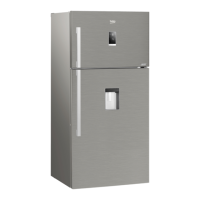
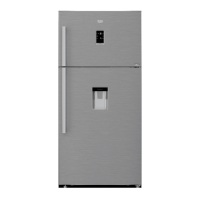
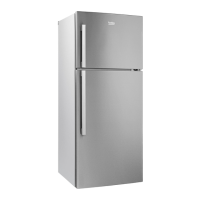
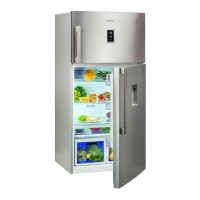
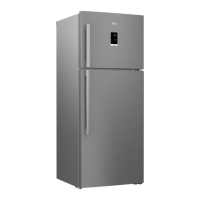
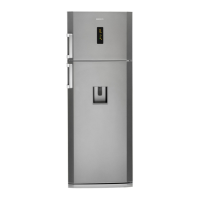
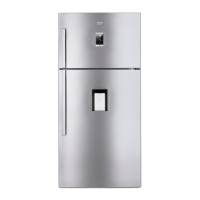
| Product color | Stainless steel |
| Built-in display | Yes |
| Reversible doors | - |
| Shelves material | Tempered glass |
| Appliance placement | Freestanding |
| Refrigerating medium | R600a |
| Noise level | 41 dB |
| Climate class | SN-T |
| Total net capacity | 539 L |
| Total gross capacity | 611 L |
| Fridge net capacity | 385 L |
| Fridge door balconies | 1 |
| Fridge gross capacity | - L |
| Number of vegetable drawers | 2 |
| Fridge number of shelves/baskets | 3 |
| Freezer position | Top-placed |
| Freezing capacity | 10 kg/24h |
| Freezer net capacity | 122 L |
| Storage time during power failure | 22 h |
| Fresh zone compartment gross capacity | 32 L |
| Cord length | 1.9 m |
| Connected load | - W |
| AC input voltage | 230 V |
| AC input frequency | 50 Hz |
| Annual energy consumption | 345 kWh |
 Weight and Dimensions
| Depth | 750 mm |
|---|---|
| Width | 840 mm |
| Height | 1835 mm |
| Weight | 120000 g |