5 - EN
• Takeoutallsubstancesinthepocketssuchas
coins, pens and paper clips, and turn pockets
inside out and brush. Such objects may
damage the product or cause noise problem.
• Putsmallsizeclothessuchasinfant'ssocks
and nylon stockings in a laundry bag or pillow
case.
• Placecurtainsinwithoutcompressingthem.
Remove curtain attachment items.
• Fastenzippers,sewloosebuttonsandmend
rips and tears.
• Wash“machinewashable”or“handwashable”
labeled products only with an appropriate
programme.
• Donotwashcoloursandwhitestogether.New,
dark coloured cottons release a lot of dye.
Washthemseparately.
• Toughstainsmustbetreatedproperlybefore
washing.Ifunsure,checkwithadrycleaner.
• Useonlydyes/colourchangersandlimescale
removers suitable for machine wash. Always
follow the instructions on the package.
• Washtrousersanddelicatelaundryturned
inside out.
• KeeplaundryitemsmadeofAngorawoolinthe
freezer for a few hours before washing. This will
reduce pilling.
• Laundrythataresubjectedtomaterialssuchas
flour, lime dust, milk powder, etc. intensely must
be shaken off before placing into the machine.
Such dusts and powders on the laundry may
build up on the inner parts of the machine in
time and can cause damage.
Correct load capacity
The maximum load capacity depends on the type
of laundry, the degree of soiling and the washing
programme desired.
The machine automatically adjusts the amount
of water according to the weight of the loaded
laundry.
A
Follow the information in the “Programme
andconsumptiontable”.Whenoverloaded,
machine's washing performance will drop.
Moreover, noise and vibration problems may
occur.
Laundry types and their average weights in the
following table are given as examples.
Laundry type Weight(g)
Bathrobe 1200
Duvetcover 700
Bed Sheet 500
Pillowcase 200
Tablecloth 250
Towel 200
Men’s shirt 200
Loading the laundry
Open the loading door. Place laundry items loosely
into the machine. Push the loading door to close
until you hear a locking sound. Ensure that no items
are caught in the door.
C
The loading door is locked while a programme
is running. The door can only be opened a
while after the programme comes to an end.
A
Incaseofmisplacingthelaundry,noiseand
vibration problems may occur in the machine.
Using detergent and softener
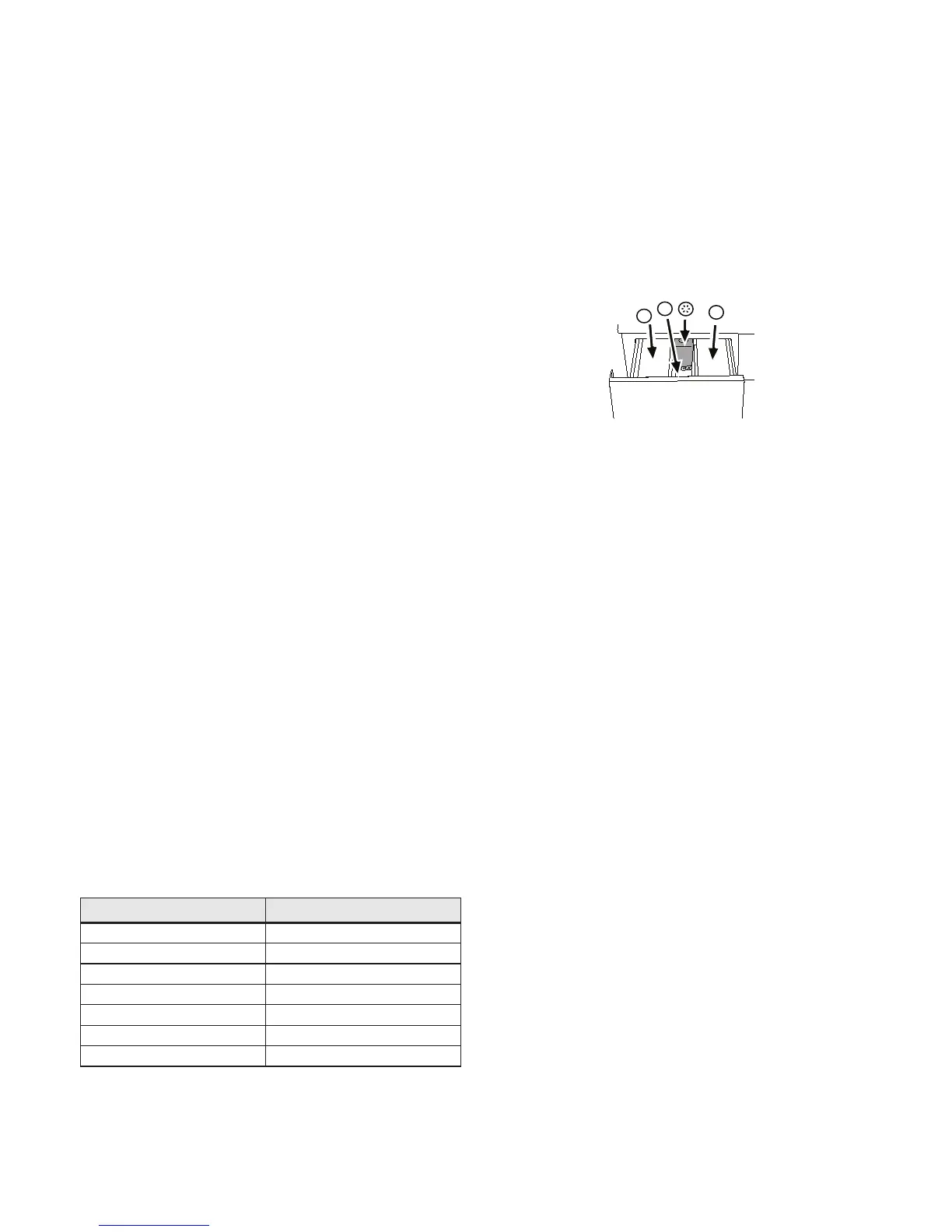
Detergent Drawer
The detergent drawer is composed of three
compartments:
- (1) for prewash
- (2) for main wash
–(3)forsoftener
–(*)inaddition,thereissiphonpieceinthesoftener
compartment.
1
2
3
Detergent, softener and other cleaning agents
• Adddetergentandsoftenerbeforestartingthe
washing programme.
• Neveropenthedetergentdrawerwhilethe
washing programme is running!
• Whenusingaprogrammewithoutprewash,
do not put any detergent into the prewash
compartment (compartment nr. 1).
• Inaprogrammewithprewash,donotput
liquiddetergentintotheprewashcompartment
(compartment nr. 1).
• Donotselectaprogrammewithprewashifyou
are using a detergent bag or dispensing ball.
Place the detergent bag or the dispensing ball
directly among the laundry in the machine.
• Ifyouareusingliquiddetergent,donotforget
toplacetheliquiddetergentcupintothemain
wash compartment (compartment nr. 2).
Choosing the detergent type
The type of detergent to be used depends on the
type and colour of the fabric.
• Usedifferentdetergentsforcolouredandwhite
laundry.
• Washyourdelicateclothesonlywithspecial
detergents(liquiddetergent,woolshampoo,
etc.) used solely for delicate clothes.
• Whenwashingdarkcolouredclothesand
quilts,itisrecommendedtouseliquid
detergent.
• Washwoolenswithspecialdetergentmade
specifically for woolens.
A
Useonlydetergentsmanufacturedspecifically
for automatic washing machines.
A
Donotusesoappowder.
Adjusting detergent amount
The amount of washing detergent to be used
depends on the amount of laundry, the degree
of soiling and water hardness. Read the
manufacturer's instructions on the detergent
package carefully and follow the dosage values.
• Donotuseamountsexceedingthedosage
quantitiesrecommendedonthedetergent



 To Next Page