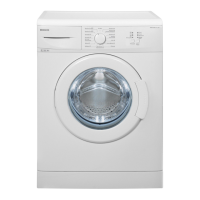
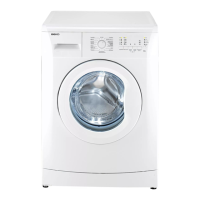
Need help?
Do you have a question about the Beko EV6800 and is the answer not in the manual?
Safety guidelines for operating the washing machine, including user limitations and electrical safety. Failure to follow voids warranty.
Specifies the product is for domestic use, washing/rinsing laundry only, and manufacturer's disclaimer for misuse.
Safety precautions for children around the washing machine, including keeping them away and storing detergents safely.
Guidelines for placing the machine on a stable floor, away from heat sources and edges, ensuring proper airflow.
Instructions on how to remove packaging securing the machine during transport by tilting and pulling.
Steps to remove transportation bolts before use to prevent machine damage, securing covers afterward.
Details on connecting water inlet hoses, pressure requirements (1-10 bars), and ensuring correct connections.
Instructions for connecting the drain hose, ensuring proper height (40-100cm) and preventing backflow.
How to adjust the machine's feet for stability and reduced vibration by loosening lock nuts.
Guidelines for connecting to a grounded outlet, compliance with regulations, and fuse requirements (16 Amp).
Information on recycling packaging materials and keeping them away from children for safety.
Steps for unplugging and preparing the machine for transport, including safety bolts and draining.
Guidance on environmentally friendly disposal of the old appliance, including cutting the cable.
Tips for efficient and ecological use of the washing machine, such as using full capacity and lower temperatures.
Advice on sorting clothes by fabric type, color, and soiling level before washing.
How to prepare clothes for washing, checking pockets, removing metal items, and washing delicate items.
Information on maximum load capacity and how the machine automatically adjusts water usage.
Instructions on how to properly load clothes into the machine, ensuring the door is closed securely.
Description of the detergent drawer compartments for prewash, main wash, and softener.
Guidance on selecting appropriate detergents based on fabric type, color, and specific needs.
Recommendations for detergent dosage based on load size, soiling, and water hardness for optimal results.
How to use fabric softener, including dosage and compartment usage, ensuring proper fluidity.
Instructions for using bleaching agents safely and effectively with different programs, avoiding mixing.
Guidance on using limescale removers specifically designed for washing machines, following package instructions.
Description of the washing machine's control panel, including program selection knob and indicators.
Steps to prepare the machine for operation, including hose connection, water tap, and loading laundry.
Guide to selecting appropriate wash programs based on fabric type, soiling, and temperature.
Details on primary wash programs like Cottons, Synthetics, and Woollens, with usage descriptions.
Information on special or optional wash programs such as Prewash Cotton, Cotton Economic, and Hand Wash.
Overview of specific wash programs like Rinse, Spin+Pump, and Mini 30 for particular applications.
Solutions for program start issues, including power/water problems and resetting the machine.
Explanation for residual water from quality control and that it is not a failure.
Troubleshooting steps for vibration and noise, including leveling, pump filter, and load distribution.
Reason for temporary stoppage, such as low voltage, and how it resumes automatically.
Explanation of timer pauses during water intake, heating, or spinning due to machine operations.
Cause of foam overflow, typically excessive detergent usage, and how to mitigate it.
Reasons for wet laundry, such as excessive foam or unbalanced load preventing spinning, and solutions.
 General
| Energy Efficiency Class | A |
|---|---|
| Capacity | 8 kg |
| Noise Level (Spin) | 76 dB |
| Programs | 15 |
| Delay Start | Yes |
| Child Lock | Yes |
| Drum Material | Stainless Steel |
| Washing Capacity (kg) | 8 kg |

 To Next Page