45
LAWN MAINTENANCE
1. To keep a lawn green, soft, and
attractive, it should be cut regularly
without damaging the grass. A lawn
can be composed of different types
of grass. If the lawn is cut frequently,
grass and roots grow more
vigorously, forming a solid grassy
bed. If the lawn is cut less frequently,
higher grass and weeds start
growing (plus daisies and clovers,
etc.).
2. It is always better to cut the grass when dry.
3. The blades must be in good condition and well sharpened so that the grass is
cut straight without a ragged edge that leads to yellowing at the ends.
4. The engine must run at full speed, both to ensure a sharp cut of the grass and to
get the necessary thrust to push the cuttings through the collector channel.
5. The frequency of mowing should be in relation to the rate of growth of the grass.
The grass should not be left to grow too much between one cut and the next.
6. During hot and dry periods, the grass should be cut a little higher to prevent the
ground from drying out.
7. The best height of the grass on a well-kept lawn is approx. 4-5 cm. With one cut,
you do not need to remove more than a third of the total height. If the grass is
very tall, it should be cut twice in a twenty-four-hour period – the first time with
the blades at maximum height, possibly reducing the cutting width, and the
second cut at the desired height.
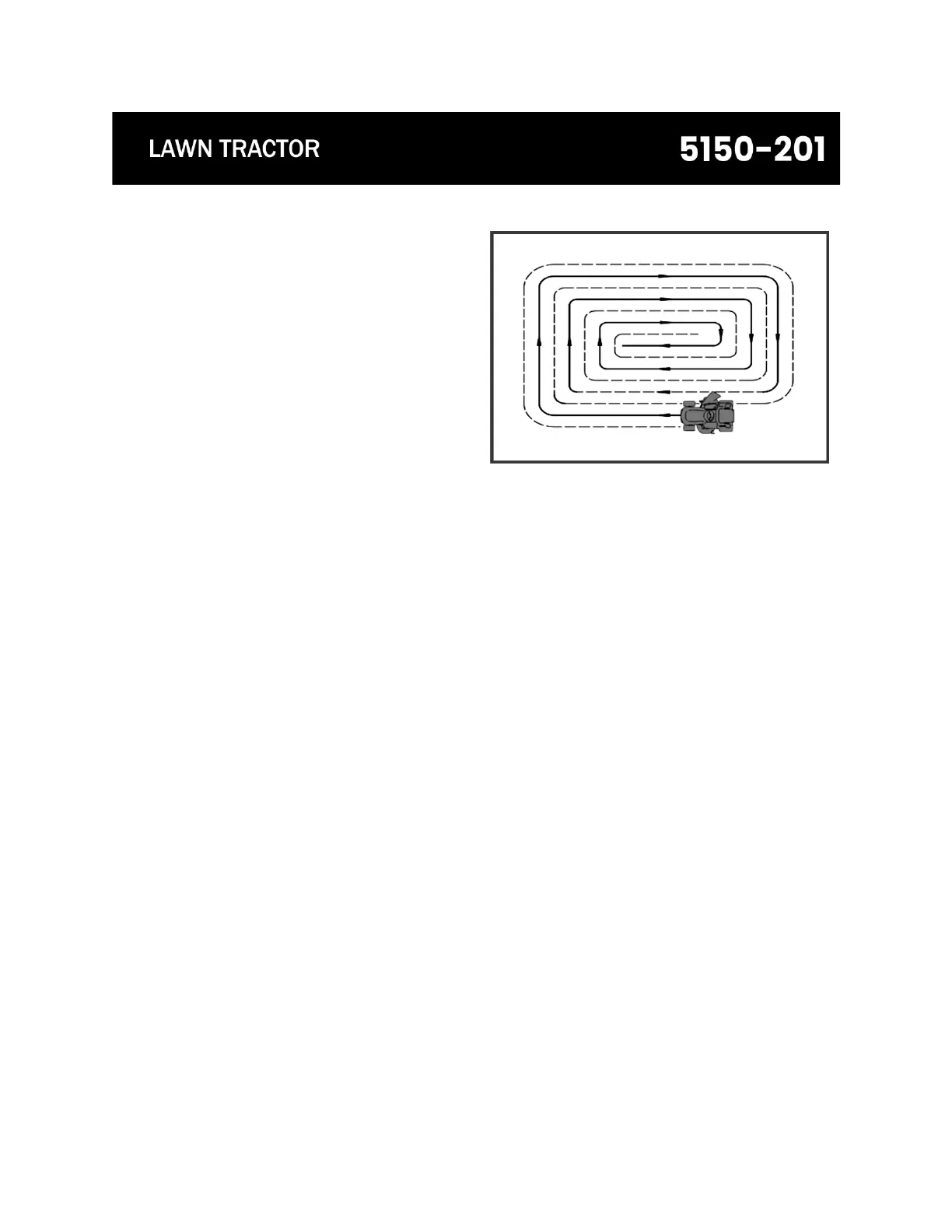
8. When you mow large areas, start by turning to the right so that the cut grass will
discharge away from shrubs, fences, driveways, etc. After one or two rounds,
mow in the opposite direction making left turns until finished.
9. The appearance of the lawn will improve if you alternate cutting in both
directions.
10. If the collector system tends to get blocked with grass; you should reduce the
forward speed as it may be too high for the condition of the grass. If the problem
persists, the probable causes are either badly sharpened blades or deformed
wings.


 To Next Page