EasyManua.ls Logo

Biamp Vocia DS-4 - User Manual

Biamp Vocia DS-4
8 pages
Print Icon
To Next Page IconTo Next Page
Loading...
System Design Template - Cruise Ship (Evac, BGM,
ANC and Paging)
This system design template shows how Vocia products can be used to easily create a vessel-wide paging and
evacuation system. Vocia is a highly reliable solution that provides excellent audio quality while managing all your
paging, background music, and emergency communication requirements. It is powerful, scalable, and flexible, and can
meet a facility’s needs well into the future. A decentralized approach, which places digital signal processing in all of the
endpoints, creates a solution with no single point of failure and provides a means to expand an existing system as needs
grow or change.
The cruise ship market has an extended demand for system availability and safety measures, especially when it comes
to large public areas where crowds assemble. In an emergency, it's critical structured, clear to follow evacuation
directions are given. Vocia is capable of meeting and exceeding that requirement.
Paging system design
Paging System Functionality Scope:
7 Paging Stations to provide live pages from the Bar,
Bridge, Casino, Pool, Restaurant, Security
and Theater.
2 Emergency Paging Stations to provide live
paging from the Bridge/Helm and Security room.
10 Regular Paging Zones and 8 Emergency Zones
6 music sources available to entertainment and
dining Zones
Automatic level adjustment depending on background
noise in the Restaurant and Casino Zones
An interface with the fire and emergency detection
system to enable the use of the paging system for
emergency evacuation
Speaker line monitoring to ensure the system is working
Scheduled announcements of daily activities
Background music source and level control in the Bar, Casino, Pool, and Restaurant
Automatically scheduled announcements of the activities happening that day
Copyright 2013-2020 Biamp Systems http://support.biamp.com/
1

Other manuals for Biamp Vocia DS-4

Question and Answer IconNeed help?

Do you have a question about the Biamp Vocia DS-4 and is the answer not in the manual?

Overview

This document outlines a system design template for a cruise ship, focusing on Vocia products for a vessel-wide paging and evacuation system, background music (BGM), and ambient noise compensation (ANC). The Vocia system is presented as a highly reliable, scalable, and flexible solution with excellent audio quality, designed to meet current and future communication requirements. Its decentralized architecture, with digital signal processing in all endpoints, eliminates single points of failure and facilitates system expansion. The design emphasizes the critical need for system availability and safety measures in large public areas, particularly for providing clear evacuation directions during emergencies.

Paging System Functionality Scope:

The system design incorporates several key functionalities:

  • Paging Stations: 7 standard paging stations are strategically placed in high-traffic areas such as the Bar, Bridge, Casino, Pool, Restaurant, Security, and Theater, allowing for live announcements.
  • Emergency Paging Stations: 2 dedicated emergency paging stations are located in critical areas: the Bridge/Helm and the Security room, enabling live emergency announcements.
  • Paging Zones: The system supports 10 regular paging zones for day-to-day operations and 8 emergency zones for evacuation scenarios.
  • Music Sources: 6 music sources are available to entertainment and dining zones, providing background music.
  • Automatic Level Adjustment: Ambient Noise Compensation (ANC-1) devices are installed in the Restaurant and Casino Zones to automatically adjust background music and paging levels based on ambient noise, ensuring intelligibility.
  • Fire Panel Interface: The system interfaces with the ship's fire and emergency detection system, allowing the paging system to be used for emergency evacuation.
  • Speaker Line Monitoring: Speaker line monitoring is implemented to ensure the system is fully operational and to detect any interruptions.
  • Scheduled Announcements: The system supports scheduled announcements for daily activities.
  • Background Music Control: Background music sources and their levels can be controlled in the Bar, Casino, Pool, and Restaurant areas.
  • Automated Daily Activity Announcements: The system can automatically schedule and play announcements for daily activities.

Equipment List:

The following Biamp Vocia equipment is used in this project:

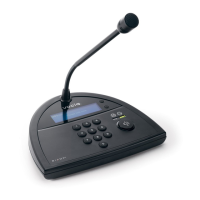
  • 5 - Vocia DS-4: 4-button desktop paging stations with cardioid microphones, PoE, and CobraNet audio/control.
  • 2 - Vocia DS-10: 10-button desktop paging stations with cardioid microphones, PoE, and CobraNet audio/control.
  • 2 - Vocia EWS-10: 10-button emergency wall-mount paging stations with cardioid microphones, PoE, and CobraNet audio/control. These stations allow for live paging even when the system is in emergency mode.
  • 2 - VA-8150CV: 8-channel x 150W constant voltage 70V/100V amplifiers with CobraNet audio/control.
  • 2 - VA-4300CV: 4-channel x 300W constant voltage 70V/100V amplifiers with CobraNet audio/control.
  • 1 - VA-8600: 8-channel x 600W (2400W Total) constant voltage 70V/100V amplifier with CobraNet audio/control. This amplifier also provides automatic output level adjustments in response to changes in ambient noise levels, with PoE and CobraNet audio/control.
  • 4 - WR-1: Wall remotes for background music source selection and volume control.
  • 1 - VI-6: 6-channel networked audio input expansion device with 4 line-level inputs, 2 mic/line inputs with phantom power, PoE, and CobraNet audio/control. This device provides the inputs for the six channels of background music.
  • 3 - ANC-1: Ambient Noise Compensators that provide automatic output level adjustments in response to changes in ambient noise levels, with PoE and CobraNet audio/control.
  • 1 - LSI-16e: Life Safety Interface (LSI-16e) for enhanced emergency interface between the Vocia paging system and the emergency/fire alarm systems. It also serves as a speaker line monitoring device for Vocia Amplifiers (VA-8150CV and VA-4300CV). The LSI-16e is crucial for switching the system from non-emergency to emergency mode upon detection of a fire or other critical event.
  • 1 - CI-1: Control Interface (CI-1) for LSI-16e, facilitating connectivity to the Fire/Evacuation System (CIE) for bi-directional control and monitoring.
  • 1 - MS-1e: Message Processor for recorded announcements and scheduling. This device hosts non-emergency recorded messages and scheduled announcements of daily activities.
  • 8 - PLD-1 and 23 - PLD-2:** Optional active and passive speaker line monitoring devices. These are recommended for all life-safety and emergency systems to ensure compliance with VACIE and evacuation standards, though they are not explicitly shown in the system diagram. They monitor speaker lines and report Audio Path Fault messages to the LSI-16e if a line is interrupted.

System Design Features:

  • Paging Station Capabilities: All paging stations can page their respective zones and the security office at a minimum. Priority levels are assigned to pages, with higher numbers indicating greater precedence.
  • Background Music (BGM): Six channels of background music are available via the VI-6. Sources are selectable and level-controllable from WR-1 wall remotes in the Restaurant, Bar, Pool, and Casino areas.
  • Ambient Noise Compensation: ANC-1 devices in the restaurant and casino automatically adjust BGM and paging levels to compensate for changes in ambient noise, ensuring optimal intelligibility.
  • Zone Assignment: During non-emergency operation, the ship is divided into ten main zones, with additional paging zones for the entire upper deck and lower deck.
  • Emergency Zone Assignment: Upon alarm detection, the Vocia system enters emergency mode, and the vessel is automatically re-zoned into 8 emergency zones. A 20-second delay is applied to lower emergency areas to facilitate congestion-free evacuation from the upper deck.
  • Emergency Messages: Seven emergency messages, composed of multiple audio file elements (alarm tone, "alarm active," "please proceed to the," directional instructions, and further directions), guide staff and passengers to the correct assembly points based on their current emergency zone.
  • Emergency Capable Amplifiers: All amplifiers in the system are emergency capable and have emergency zone assignments in addition to non-emergency zone assignments.

External Connections to the System:

Fire Panel Connection to the LSI-16e:

The LSI-16e's functionality is tailored to EN 54-16 European life safety standards, but it, along with the CI-1, is applicable for highly reliable and fault-tolerant voice evacuation systems even without EN 54-16 compliance. The CI-1 facilitates connectivity to the Fire/Evacuation System (CIE) for bi-directional control and monitoring. Extra contact closure inputs on the LSI-16e are used for scheduled fire drills and system testing in specific areas.

Setup Requirements for Fire Panel Connection:

  • Power Supply: A 24V standard compliant external power supply is connected to the CI-1.
  • Emergency Mode Trigger: The CIE connects to input channels 1-8 on the LSI-16e's IM-16 general purpose inputs to place the Vocia system in emergency mode.
  • Alarm Reset: An alarm reset link from the CIE connects to the Rs terminal on the CI-1 to reset the emergency mode in the Vocia system.
  • System Fault Alert: A system fault link between the LSI-16e and the Evacuation Panel allows the fire panel to alert when the Vocia Evacuation System has a system fault.
  • Voice Alarm Active Signal: A voice alarm active link from the VA terminal on the CI-1 to the CIE signals that Vocia has an active alarm.
  • General Fault Signal: A general fault link from the GF terminal on the CI-1 to the CIE signals when there's a fault in the Vocia system.
  • Optional Alarm Silence: An alarm silence link from the CIE to the SI terminal on the CI-1 can silence the alarm in the Vocia system.
  • LSI-16e and CI-1 Links: Links between the LSI-16e Life Safety Interface and CI-1 Control Interface are established with supplied jumpers.

Required Physical Connections (General Purpose Inputs):

  • Input Configuration: Inputs are configured as "High-Range monitored."
  • Fault Indication: Loss of individual connections will be indicated as a General Fault (GF).
  • Alarm Triggers: Physical inputs 1-8 are configured as alarm triggers for individual Upper and Lower Zones.
  • Emergency Zone Testing: Physical IM-16 Inputs 10-13 and LSI-16e inputs 1-4 are used to test individual emergency zones.
  • Alarm Silence/System Reset: Physical input 15 silences any alarms while keeping the system in emergency mode. Physical input 16 returns the system to regular/non-emergency mode.

Speaker Lines:

  • Constant Voltage: Speaker circuits are installed as constant voltage speaker lines (70V or 100V selectable via software; 70V in this example).
  • Transformer Taps: Speaker transformer taps are individually selected to ensure emergency messages are at least 10dB SPL above the A-weighted noise floor in each area.
  • Line Monitoring: PLD-1 or PLD-2 devices are attached to every last speaker of each individual speaker line if line monitoring is required. The amplifier monitors the speaker line end-to-end and reports an Audio Path Fault to the LSI-16e if interrupted.
  • Active Line Monitoring (Optional): If installation conditions require speaker line branches or active speaker line monitoring for compliance, End-of-Line Devices (ELD-1) can be used instead of PLD-1/PLD-2s. Up to 15 ELD-1s per speaker line can accommodate branch connections, requiring a PoE-enabled connection to the Vocia Network.

Networking Details:

Vocia supports two network communication modes:

  1. Direct CobraNet Connection: For direct connection to a CobraNet network.
  2. IP-based Connection: For accessing the system via an IP-based connection to the MS-1e Message Processor. The factory default IP address for the MS-1e is 192.168.1.101.

Setup Requirements for Networking:

  • PoE Power: The following devices require 802.3af (Class 3) power from a PoE-capable switch or injector: 5 Vocia DS-4, 2 Vocia DS-10, 2 Vocia EWS-10, 4 WR-1, 1 VI-6, 3 ANC-1, and 1 LSI-16e (2 Ports).

System Setup:

All Vocia devices are set to unity gain by default, allowing the system to start working with minimal adjustments once the configuration file is loaded.

Setup Steps:

  • Output Voltage: Select the appropriate output voltage on the amplifiers (70V or 100V).
  • Amplifier Output Level: Adjust the amplifier output level for each zone as needed.
  • ELD Assignment: Assign PLDs in the "ELD Assignment" tab within the amplifier's properties if they are being used.
  • Ambient Sense Microphones: Adjust the input levels and values for ambient sense microphones.
  • Microphone Input Levels: Check and confirm adequate microphone input levels for DS-10, DS-4, and EWS-4 units from the "Audio & Live Control" tab.
  • Alarm/Fault Verification: Verify that there are no active alarms or faults in the LSI-16e, checking wiring and terminations if present.
  • Emergency Message Upload: Upload and assign customized emergency messages tailored to the ship's evacuation requirements.
  • Scheduled Announcements: Adjust scheduled announcements for daily activities.
  • System Testing: Test the Emergency Evacuation Systems with each trigger for proper functionality and validation.

Biamp Vocia DS-4 Specifications

General IconGeneral
BrandBiamp
ModelVocia DS-4
CategoryMicrophone
LanguageEnglish

Related product manuals