EasyManua.ls Logo

Blackberry BBB100-1 - User Manual

Blackberry BBB100-1
8 pages
Print Icon
To Next Page IconTo Next Page
Loading...
1
Safety and product
information
Safety information
Before you start using your BlackBerry smartphone (hereinafter referred to as smartphone),
review the safety and regulatory information provided in this document. Keep this document
in a safe place so that you can refer to it whenever you need it.
In some countries there may be restrictions on using Bluetooth enabled devices and wireless
devices with encryption software. Check with your local authorities for the restrictions in your
area.
Important safety precautions
Use only approved batteries and chargers with your smartphone. Use of
batteries or chargers that have not been approved by the manufacturer
might present a risk of fire or explosion, which could cause serious harm,
death, or property loss.
Use only the manufacturer approved holsters. Use of holsters that have not
been approved by the manufacturer may cause your smartphone to exceed
radio frequency exposure standards.
Keep the smartphone at least 0.20 in. (5 mm) away from your body. When you
carry the smartphone on your body, use only accessories equipped with an
integrated belt clip, and if the accessory is not supplied by the manufacturer,
verify that the accessory does not contain metal. If you do not follow
these guidelines, your smartphone may exceed radio frequency exposure
standards. Whether there are any long term health eects of exceeding radio
frequency exposure standards is a subject of ongoing scientific study.
Your smartphone is designed to be operated in temperatures between 32 and
113°F (0 and 45°C). Use of your smartphone outside of the recommended
temperature range could cause damage to your smartphone or lithium-ion
battery.
Do not rely on your smartphone for emergency communications. The wireless
networks that are necessary to make emergency calls or send messages are
not available in all areas, and emergency numbers, such as 911, 112, 119, or
999, might not connect you to emergency services in all areas.
Your smartphone and smartphone accessories are not intended for children.
If you allow a child to use or handle your smartphone or smartphone
accessories, ensure you strictly supervise the child. Your smartphone
contains small parts that are choking hazards to children.
Keep your smartphone away from medical devices, including pacemakers
and hearing aids, because they might malfunction and cause serious harm
or death to you or others.
Do not put your smartphone in contact with liquids because this might cause
a short circuit, a fire, or an electric shock.
When you use your smartphone speakerphone, never hold the smartphone to
your ear. Serious and permanent hearing damage could occur.
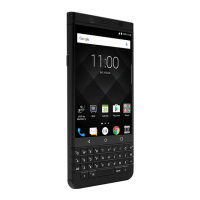
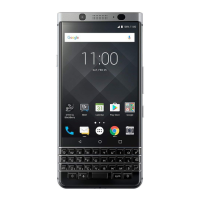
BlackBerry® KEYone
BBB100-1
CQF61Y009AAA
EN
Question and Answer IconNeed help?

Do you have a question about the Blackberry BBB100-1 and is the answer not in the manual?

Summary

Safety Information

Important Safety Precautions

Essential safety guidelines for using the smartphone, including battery, charging, and body proximity.

Using Your Smartphone Safely

General Safe Usage Practices

Guidelines on handling the device, avoiding water, unstable surfaces, and taking breaks.

Electrical Safety

Charging and Electrical Precautions

Instructions for safe charging, avoiding damaged cords, and preventing electric shock.

Battery Safety

Lithium-Ion Battery Precautions

Warnings about battery mistreatment, heat, liquids, and disposal.

Driving and Walking Safely

Road and Pedestrian Safety

Advice on avoiding distraction while driving or walking and securing the device in vehicles.

Accessories

Approved Accessories and Carrying Solutions

Use only approved accessories; use belt clips for carrying and maintain distance for RF exposure.

Magnetometer and Magnetic Media

Using the magnetometer and avoiding magnetic strips near carrying solutions.

Media Playback and Camera Use

Guidelines for audio playback volume, camera use, and flash safety.

Antenna and Interference with Equipment

Use integrated antenna; understand interference with medical devices like pacemakers.

Dangerous Areas

Hazardous Environment Precautions

Warnings and restrictions for using the smartphone in potentially explosive or hazardous atmospheres.

Operating and Storage Temperatures

Temperature Guidelines

Recommended operating and storage temperature ranges for the smartphone and charger.

Smartphone Cleaning and Repair

Cleaning and Repair Procedures

Instructions for cleaning the device and when to seek professional repair services.

Smartphone and Battery Disposal

Proper Disposal Guidelines

Information on how to safely dispose of the smartphone and its battery according to regulations.

Compliance Information

Exposure to Radio Frequency Signals

Details on radio frequency exposure compliance and guidelines for minimizing exposure.

Specific Absorption Rate Data

Information on SAR values and government requirements for radio wave exposure.

EU Regulatory Conformance

Declaration of conformity with EU Radio Equipment Directive and Wi-Fi usage in EU countries.

Additional Regulatory Conformance

Instructions on how to view model and compliance information on the device.

Product Information

Mechanical Properties

Specifications for the smartphone's weight, dimensions, and memory.

Power Specifications

Battery and Connectivity Specs

Details on the battery, SIM card support, and USB Type-C port.

Mobile Network Radio Specifications

Network Band and Frequency Support

Information on supported FD-LTE, TD-LTE, HSPA+, and GSM bands and frequencies.

Wi-Fi Network Radio Specifications

Wi-Fi Standards and Frequencies

Details on supported Wi-Fi standards (802.11a/b/g/n/ac) and their frequencies.

Bluetooth Radio Specifications

Bluetooth Standards and Frequencies

Information on Bluetooth support, ISM band, and transmitting frequencies.

NFC Technology

NFC Operating Frequency and Modes

Details on NFC operating frequency and supported modes like reader/writer and card emulation.

Legal Notice

Trademarks and Disclaimers

Information on trademarks, licensing, and disclaimers from the manufacturer and affiliates.

Summary

Safety Information

Important Safety Precautions

Essential safety guidelines for using the smartphone, including battery, charging, and body proximity.

Using Your Smartphone Safely

General Safe Usage Practices

Guidelines on handling the device, avoiding water, unstable surfaces, and taking breaks.

Electrical Safety

Charging and Electrical Precautions

Instructions for safe charging, avoiding damaged cords, and preventing electric shock.

Battery Safety

Lithium-Ion Battery Precautions

Warnings about battery mistreatment, heat, liquids, and disposal.

Driving and Walking Safely

Road and Pedestrian Safety

Advice on avoiding distraction while driving or walking and securing the device in vehicles.

Accessories

Approved Accessories and Carrying Solutions

Use only approved accessories; use belt clips for carrying and maintain distance for RF exposure.

Magnetometer and Magnetic Media

Using the magnetometer and avoiding magnetic strips near carrying solutions.

Media Playback and Camera Use

Guidelines for audio playback volume, camera use, and flash safety.

Antenna and Interference with Equipment

Use integrated antenna; understand interference with medical devices like pacemakers.

Dangerous Areas

Hazardous Environment Precautions

Warnings and restrictions for using the smartphone in potentially explosive or hazardous atmospheres.

Operating and Storage Temperatures

Temperature Guidelines

Recommended operating and storage temperature ranges for the smartphone and charger.

Smartphone Cleaning and Repair

Cleaning and Repair Procedures

Instructions for cleaning the device and when to seek professional repair services.

Smartphone and Battery Disposal

Proper Disposal Guidelines

Information on how to safely dispose of the smartphone and its battery according to regulations.

Compliance Information

Exposure to Radio Frequency Signals

Details on radio frequency exposure compliance and guidelines for minimizing exposure.

Specific Absorption Rate Data

Information on SAR values and government requirements for radio wave exposure.

EU Regulatory Conformance

Declaration of conformity with EU Radio Equipment Directive and Wi-Fi usage in EU countries.

Additional Regulatory Conformance

Instructions on how to view model and compliance information on the device.

Product Information

Mechanical Properties

Specifications for the smartphone's weight, dimensions, and memory.

Power Specifications

Battery and Connectivity Specs

Details on the battery, SIM card support, and USB Type-C port.

Mobile Network Radio Specifications

Network Band and Frequency Support

Information on supported FD-LTE, TD-LTE, HSPA+, and GSM bands and frequencies.

Wi-Fi Network Radio Specifications

Wi-Fi Standards and Frequencies

Details on supported Wi-Fi standards (802.11a/b/g/n/ac) and their frequencies.

Bluetooth Radio Specifications

Bluetooth Standards and Frequencies

Information on Bluetooth support, ISM band, and transmitting frequencies.

NFC Technology

NFC Operating Frequency and Modes

Details on NFC operating frequency and supported modes like reader/writer and card emulation.

Legal Notice

Trademarks and Disclaimers

Information on trademarks, licensing, and disclaimers from the manufacturer and affiliates.

Overview

This document provides safety and product information for the BlackBerry® KEYone smartphone (model BBB100-1, CQF61Y009AAA). It covers important safety precautions, usage guidelines, electrical safety, battery safety, driving and walking safety, accessories, magnetometer, media, antenna, interference with electronic equipment, dangerous areas, operating and storage temperatures, cleaning and repair, smartphone and battery disposal, compliance information, specific absorption rate data, EU regulatory conformance, and product information.

Function Description

The BlackBerry KEYone is a smartphone designed for communication, data access, and various applications. It supports mobile network connectivity (FD-LTE, TD-LTE, HSPA+, GSM/GPRS/EDGE), Wi-Fi (IEEE 802.11a/b/g/n/ac), Bluetooth (ISM 2.4 GHz), and NFC technology. It features a camera, speakerphone, and a display for user interaction. The device is powered by a nonremovable lithium-ion battery and charges via a USB Type-C port.

Important Technical Specifications

  • Model: BlackBerry® KEYone (BBB100-1)
  • Dimensions (L x W x H): 5.88 x 2.85 x 0.37 in. (149.3 x 72.5 x 9.42 mm)
  • Weight: Approximately 6.35 oz (180 g) including lithium-ion battery
  • Memory: 4-GB
  • Application Storage: 64-GB
  • Storage Expansion: microSD card slot
  • Battery: Nonremovable, rechargeable lithium-ion battery
  • SIM Card Support: 3V, 1.8V nano SIM cards
  • Charging Port: USB Type-C
  • Mobile Network Bands:
    • FD-LTE: 1, 2, 3, 4, 5, 7, 8, 12, 13, 17, 19, 20, 28, 29, 30 (2100/1900/1800/1700/850/2600/900/700/800/2300 MHz) – 23dBm
    • TD-LTE: 38, 39, 40, 41 (2600/1900/2300/2500 MHz) – 23dBm
    • HSPA+: 1, 2, 4, 5/6, 8 (2100/1900/1700/850/800/900 MHz) – 23dBm
    • GSM/GPRS/EDGE: 2, 3 (1900/1800 MHz) – 30dBm; 5, 8 (850/900 MHz) – 33dBm
  • Wi-Fi Standards: IEEE 802.11a, IEEE 802.11b, IEEE 802.11g, IEEE 802.11n, IEEE 802.11ac
  • Wi-Fi Frequencies:
    • 2.412 to 2.462 GHz (< 21dBm)
    • 5.180 to 5.825 GHz (< 19dBm)
  • Bluetooth: ISM 2.4 GHz, 2402 to 2480 MHz (< 9dBm), Bluetooth Class 1
  • NFC Operating Frequency: 13.56 MHz
  • SAR (W/kg) for 10g (RED):
    • At ear (GSM 900 + Wi-Fi): 0.77
    • At 0.20 inch (5 mm) from body (UMTS 2100 + Wi-Fi): 1.61
  • Operating Temperature: 32 to 113°F (0 to 45°C)
  • Storage Temperature:
    • Less than 3 months: -4 to 113°F (-20 to 45°C)
    • 3 months or more: 77°F (25°C +/- 3°C)
  • Charger Operating Temperature: 32 to 104°F (0 to 40°C)

Usage Features

  • Approved Accessories: Only use manufacturer-approved batteries, chargers, and holsters to avoid risks of fire, explosion, or exceeding radio frequency exposure standards.
  • Body-Worn Operation: Maintain at least 0.20 in. (5 mm) distance from the body when transmitting. Use integrated belt clip holsters or non-metallic body-worn accessories.
  • Temperature Range: Operate the smartphone within 32 to 113°F (0 to 45°C) to prevent damage to the device or battery.
  • Emergency Communications: Do not rely solely on the smartphone for emergency calls as wireless networks may not be available everywhere.
  • Child Safety: The smartphone and its accessories are not intended for children due to small parts that pose choking hazards. Strict supervision is required if children use the device.
  • Medical Devices: Keep the smartphone away from pacemakers and hearing aids (at least 7.88 inches or 20 cm from pacemakers) to prevent interference. Consult a physician or device manufacturer if concerns arise.
  • Speakerphone Use: Avoid holding the smartphone to your ear when using speakerphone to prevent hearing damage.
  • Flashing Lights: Be aware that flashing lights on the smartphone (LED notification, camera flash) can cause epileptic seizures or blackouts in susceptible individuals. Consult a physician if you are susceptible.
  • Driving Safety: Do not use the smartphone while driving unless legally permitted in hands-free mode.
  • Hazardous Environments: Turn off the smartphone in areas with gas fumes, explosive dust, or other explosive chemicals. Do not use in intrinsically unsafe environments.
  • Aircraft Use: Turn off all wireless connections on aircraft to avoid interference with aircraft systems and comply with regulations.
  • Magnetometer: The built-in magnetometer is used by applications like Compass. Be aware that magnets in holsters or other devices can affect its accuracy. Do not rely on it for emergency location.
  • Audio Files: Listen to audio at moderate volumes, especially with headphones, to prevent permanent hearing loss.
  • Camera Use: Do not aim the camera directly at the sun or bright lights. Keep the camera flash at least 19.69 in. (50 cm) from the subject's eyes.
  • Antenna: Use only the supplied integrated antenna.
  • Radio Frequency Exposure Reduction: Use the smartphone in areas with strong wireless signals, use hands-free options, and reduce call duration (prefer email/text messages) to minimize RF exposure.
  • Displaying Regulatory Information: Swipe down from the top of the screen (once with two fingers or twice with one finger), then tap Settings > About phone > Regulatory approvals.

Maintenance Features

  • Liquid Contact: Avoid contact with liquids to prevent short circuits, fire, or electric shock.
  • Physical Damage: Do not place heavy objects on the smartphone, use sharp objects on the screen, or apply excessive force. If the glass screen cracks, do not touch it until repaired.
  • Repair and Modification: Do not attempt to modify, disassemble, or service the smartphone or its accessories. Do not attempt to replace the nonremovable battery. Only qualified service personnel should perform repairs or battery replacements using manufacturer-specified parts.
  • Cleaning: Disconnect all cables and unplug charging accessories before cleaning. Use only a soft, dry cloth. Do not use liquid, aerosol cleaners, or solvents.
  • Battery Disposal: Do not dispose of the smartphone or battery in household waste or fire. Dispose of them according to local laws and regulations for recycling.
  • Troubleshooting Battery Issues: If a battery icon appears on the smartphone indicating a problem, try restarting. If the icon persists, return the smartphone to qualified service personnel for repair.

Blackberry BBB100-1 Specifications

General IconGeneral
BrandBlackberry
ModelBBB100-1
CategoryCell Phone
LanguageEnglish

Related product manuals