EasyManua.ls Logo

Blackfin 252 Dual Console - User Manual

Default Icon
154 pages
Print Icon
To Next Page IconTo Next Page
Loading...
BLACKFIN OWNER’S MANUAL
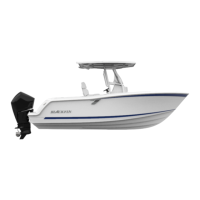
Blackfin 252 Dual Console

Table of Contents

Questions and Answers

Summary

Chapter 1: SAFETY EQUIPMENT

1.1 General Safety Overview

General overview of safety equipment for boat operation.

1.2 Engine Alarm Systems

How engine alarm systems enhance safety and alert to problems.

1.3 Neutral Safety Switch Function

Function of the neutral safety switch to prevent starting in gear.

1.4 Engine Stop Switch Operation

Operation of the engine stop switch and lanyard for emergency shutdown.

1.5 Required Safety Equipment

Lists U.S. Coast Guard required safety equipment for passenger safety.

1.6 Bilge and Fuel Fire Safety

Dangers and decision-making for bilge and fuel compartment fires.

1.7 First Aid Procedures

Operator's responsibility for first-aid and recommendations for preparation.

1.8 Additional Safety Equipment

Prudent boaters carry extra safety equipment, considering offshore use.

1.9 Caution and Warning Labels

Examples of caution and warning labels and their importance for safety.

Safety Information

California Safety Requirements

Details Proposition 65 warning regarding chemicals and potential health risks.

California Emission Requirements

Explains engine emissions standards and associated labeling requirements.

Boat Information

Owners Boat Information Section

Section to record boat, engine, and trailer details for service assistance.

Introduction and Important Information

Warranty and Registration Cards

Importance of registering the boat and engines to validate warranty and comply with laws.

Owners Responsibility

Emphasizes owner's responsibility for boat safety and common sense.

Owner; Operator Information

Registration and Numbering

Federal and state requirements for registering and displaying boat numbers.

Boat Insurance

Owner's responsibility for damages and the importance of adequate insurance coverage.

Reporting Boating Accidents

Procedures for reporting boating accidents to authorities and required timelines.

Boating Education

Recommendation for boaters to enroll in safety courses for enhanced skills.

Required Equipment

U.S. Coast Guard regulations on essential safety equipment and standards.

New Boat Delivery

Delivery Inspection and Warranty Registration

Process of signing inspection reports and warranty registrations during delivery.

Chapter 2: OPERATION

2.1 General Operation Guidelines

Importance of familiarizing with systems, pre-cruise checks, and operator responsibilities.

2.2 Rules of the Road

Basic navigation rules for safe boating operations and right-of-way.

2.3 Pre-Cruise Check

Essential checks before starting engines and departing for a safe cruise.

2.4 Operating Your Boat

Procedures for starting, operating, and stopping the boat safely.

2.5 Docking, Anchoring & Mooring

Techniques for maneuvering, docking, anchoring, and mooring the boat safely.

2.6 Control System Failures

Actions to take in case of failure in critical boat control systems.

2.7 Collision Procedures

Procedures to follow after a collision, including passenger safety and damage inspection.

2.8 Grounding, Towing & Assistance

Legal requirements and precautions for assisting distressed vessels or rendering assistance.

2.9 Flooding or Capsizing Response

Procedures to follow if the boat becomes flooded or capsizes.

2.10 Fishing Operations

Considerations for safe operation while fishing, especially in crowded areas.

2.11 Man Overboard Recovery

Procedures for recovering a person who has fallen overboard.

2.12 Water Skiing & Wakeboarding

Safety precautions and guidelines for towing skiers and wakeboarders.

2.13 Trash Disposal Regulations

Regulations and responsible practices for waste disposal in marine environments.

2.14 Maximum Capacities Plate

Understanding and adhering to the boat's maximum capacities plate.

2.15 Trailering Your Boat

Guidelines for safely trailering the boat, including vehicle and trailer considerations.

Chapter 3: PROPULSION SYSTEM

3.1 Engine General Information

Overview of 4-cycle outboard motors, their systems, and maintenance requirements.

3.2 Drive System Corrosion

Understanding galvanic corrosion and protecting submerged engine components.

3.3 Engine Lubrication

Importance of maintaining proper engine oil levels and using the specified type.

3.4 Engine Cooling System

How the raw water cooling system works and how to check for proper operation.

3.5 Propeller Information

Understanding propeller specifications and the importance of their condition.

3.6 Performance Issues & Propellers

Diagnosing performance issues and selecting the correct propeller for optimal RPM.

3.7 Engine Instrumentation

Overview of helm station instruments for monitoring engine operational conditions.

Chapter 4: HELM CONTROL SYSTEMS

4.1 Helm Control Overview

Introduction to helm control systems including throttle, steering, and trim tabs.

4.2 Engine Throttle & Shift Controls

Description of cable and electronic control systems for engine throttle and shifting.

4.3 Neutral Safety Switch

Testing and ensuring the proper function of the neutral safety switch.

4.4 Engine Power Tilt & Trim

Understanding and operating the tilt and trim features of outboard engines.

4.5 Engine Stop Switch

Importance and proper use of the engine stop switch and lanyard.

4.6 Steering System

Details on hydraulic and electronic steering systems, their components, and maintenance.

4.7 Joystick Controls

Operation and safety precautions for joystick control systems, especially with "Skyhook".

4.8 Trim Tabs

Function, operation, and maintenance of trim tabs for hull attitude control.

4.9 Control Systems Maintenance

Routine inspections and maintenance for hydraulic and electronic control systems.

Chapter 5: FUEL SYSTEM

5.1 Gasoline Fuel Systems

Overview of EPA-compliant fuel systems, safety, and maintenance.

5.2 Engine Fuel Delivery System

Components of the fuel delivery system, including fuel filters and anti-siphon valves.

5.3 Fueling Instructions

Procedures for safe fueling, static electricity prevention, and proper tank filling.

5.4 Fuel System Maintenance

Regular inspection and maintenance of fuel system connections, filters, and fuel quality.

Chapter 6: ELECTRICAL SYSTEM

6.1 Electrical System Overview

Explanation of the boat's 12-volt DC electrical system and battery types.

6.2 Single Engine Battery System

Configuration of the single engine battery system, including circuit protection.

6.3 Twin Engine Battery System

Description of the twin engine battery system, battery switches, and circuit protection.

6.4 Parallel Switch & Dead Batteries

Procedures for using the parallel switch for starting and managing dead batteries.

6.5 Ignition Switch Panels

Overview of ignition switch panels and the starting procedure for engines.

6.6 12 Volt Accessory Switch Panels

Description of accessories controlled by the helm accessory switches.

6.7 DC Circuit Protection

Understanding DC circuit protection, breakers, fuses, and proper replacement.

6.8 Engine Control Systems Circuit Protection

Circuit protection for engine control systems and steering, referring to owner's manuals.

6.9 Electrical System Maintenance

Routine maintenance for the DC electrical system, including battery care and wiring inspection.

Chapter 7: FRESH WATER SYSTEM

7.1 Fresh Water System Overview

Components of the fresh water system, including tank, pump, and distribution lines.

7.2 Fresh Water System Operation

Procedures for filling, priming, and operating the fresh water system.

7.3 Fresh Water System Maintenance

Routine maintenance for the fresh water system, including strainer cleaning and sanitization.

Chapter 8: RAW WATER SYSTEM

8.1 Raw Water System Overview

Overview of raw water systems, livewell pump, and auxiliary supply fittings.

8.2 Raw Water System Operation

Operation of the high-pressure raw water pump and washdown hose connector.

8.3 Baitwell Operation

Providing seawater to the baitwell, controlling flow, and draining the baitwell.

8.4 Raw Water System Maintenance

Routine maintenance for the raw water system, including hose checks and strainer cleaning.

Chapter 9: DRAINAGE SYSTEM

9.1 Drainage System Overview

How water drains overboard via thru-hull fittings and the importance of checking drain systems.

9.2 Cockpit & Deck Drainage

Drainage of the cockpit sole, aft fishboxes, wet bar sink, and livewell.

9.3 Bilge Drainage

Location and operation of aft and forward bilge pumps, including automatic switches.

9.4 Hardtop Drains

Drain holes in hardtop legs to prevent water trapping and freezing.

9.5 Head Compartment Drains

Drainage of the head compartment sole.

9.6 Grey Water System

Operation and monitoring of the grey water sump system and holding tank.

9.7 Drainage System Maintenance

Essential periodic maintenance for proper drainage of the boat.

Chapter 10: VENTILATION SYSTEM

10.1 Head Compartment Ventilation

How ventilation is provided to the head compartment via door and window.

10.2 Windshield & Cockpit Ventilation

Ventilation for the cockpit and bow seating via windshield panel and walk-through door.

10.3 Ventilation System Maintenance

Periodic maintenance for ventilation system components like hinges and gaskets.

Chapter 11: EXTERIOR EQUIPMENT

11.1 Deck Rails & Deck Hardware

Installation and inspection of deck rails, hardware, and retractable cleats.

11.2 Anchor Rope Locker

Location, operation, and maintenance of the anchor rope locker and its hatch.

11.3 Windlass & Bow Roller

Operation and securing of the windlass and bow roller assembly for anchor handling.

11.4 Hull Features

Engine mounting system, swim platform, and boarding ladder features.

11.5 Cockpit Features

Operation and securing of cockpit hatches, doors, and the transom door.

11.6 Bow Seating Area

Access to the bow seating area, walk-through door, and windshield panel operation.

11.7 Hardtop

Construction, features, and warranty considerations for the hardtop.

11.8 Weather Enclosure

Installation and use of bow cover, windshield connector, side curtains, and aft enclosure.

11.9 Bow & Aft Sunshade

Installation and use of optional bow and aft sunshades.

11.10 Bimini Top & Optional Canvas

Installation and use of Bimini tops and optional canvas enclosures.

11.11 Aftermarket Hardtop or Tower

Blackfin's recommendation regarding aftermarket hardtops or towers.

Chapter 12: INTERIOR EQUIPMENT

11.1 Head Compartment

Features of the head compartment, including water hose, shower, and vanity.

11.2 Portable Marine Head

Standard portable marine head system, its components, and usage.

11.3 Electric Marine Head System

Operation of the optional electric marine toilet and its waste management system.

11.4 Head System Holding Tank

Location, monitoring, and maintenance of the head system holding tank.

Chapter 13: ROUTINE MAINTENANCE

12.1 Exterior Hull & Deck Maintenance

Cleaning the hull below the waterline, antifouling paint, and osmosis blistering.

Sacrificial Anodes Maintenance

Inspection and maintenance of sacrificial anodes to prevent galvanic corrosion.

Fiberglass Gelcoat Surfaces Care

Guidelines for cleaning, waxing, and maintaining fiberglass gelcoat surfaces.

Stainless Steel Hardware Care

Care and maintenance of stainless steel hardware to prevent corrosion.

Anodized Aluminum Surfaces Care

Cleaning and maintenance of anodized aluminum components.

Powder Coated Aluminum Care

Cleaning and maintenance of powder coated aluminum components.

12.2 Upholstery, Canvas & Enclosures Care

Cleaning and care for upholstery, canvas, and enclosures.

12.3 Cabin Interior Cleaning

Cleaning and maintenance of the cabin interior, including solid surfaces.

12.4 Bilge, Pumps & Components Maintenance

Keeping the bilge clean and maintaining bilge pumps and components.

12.5 Engine & Fuel Maintenance

Essential maintenance for outboard engines and fuel systems.

12.6 Drainage System Maintenance

Periodic maintenance of the boat's drainage system.

Chapter 14: SEASONAL MAINTENANCE

14.1 Storage & Lay-up Procedures

Procedures for preparing the boat for storage, including hauling and supporting it.

14.2 Winterizing Systems

Steps for winterizing various boat systems like fresh water, raw water, and heads.

14.3 Recommissioning

Steps for recommissioning the boat after storage and before launching.

Appendix A: SCHEMATICS

Helm Switch Panel Schematic

Diagram of the helm switch panel layout and component identification.

Appendix B: MAINTENANCE LOG

Maintenance Log Record

A template for recording boat maintenance history and service details.

Appendix C: BOATING ACCIDENT REPORT

Boating Accident Report Form

Official form for reporting boating accidents to the U.S. Coast Guard.

Appendix D: FLOAT PLAN

Float Plan Instructions

Recommended procedure for filing a float plan for safety during trips.

Appendix E: GLOSSARY OF TERMS

Glossary of Boating Terms

Definitions of common boating terms used throughout the manual.

Appendix F: TROUBLESHOOTING GUIDE

Control Systems Troubleshooting

Solutions for problems related to hydraulic steering and engine control systems.

Performance Problems Troubleshooting

Troubleshooting steps for issues like sluggishness, loss of speed, and vibrations.

Engine Problems Troubleshooting

Diagnosing and resolving common engine issues like overheating and charging problems.

Accessory Problems Troubleshooting

Solutions for common problems with pumps, heads, and holding tanks.

Appendix G: SPECIFICATIONS

252 Blackfin DC Specifications

Technical specifications for the Blackfin 252 DC model.

Appendix H: OCCUPANT SEATING

Occupant Seating Diagram

Diagram illustrating occupant seating arrangements and capacities on the boat.

Blackfin 252 Dual Console Specifications

General IconGeneral
Max Horsepower300 hp (224 kW)
Passenger Capacity10 persons
Beam8 ft 6 in (2.59 m)
Water Capacity20 gal (76 L)
Deadrise20 degrees

Related product manuals