Page 17
SET UP & USE
Scrape o any large amounts of leftover food. Soften remnants of burnt food in pans.
It is not necessary to rinse the dishes under running water.
Load the dishwasher in following way:
• Place items such as cups, glasses, pots/pans, etc. face down.
• Curved items, or those with recesses, should be loaded at a slant so that water can
drain o.
• All utensils should be stacked securely and can not tip over.
• All utensils should be placed so that the spray arms can rotated freely during
washing.
• Load hollow items such as cups, glasses, pans etc. with the opening downwards so
that water cannot collect inside.
• Dishes and items of cutlery must not lie inside one another, or cover each other.
• To avoid damage to glasses, they must not touch.
• Load large items which are most dicult to clean into the bottom rack.
CAUTION: Long and/or sharp items of cutlery such as carving knives must be
positioned horizontally in the basket. Knives with long blades loaded
in an upright position are a potential hazard.
LOADING THE DISHWASHER
When loading dishes, pull out the upper rack suciently so you can load it without
striking the counter with dishes.
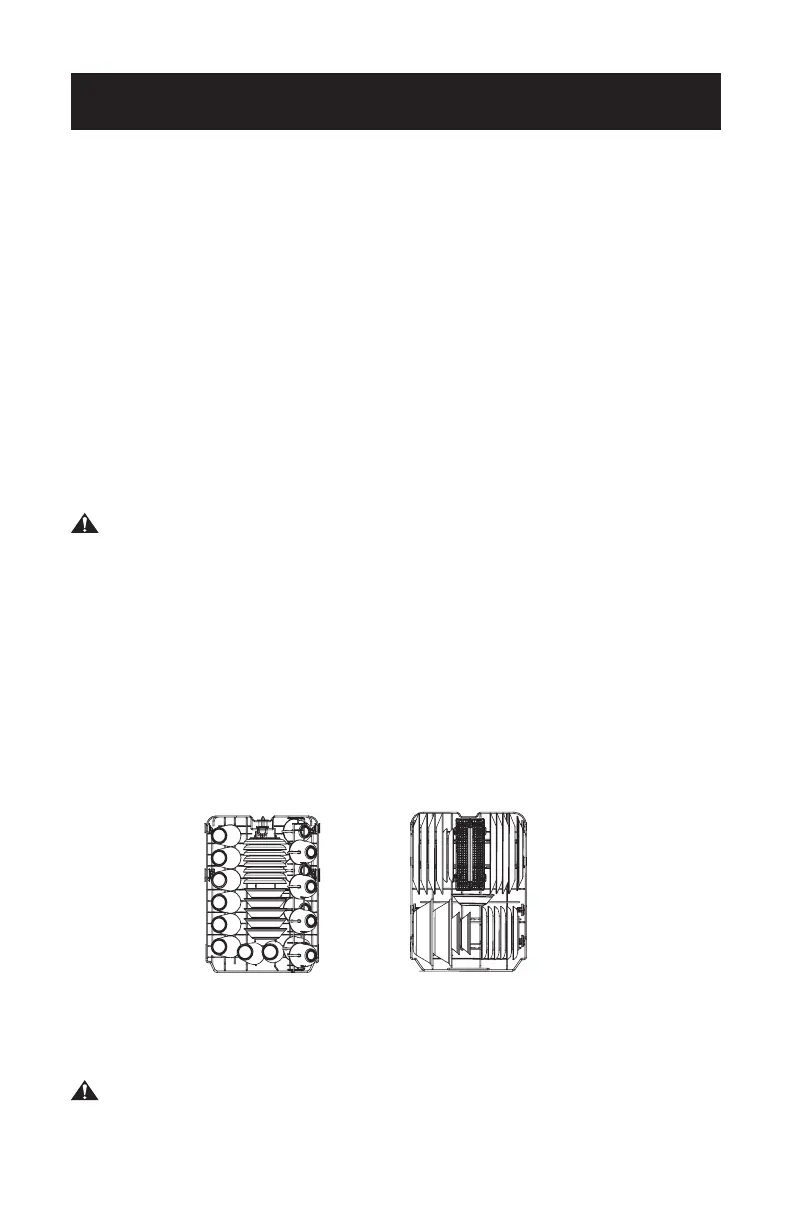
The upper rack is designed for small plates, mugs and glasses marked
“Recommended Loading”. If you have several small plates in is recommended that
you load them into the dishwasher in two half rows The front of each plate should
face the back of the plate in front of it, and the open sides of the plates at the center
of the dishwasher face each other.
Dinner plates, soup bowls, plates, pots, lids, casserole dishes, and plate should
be loaded in the bottom rack. Load large items such as pots and pans into the
dishwasher so their open sides face downwards
Silverware Basket
CAUTION: Long and/or sharp items of cutlery such as carving knives must be
positioned horizontally in the basket. Knives with long blades loaded
in an upright position are a potential hazard.
Top Rack
Recommended Loading
Bottom Rack



 To Next Page