ENGLISH
8
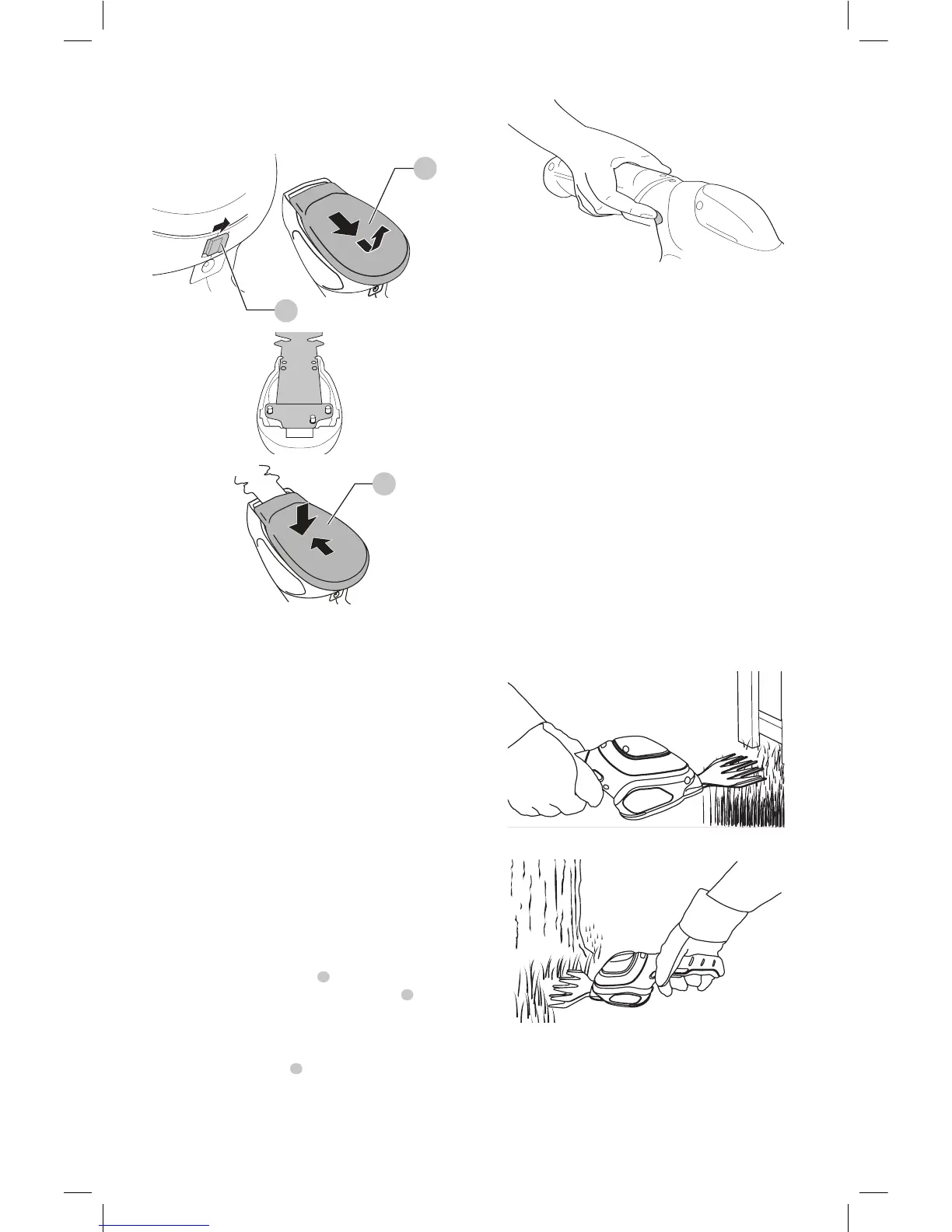
NOTE: No alignment of blade with drive pin is required and
operation of the blade cover release button is not required
when re-fitting the blade cover.
2
1
Fig. C
6
3
Fig. D
1
2
Fig. E
6
OPERATION
WARNING: To reduce the risk of serious
personal injury, turn unit off before making any
adjustments or removing/installing attachments
or accessories. An accidental start-up can
causeinjury.
Proper Hand Position
WARNING: To reduce the risk of serious personal injury,
ALWAYS use proper hand position as shown.
WARNING: To reduce the risk of serious personal
injury, ALWAYS hold securely in anticipation of a
suddenreaction.
Proper hand position requires one hand on the
mainhandle.
CAUTION: Blades coast after turn off.
Switching on
• Push and hold the lock button
2
(Fig. E) to the right or
to the left and then squeeze the on/off switch
1
.
• Release the lock-off button. (Fig. F)
Switching off
• Release the on/off switch
1
.
WARNING: Never attempt to lock the switch in the
on position.
Fig. F
Hints for optimum use (Figs. G–J)
Trimming Grass
CAUTION: Blades coast after turn off.
• In order to achieve optimum cutting results, only cut
dry grass.
• Hold the tool as shown in fig. G & H. Keep your
other hand well away from the blade. Maintain a
stable working position so that you do not slip. Do
not overreach.
• When cutting long grass, work in stages from the top.
Take small cuts.
• Keep the tool away from hard objects and
delicate plants.
• If the tool starts running slowly, reduce the load.
• To make a closer cut, slightly tilt the tool.
• Spray the blade with a light coating of general purpose
oil before first use and whenever the blades begin to
look dry.
Fig. G
Fig. H
Trimming Hedges
CAUTION: Blades coast after turn off.
• Slightly tilt the tool (up to 15° relative to the line of cut)
so that the blade tips point slightly towards the hedge
(Fig. I). This will cause the blades to cut more effectively.



 To Next Page