EasyManua.ls Logo

Blata Ultima - User Manual

Blata Ultima
30 pages
Print Icon
To Next Page IconTo Next Page
Loading...
www.BLATA .com
User manual for the minibike Blata Ultima EN
ver. 02-2009/12/11

Table of Contents

Question and Answer IconNeed help?

Do you have a question about the Blata Ultima and is the answer not in the manual?

Summary

SAFETY WARNING

General Safety Warnings

Pay extra attention when performing maintenance and service of the machine and maintain safety warnings.

Rider Safety Equipment

The rider must properly use safety helmet, eye protection, gloves, elbow/knee protectors, and suitable footwear.

Pre-Ride Checks and Maintenance Safety

Perform prescribed inspection before each ride. Avoid injury during maintenance by turning off the engine.

Fuel and Hot Parts Safety

Handle fuel carefully; it's toxic and flammable. Allow hot parts to cool before manipulation.

Riding and Component Safety

Adjust riding to conditions. Inspect chain, brakes, and tires regularly for safe operation.

PACKAGE CONTENT

Delivery Contents

The minibike delivery includes: transport packing, minibike, user manual, stand, and document of payment.

Unpacking and Damage Reporting

Follow unpacking instructions. Report any visible damage or defects to the transport company or seller immediately.

GENERAL WARNING

Manual Purpose and User Responsibility

This manual provides necessary information for effective use. User is fully responsible for its application.

Operator Familiarization and Safety Instructions

Operators must familiarize themselves with the manual before use to prevent mistakes and ensure safety.

Clothing Hazards and Protective Gear

Use protective gear. Avoid loose clothing, jewelry, or long hair that can get caught in moving parts.

FORBIDDEN USE

Prohibited Activities and Modifications

Do not use without protective elements, modify the machine, or allow unauthorized persons access.

INTRODUCTION

Minibike Designation and Purpose

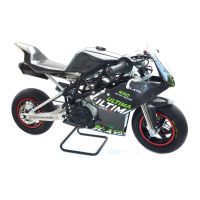
The Minibike Ultima is for enclosed tracks. Adults and children under supervision can ride it.

Engine and Drivetrain Overview

Features a single-cylinder two-stroke engine, chain drive, and disc brakes on both wheels.

TECHNICAL DATA

Engine and Carburetor Specifications

Details on engine types (RM9, R40, W40, W50), displacement, power, torque, and carburetor models.

Frame, Brakes, and Wheels Data

Information on frame material, brake systems (hydraulic/mechanical), and wheel sizes.

Tires, Fuel, and Dimensions

Specifications for tire sizes, fuel tank volume, weight capacity, and overall vehicle dimensions.

PREPARATION FOR OPERATION

Initial Setup and Checks

Set handlebars, verify throttle/brake controls, and check cooling fluid level in the reservoir.

Fueling the Minibike

Fill the minibike tank with fuel and ensure the fuel supply valve is open before starting.

STARTING PROCEDURES

Engine Starting Sequence

Start the engine on the stand using the choke lever and pull-starting cord. Adjust idle speed.

Idle Speed Adjustment

Adjust engine revolutions so the clutch does not drive the rear wheel when the engine is running.

RIDING INSTRUCTIONS

Riding and Braking Techniques

Ride by turning throttle. Decrease speed before braking, using rear and front brake levers.

Post-Ride Inspection

After the first ride, inspect tightness of bolts and nuts, especially on engine and chassis parts.

REGULAR MAINTENANCE

Pre-Ride Checks and Cleaning

Check cables, brakes, chain lubrication. Clean minibike after use. Wash air filter after 1 hour of riding.

Component Inspections (Brakes, Clutch, Cooling)

Inspect brake pads, cooling system, and clutch lining thickness. Adjust clutch levers.

Tire and Bolt Tightness Checks

Inspect tire air pressure and tightness of all bolts and nuts using the tightening torques table.

CHAIN MAINTENANCE AND ADJUSTMENT

Chain Adjustment and Lubrication

Adjust chain slack to 5mm. Lubricate chain regularly for service life and reduced noise.

ENGINE BOTTOM BRACKET ADJUSTMENT

Bracket Adjustment Procedure

Remove engine bracket, adjust stop screw and lock nut for engine positioning, then reassemble.

HYDRAULIC BRAKE MAINTENANCE

Brake Bleeding Procedure

Use a bleeding set to remove air from the hydraulic brake system by pushing fluid through.

Brake Fluid Handling Precautions

Prevent brake fluid contact with other parts. Use protective gloves and safety glasses.

HYDRAULIC BRAKE PAD REPLACEMENT

Hydraulic Brake Pad Replacement

Replace worn pads by removing the bolt, swapping pads with metal spring, and securing.

MECHANICAL BRAKE ADJUSTMENT AND REPLACEMENT

Mechanical Brake Adjustment

Adjust mechanical brakes on handlebars using the adjustment mechanism and locking nut.

Mechanical Brake Pad Replacement

Replace front and rear brake pads by disassembling caliper, swapping pads, and reassembling.

WHEEL REMOVAL AND MOUNTING

Front and Rear Wheel Procedures

Remove wheels by unscrewing axle nuts. Pay attention to spacer placement during reassembly.

PINION REPLACEMENT

Pinion Replacement Procedure

Remove chain, loosen axle nut, and use a tool to prevent clutch drum rotation while unscrewing the pinion.

CHASSIS GEOMETRY ADJUSTMENT

Overview of Geometry Adjustments

The BLATA SET-UP SYSTEM allows significant changes to steering angle, seat height, and foot rest position.

Steering Angle Modification

Change steering angle using exchangable steering plates for ±2° to ±4° adjustments.

CHASSIS GEOMETRY ADJUSTMENT

Seat Height Adjustment

Adjust seat height using adjustable rear fork supports, offering approximately 3.5 cm range.

Foot Rest Position Adjustment

Achieve sixteen positions for foot rests using holders, rotary cam, and fork end piece holes.

Geometry Change Safety Warning

After geometry changes, check for potential collisions between parts like radiator and front wheel.

CLUTCH MAINTENANCE AND ADJUSTMENT

Clutch Lever Replacement

Replace clutch levers and springs. Ensure correct assembly and basic adjustment.

Clutch Engagement Adjustment

Adjust clutch engagement RPM to 7000-9000 RPM by adjusting spring tension.

TIRE REPLACEMENT

Tire Removal and Mounting

Remove wheel, deflate tire, use levers to remove bead, and reverse for mounting and inflation.

AIR FILTER MAINTENANCE

Air Filter Cleaning and Oiling

Remove, wash, and re-oil the air filter for proper engine air intake.

COOLING SYSTEM MAINTENANCE

Filling and Bleeding Procedure

Fill cooling system with fluid, bleed air from the radiator, and check fluid level.

System Checks and Fluid Draining

Check fluid level before rides. Drain fluid properly and ensure ecological disposal.

TIGHTENING TORQUES

Motor Component Torque Specifications

Table listing specified tightening torques in Newton-meters for various engine parts.

Frame Component Torque Specifications

Table listing specified tightening torques in Newton-meters for chassis components.

COMPOSITE MATERIALS

Material Description and Benefits

Blata Ultima uses carbon fiber for lightness, rigidity, and damping, improving riding characteristics.

Specific Component Applications

Carbon front fork, frame supports, and rear fork supports utilize patented axial fiber winding technology.

NOISE EMISSION AND DECLARATION

Noise Measurement and Limits

Noise levels measured according to UEM RR011 are within the prescribed limits.

Emission vs. Exposure Levels

Emission levels are not safe working levels; actual exposure depends on workplace factors.

OPERATION MODES

Putting Out of Operation and Storage

Drain fuel, protect from climate effects, and store properly for longer periods.

Repeat Operation and Permanent Disposal

Degrease parts before reuse. Disassemble and recycle components according to regulations.

TECHNICAL SERVICE AND SUPPORT

Dealer Contact and Manual Clarification

Contact dealer for any manual or service inquiries. Find updated dealer lists online.

IDENTIFICATION INFORMATION

Purpose and Key Identifiers

Information for service: serial number, manufacturing label, and configuration code are essential.

Warranty and Dealer Information

Manual serves as warranty certificate. Ensure details are filled and present for claims.

Summary

SAFETY WARNING

General Safety Warnings

Pay extra attention when performing maintenance and service of the machine and maintain safety warnings.

Rider Safety Equipment

The rider must properly use safety helmet, eye protection, gloves, elbow/knee protectors, and suitable footwear.

Pre-Ride Checks and Maintenance Safety

Perform prescribed inspection before each ride. Avoid injury during maintenance by turning off the engine.

Fuel and Hot Parts Safety

Handle fuel carefully; it's toxic and flammable. Allow hot parts to cool before manipulation.

Riding and Component Safety

Adjust riding to conditions. Inspect chain, brakes, and tires regularly for safe operation.

PACKAGE CONTENT

Delivery Contents

The minibike delivery includes: transport packing, minibike, user manual, stand, and document of payment.

Unpacking and Damage Reporting

Follow unpacking instructions. Report any visible damage or defects to the transport company or seller immediately.

GENERAL WARNING

Manual Purpose and User Responsibility

This manual provides necessary information for effective use. User is fully responsible for its application.

Operator Familiarization and Safety Instructions

Operators must familiarize themselves with the manual before use to prevent mistakes and ensure safety.

Clothing Hazards and Protective Gear

Use protective gear. Avoid loose clothing, jewelry, or long hair that can get caught in moving parts.

FORBIDDEN USE

Prohibited Activities and Modifications

Do not use without protective elements, modify the machine, or allow unauthorized persons access.

INTRODUCTION

Minibike Designation and Purpose

The Minibike Ultima is for enclosed tracks. Adults and children under supervision can ride it.

Engine and Drivetrain Overview

Features a single-cylinder two-stroke engine, chain drive, and disc brakes on both wheels.

TECHNICAL DATA

Engine and Carburetor Specifications

Details on engine types (RM9, R40, W40, W50), displacement, power, torque, and carburetor models.

Frame, Brakes, and Wheels Data

Information on frame material, brake systems (hydraulic/mechanical), and wheel sizes.

Tires, Fuel, and Dimensions

Specifications for tire sizes, fuel tank volume, weight capacity, and overall vehicle dimensions.

PREPARATION FOR OPERATION

Initial Setup and Checks

Set handlebars, verify throttle/brake controls, and check cooling fluid level in the reservoir.

Fueling the Minibike

Fill the minibike tank with fuel and ensure the fuel supply valve is open before starting.

STARTING PROCEDURES

Engine Starting Sequence

Start the engine on the stand using the choke lever and pull-starting cord. Adjust idle speed.

Idle Speed Adjustment

Adjust engine revolutions so the clutch does not drive the rear wheel when the engine is running.

RIDING INSTRUCTIONS

Riding and Braking Techniques

Ride by turning throttle. Decrease speed before braking, using rear and front brake levers.

Post-Ride Inspection

After the first ride, inspect tightness of bolts and nuts, especially on engine and chassis parts.

REGULAR MAINTENANCE

Pre-Ride Checks and Cleaning

Check cables, brakes, chain lubrication. Clean minibike after use. Wash air filter after 1 hour of riding.

Component Inspections (Brakes, Clutch, Cooling)

Inspect brake pads, cooling system, and clutch lining thickness. Adjust clutch levers.

Tire and Bolt Tightness Checks

Inspect tire air pressure and tightness of all bolts and nuts using the tightening torques table.

CHAIN MAINTENANCE AND ADJUSTMENT

Chain Adjustment and Lubrication

Adjust chain slack to 5mm. Lubricate chain regularly for service life and reduced noise.

ENGINE BOTTOM BRACKET ADJUSTMENT

Bracket Adjustment Procedure

Remove engine bracket, adjust stop screw and lock nut for engine positioning, then reassemble.

HYDRAULIC BRAKE MAINTENANCE

Brake Bleeding Procedure

Use a bleeding set to remove air from the hydraulic brake system by pushing fluid through.

Brake Fluid Handling Precautions

Prevent brake fluid contact with other parts. Use protective gloves and safety glasses.

HYDRAULIC BRAKE PAD REPLACEMENT

Hydraulic Brake Pad Replacement

Replace worn pads by removing the bolt, swapping pads with metal spring, and securing.

MECHANICAL BRAKE ADJUSTMENT AND REPLACEMENT

Mechanical Brake Adjustment

Adjust mechanical brakes on handlebars using the adjustment mechanism and locking nut.

Mechanical Brake Pad Replacement

Replace front and rear brake pads by disassembling caliper, swapping pads, and reassembling.

WHEEL REMOVAL AND MOUNTING

Front and Rear Wheel Procedures

Remove wheels by unscrewing axle nuts. Pay attention to spacer placement during reassembly.

PINION REPLACEMENT

Pinion Replacement Procedure

Remove chain, loosen axle nut, and use a tool to prevent clutch drum rotation while unscrewing the pinion.

CHASSIS GEOMETRY ADJUSTMENT

Overview of Geometry Adjustments

The BLATA SET-UP SYSTEM allows significant changes to steering angle, seat height, and foot rest position.

Steering Angle Modification

Change steering angle using exchangable steering plates for ±2° to ±4° adjustments.

CHASSIS GEOMETRY ADJUSTMENT

Seat Height Adjustment

Adjust seat height using adjustable rear fork supports, offering approximately 3.5 cm range.

Foot Rest Position Adjustment

Achieve sixteen positions for foot rests using holders, rotary cam, and fork end piece holes.

Geometry Change Safety Warning

After geometry changes, check for potential collisions between parts like radiator and front wheel.

CLUTCH MAINTENANCE AND ADJUSTMENT

Clutch Lever Replacement

Replace clutch levers and springs. Ensure correct assembly and basic adjustment.

Clutch Engagement Adjustment

Adjust clutch engagement RPM to 7000-9000 RPM by adjusting spring tension.

TIRE REPLACEMENT

Tire Removal and Mounting

Remove wheel, deflate tire, use levers to remove bead, and reverse for mounting and inflation.

AIR FILTER MAINTENANCE

Air Filter Cleaning and Oiling

Remove, wash, and re-oil the air filter for proper engine air intake.

COOLING SYSTEM MAINTENANCE

Filling and Bleeding Procedure

Fill cooling system with fluid, bleed air from the radiator, and check fluid level.

System Checks and Fluid Draining

Check fluid level before rides. Drain fluid properly and ensure ecological disposal.

TIGHTENING TORQUES

Motor Component Torque Specifications

Table listing specified tightening torques in Newton-meters for various engine parts.

Frame Component Torque Specifications

Table listing specified tightening torques in Newton-meters for chassis components.

COMPOSITE MATERIALS

Material Description and Benefits

Blata Ultima uses carbon fiber for lightness, rigidity, and damping, improving riding characteristics.

Specific Component Applications

Carbon front fork, frame supports, and rear fork supports utilize patented axial fiber winding technology.

NOISE EMISSION AND DECLARATION

Noise Measurement and Limits

Noise levels measured according to UEM RR011 are within the prescribed limits.

Emission vs. Exposure Levels

Emission levels are not safe working levels; actual exposure depends on workplace factors.

OPERATION MODES

Putting Out of Operation and Storage

Drain fuel, protect from climate effects, and store properly for longer periods.

Repeat Operation and Permanent Disposal

Degrease parts before reuse. Disassemble and recycle components according to regulations.

TECHNICAL SERVICE AND SUPPORT

Dealer Contact and Manual Clarification

Contact dealer for any manual or service inquiries. Find updated dealer lists online.

IDENTIFICATION INFORMATION

Purpose and Key Identifiers

Information for service: serial number, manufacturing label, and configuration code are essential.

Warranty and Dealer Information

Manual serves as warranty certificate. Ensure details are filled and present for claims.

Blata Ultima Specifications

General IconGeneral
BrandBlata
ModelUltima
CategoryMotorcycle
LanguageEnglish

Related product manuals