11
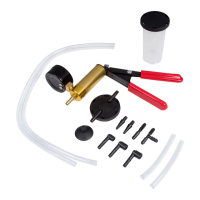
Brake Bleeding – Assembly of Brake Bleeding Kit
1. Connect the vacuum pump to the brake bleeder reservoir. Refer to the assembly diagram
if you are unsure on how to do this (figure 14).
If this is not done correctly the brake fluid would be drawn into the vacuum pump.
Brake Bleeding
ALWAYS be aware of the brake fluid hazards before you begin bleeding the brakes. Refer
to the manufacturer’s instructions.
NEVER touch the vehicles brake pedal whilst bleeding the brakes.
ALWAYS refer to the vehicle manufacturers instructions for brake bleeding and wheel
sequence before beginning. If the vehicle manufacturer does not have specific instructions
please follow the instructions listed below.
1. Remove the cap from the vehicle’s master brake fluid reservoir.
2. Top up the fluid if it is not at its maximum.
3. Attach the appropriate bleeding size attachment to the bleed nipple on the brake calliper
of the first wheel. Refer to the vehicle manufacturers instructions for guidance the wheel
sequence. If you do not have this the first wheel is normally the furthest wheel from the
master brake fluid reservoir.
4. Operate the vacuum pump until approximately 21 inHG vacuum is created.
5. To reduce the possibility of seized or broken nipples when the brakes are next bled, apply
copper grease to the brake bleeding nipples.
6. Open the bleed nipple a quarter of a turn. Allow the brake fluid to be drawn until no air
bubbles are visible in the brake fluid in the clear hose.
7. Tighten the bleed nipple.
8. Remove the attachment from the brake nipple.
9. Repeat the process where necessary.
10. When the brake bleeding and/or fluid change is complete, test the brake pedal to ensure
the brakes are working before attempting to drive the vehicle on the road.
11. Test the vehicle for satisfactory performance of the braking system.
ALWAYS check the master brake fluid reservoir regularly. Ensure that the level does not
drop too low. Top up the brake fluid when necessary.
ALWAYS empty the brake bleeder container regularly. Never allow the container to overfill
as brake fluid will be drawn into the vacuum pump.
Clutch Bleeding Procedure
ALWAYS refer to the relevant vehicle manufacturers instructions for the clutch bleeding
procedure. If the vehicle manufacturer does not have the specific instructions on how to do
this, follow the same basic procedure as the brake bleeding instructions listed above.


 To Next Page
 Loading...