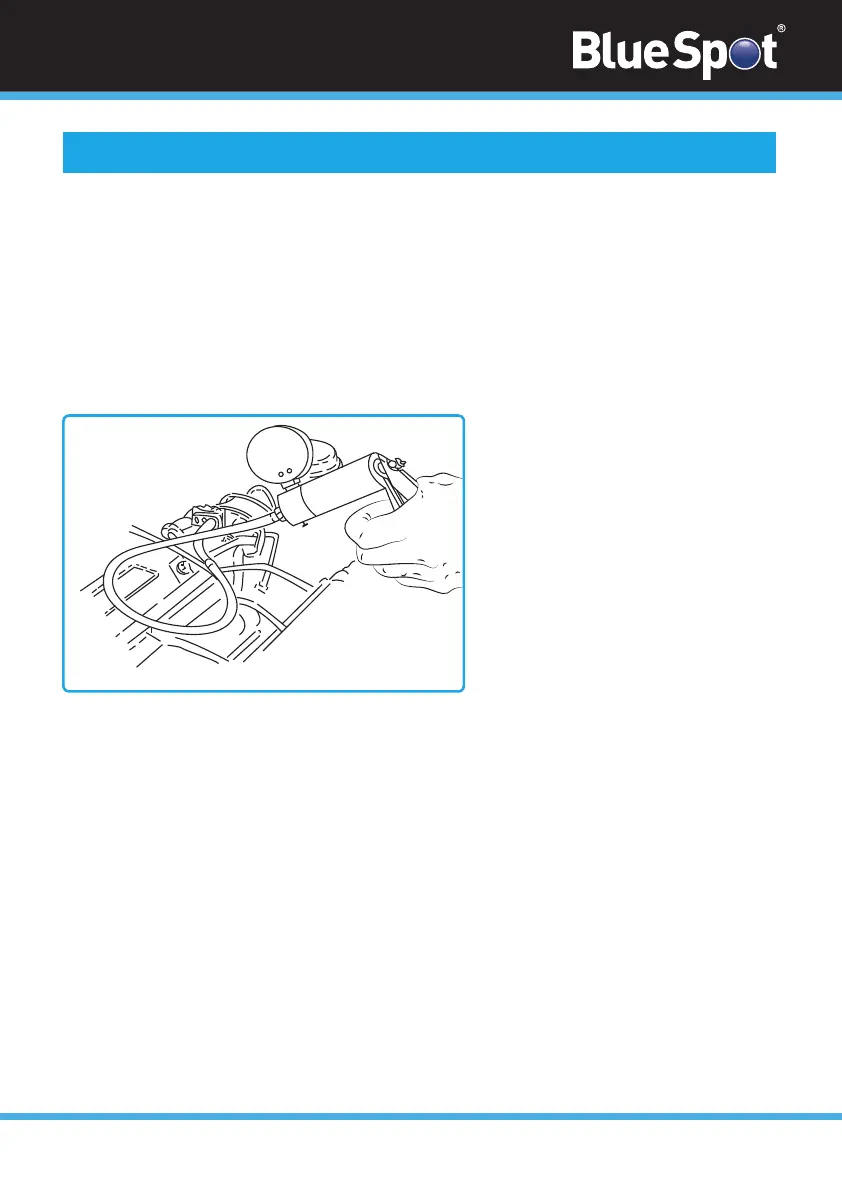
fig. 1
03
Analysing Engine Mechanical Condition via Manifold Readings
The readings shown below are examples of what you may observe. The action of the needle
is more important than the actual reading. Different engine types will run different manifold
vacuum pressures, depending on camshaft profile, valve overlap, timing etc. so an exact
vacuum reading cannot be specified. The main criteria is that the needle reading is between
16 to 21inHg and is steady.
Please consider when assessing manifold vacuum readings that the manifold vacuum is also
affected by altitude and it will drop approximately 1inHg for every 1000 feet above sea level.
Operation
Basic Diagnostic Test
1. Run the engine until the normal operating temperature is reached.
2. Switch the engine off.
3. Connect the Vacuum Pump with Gauge to a port directly on the manifold (figure 1)
or on the carburettor/throttle body below the throttle butterfly.
4. Start and run the vehicle engine at idle.
5. Observe the reading on the gauge.
6. Refer to the following diagrams to indicate readings and their possible meanings
and causes.


 To Next Page