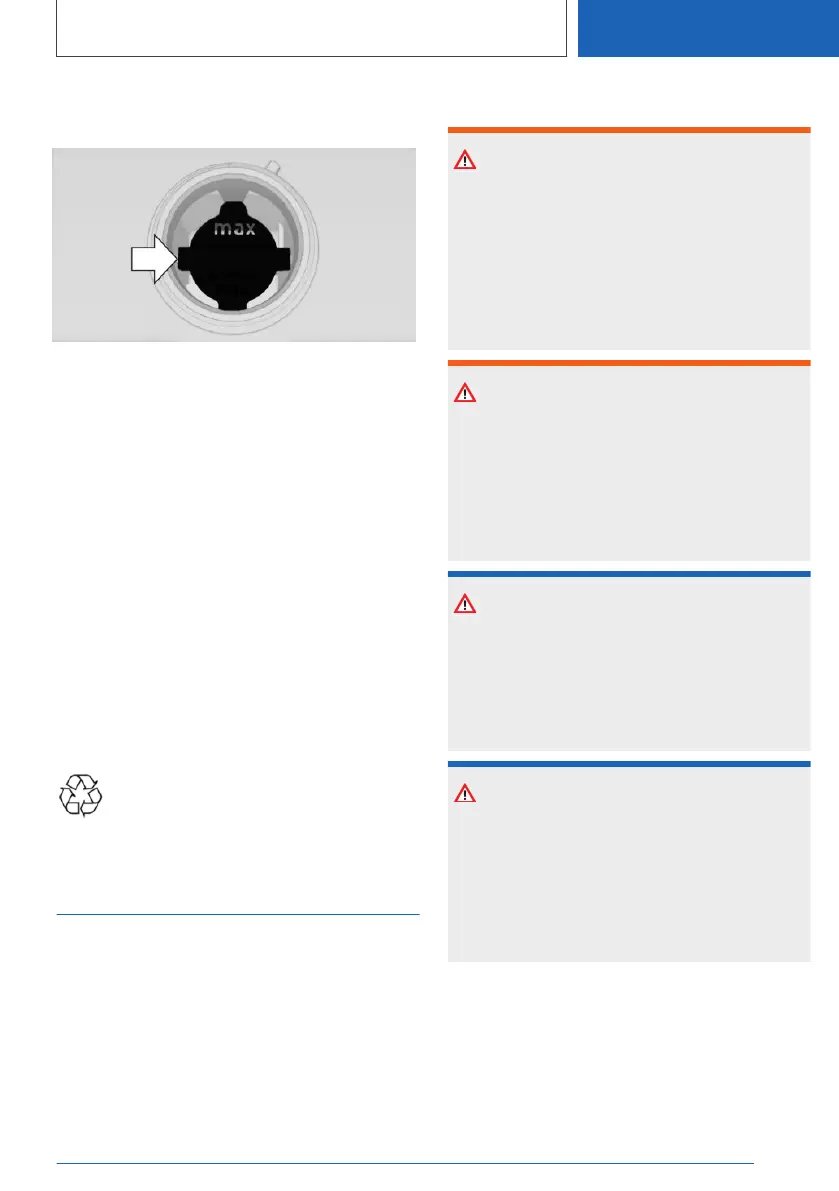
5. The coolant level is correct if it is just below
the Max. mark in the filler neck.
6. Tighten cap.
Replenishing the coolant
1.
Allow the engine to cool down.
2. Open bonnet.
Opening, see page 394.
3. Turn cap on coolant tank slightly anticlock‐
wise, then allow the pressure to escape.
4. Open cap on coolant tank.
5. If necessary, slowly top up to the correct
level; do not overfill.
6. Tighten cap.
7. Have the cause of coolant loss rectified as
soon as possible.
Disposal
When disposing of coolant and coolant
additives, comply with the relevant envi‐
ronmental protection regulations.
Washer fluid
General
All washer jets are supplied from one reservoir.
Use a mixture of tap water and screenwash con‐
centrate for the windscreen washer system, if
necessary with the addition of antifreeze.
Recommended minimum fill level: 1 litre,
1.7 Imp. pints.
Safety notes
WARNING
Some antifreezes can contain toxic substances,
and are flammable. There is a risk of fire and in‐
jury. Please comply with the instructions on the
containers. Keep antifreezes away from sour‐
ces of combustion. Do not pour service prod‐
ucts into other bottles. Keep service products
out of the reach of children.
WARNING
Washer fluid can ignite on contact with hot
parts of the engine and catch fire. There is a
risk of injury or material damage. Only top up
washer fluid when the engine has cooled down.
Then fully close the cap of the washer fluid res‐
ervoir.
NOTE
Silicone additives mixed with the washer fluid
for their water beading effect on the windows
may damage the washer system. There is a risk
of material damage. Do not add silicone addi‐
tives to the washer fluid.
NOTE
Mixing different screenwash concentrates or
antifreezes may damage the washer system.
There is a risk of material damage. Do not mix
different screenwash concentrates or antifree‐
zes. Please comply with the instructions and
mixing ratios stated on the containers.
Seite 401
Operating fluids
MOBILITY
401
Online Edition for Part no. 01405A1EA53 - X/20



 To Next Page