EasyManua.ls Logo

Bofa AD Nano+ - User Manual

Default Icon
16 pages
Print Icon
To Next Page IconTo Next Page
Loading...
AD Nano+
Question and Answer IconNeed help?

Do you have a question about the Bofa AD Nano+ and is the answer not in the manual?

Summary

Overview of AD Nano+ Extraction System

Extraction System Front View

Details components like the control panel, filters, castors, and door latches on the front of the unit.

Extraction System Rear View

Details connection points like mains inlet, exhaust outlet, isolation switch, and cooling.

Control Panel Functions Explained

Explains the indicators and controls on the extraction unit's front panel.

Safety Instructions and Precautions

Important Safety Notes and Symbols

Explains critical safety symbols (Danger, Warning, Caution, Important) and general safety guidelines.

Electrical Safety and Warnings

Covers electrical safety requirements and warnings related to live components.

Health and Environmental Hazards

Details risks to eyes, breathing, skin from particulates and cautions for filter handling.

Usage Restrictions and Precautions

Advises against using the unit with sparks, flammable materials, or explosive dusts/gases without precautions.

Warning and Information Labels

Lists and explains various warning and information labels found on the extraction unit.

Fire Risk Warning and Prevention

Details the risk of filter ignition from sparks and necessary precautions.

Before Installation Procedures

Unpacking and Unit Placement

Instructions for removing transit packaging and positioning the unit in a well-ventilated area.

Pre-installation Checks and Cautions

Guidance on checking filters, locking castors, and avoiding blocking vents.

Installation and Connection

System Specifications Overview

Details the technical specifications of the AD Nano+ unit, including dimensions and electrical requirements.

Power Supply Connection Guide

Provides instructions and safety warnings for connecting the unit to a properly earthed power outlet.

Optional Features and Remote Control

Explains optional features like remote start/stop and DC voltage input for operation.

Override and Filter Signal Functionality

Describes the override switch for continuous operation and the filter status signal.

Operating the AD Nano+ Unit

Turning the Extraction Unit On;Off

Instructions on how to activate and deactivate the extraction unit using the main isolation switch.

Setting and Adjusting Airflow Rate

Guides the user through setting the desired airflow rate for optimal fume extraction.

Maintenance and Servicing

Maintenance Requirements and Guidelines

Covers legal requirements (COSHH), general user maintenance, and cleaning procedures for the unit.

Filter Monitoring and Fire Safety

Explains when to check filters and reiterates fire risk warnings for the unit.

Filter Replacement Procedure

Step-by-step guide for replacing both the pre filter and the combined filter.

Replacement Parts and Filter Disposal

Consumable Spares and Maintenance Log

Information on ordering replacement filters and a protocol for logging filter changes.

Filter Disposal Guidelines

Provides guidance on the proper disposal methods for used filters based on hazard classification.

System Specifications and Operating Range

Technical Data and Dimensions

Detailed specifications including capacity, motor type, electrical data, dimensions, and filter types.

Environmental Operating Range

Specifies the recommended operating temperature and humidity limits for the unit.

Contact Information

BOFA Headquarters and Americas Contact

Provides contact details for BOFA's headquarters in the UK and their Americas division.

Overview

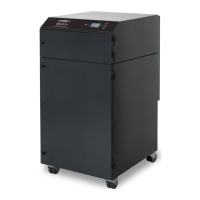
The AD Nano+ is a fume extraction system designed to capture and filter airborne particulates and gases, ensuring a cleaner and safer working environment. It is primarily used in industrial settings where processes generate fumes, dusts, or other airborne contaminants. The system is designed for ease of use, featuring a clear control panel for operation and accessible components for maintenance.

Function Description

The core function of the AD Nano+ is to draw in contaminated air, filter it, and then exhaust clean air. This is achieved through a multi-stage filtration process. Air enters the unit through the air inlet, passing first through a pre-filter, which captures larger particulates. Following this, the air moves through a combined filter, which typically includes a HEPA (High-Efficiency Particulate Air) filter for fine particulate removal and an activated carbon filter for gas and odor adsorption. The filtered air is then expelled through the exhaust outlet. A powerful centrifugal fan drives the airflow, ensuring efficient extraction. The system is equipped with an autoflow control feature, which automatically adjusts the motor speed to maintain a consistent airflow rate as filters become partially blocked, compensating for increased restriction and ensuring sustained performance.

Usage Features

The AD Nano+ is designed for straightforward operation and monitoring.

Control Panel: The front-mounted control panel provides visual indicators and controls for various system functions:

  • Power/Standby Button: A central button to turn the extractor on or off.
  • Flow Adjustment: Up and down arrows allow users to increase or decrease the airflow rate. The desired flow is indicated by a row of six blue LEDs, with six representing full speed and one being the lowest. To set the airflow, users hold down the up and down arrows for 5 seconds until a green LED flashes, indicating set mode. The system then returns to operation mode after 10-20 seconds. This adjustment should be performed with all ductwork connected.
  • Filter Status Indicators:
    • Filter 75% Full: An indicator that illuminates when the filters are approaching their capacity, prompting users to prepare for replacement.
    • Filter Blocked: A red LED to the left of a bell symbol that glows when the filters are fully blocked and require immediate replacement.
  • System Clean Running: An indicator confirming that the system is operating normally and effectively.
  • VOC Alarm (Optional): If installed, this feature monitors Volatile Organic Compound levels. If VOCs rise above a pre-set level, a red LED to the right of the bell symbol will flash, indicating that the combined filter needs replacement.

Installation and Placement:

  • The unit is equipped with lockable castors for easy movement and secure positioning.
  • It requires installation in a well-ventilated area, with at least 500 mm of space around any vented panels to ensure adequate airflow and prevent overheating.
  • The exhaust outlet must not be covered, as this can restrict airflow and cause overheating.
  • The cooling vents on the unit should also not be blocked or covered.

Power Connection:

  • The AD Nano+ must be connected to a properly earthed electrical outlet.
  • The mains isolation switch, located on the rear of the unit, allows for safe disconnection from the power supply.
  • The mains socket should be easily accessible and switchable for convenience.

Optional Interfacing: The system can be configured with optional features for remote control and monitoring:

  • Remote Stop/Start: Enables the unit to be turned on/off via an external signal, such as from a laser or auxiliary equipment. This can be triggered by a DC voltage input (12-24VDC) or a volt-free input, depending on the specification.
  • Override Switch: An internal switch allows the extractor to operate independently of external start signals, useful for maintenance or testing.
  • Filter Signal: Provides an external signal indicating filter status. The connection between green and white cables is "Closed" when the system is running normally and becomes "Open" when filters are blocked or a fault occurs.

Maintenance Features

Regular maintenance is crucial for the AD Nano+'s performance and longevity.

Filter Replacement: The system provides clear indicators for when filters need attention.

  • Pre-filter: To replace, users isolate power, open the front door, remove the lower pre-filter, vacuum any dust from the base, fit the new filter, close the door, and reconnect power.
  • Combined Filter: To replace, users isolate power, open the front door, remove the upper combined filter, fit the new filter, close the door, and reconnect power. The unit will not operate correctly if the combined filter is not secured in place using its internal lever.
  • Safety Precautions: When changing filters, it is essential to wear a mask, safety shoes, goggles, and gloves due to potential exposure to particulates and irritants.
  • Filter Disposal: Used filters should be disposed of according to local/national regulations, as the deposited materials may be hazardous. A log of filter changes should be maintained.

Cleaning:

  • Stainless Steel Units: Should be cleaned with a proprietary stainless steel cleaner according to the manufacturer's instructions.
  • Powder Coat Finish: Can be cleaned with a damp cloth and non-aggressive detergent. Abrasive cleaning products should be avoided.
  • Cooling Inlets and Outlets: Should be cleaned annually to prevent dust build-up and overheating.

Safety and Servicing:

  • Isolation: Always isolate the system from the mains power supply before performing any maintenance or removing access panels.
  • Professional Service: User maintenance is limited to cleaning and filter replacement. Component testing and replacement should only be carried out by manufacturer-trained technicians. Unauthorized work or the use of non-approved filters can void the warranty and create dangerous situations.
  • Annual Inspection (UK): Under COSHH regulations, local exhaust ventilation systems in the UK require thorough examination and testing at least every 14 months (typically annually) by a competent person, with results recorded in a log. A visual check is recommended weekly.
  • Fire Risk Warning: The unit should not be used with processes generating sparks, flammable materials, explosive dusts/gases, or pyrophoric particulates without additional precautions. Regular cleaning of nozzles, extraction devices, and pipework is essential to prevent the build-up of ignitable debris. In the rare event of a burning ember or spark entering the unit, filters could ignite, causing significant damage. An appropriate assessment should determine if additional fire protection equipment is needed and if maintenance procedures adequately prevent debris build-up.

Bofa AD Nano+ Specifications

General IconGeneral
ModelAD Nano+
CategoryScrubber
Cabinet ConstructionPowder coated mild steel
Electrical Data230v 1ph 50/60Hz
HEPA FilterHEPA filter
Filter Condition DisplayFilter condition display
Weight53lbs
TypeFume Extraction
Power Source230v 1ph 50/60Hz | 110v 1ph 60Hz
Dimensions23.2" x 13.4" x 13.4"

Related product manuals