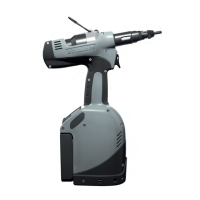
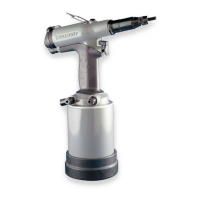
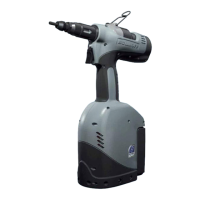
This document describes the RIVKLE® range of power hand tools for installing blind rivet nuts and studs, focusing on both stroke-controlled and force-controlled installation methods, as well as semi-automatic and battery-powered options.
RIVKLE® – Setting Methods
The BÖLLHOFF recommended installation method is the "pull method," though RIVKLE® can also be installed using a press. The document details two primary setting methods: stroke setting and pressure setting.
1.1 Stroke Setting Method
The operator adjusts the stroke limit on the setting tool according to values provided in RIVKLE® catalogue tables. The tool applies maximum force and automatically stops when the preset stroke is reached.
- Advantages: Fast and simple process, ideal for assemblies with no variation in sheet thickness, and well-adapted for M3 Aluminum.
1.2 Pressure Setting Method
The operator adjusts the force according to values in RIVKLE® catalogue tables. The tool then adjusts the required force to ensure correct setting quality regardless of the support thickness. This method is particularly suited for workpieces with variable thickness (e.g., plastic parts, various layers).
- Advantages: Optimized setting into panels with thickness variations, prevents damage to the RIVKLE® in case of double setting, permits quality control (e.g., force indicator), optimizes mandrel life, and allows setting different types of RIVKLE® with one tool and a single setup.
2. Installation Force Value
The setting force is defined by combining RIVKLE® installation parameters (from laboratory data) and application parameters (tensile strength after assembly and during service). BÖLLHOFF recommends a setting force higher than the screw tensile strength after clamping to prevent re-setting during the RIVKLE®'s life. The document provides installation force ranges per diameter and RIVKLE® material (Steel, Stainless Steel, Stainless Steel A4, Aluminium).
The document provides an overview of various RIVKLE® power hand tools, categorizing them by drive type (hydro-pneumatic, hydro-electric, pneumatic/electric) and control process (stroke or force).
RIVKLE® P2005 (Stroke Controlled)
- Function: Stroke-controlled hand setting tool based on hydro-pneumatic technology. Connects to an air source; air energy is transformed into hydraulic pressure to drive the setting operation to a preset stroke.
- Advantages: Robust and fast.
- Technical Specifications:
- Maximum stroke: 7.0 mm
- Maximum setting force: 26 kN (with 6.5 bar input)
- Operating air pressure: 5.5 bar min to 7 max
- Weight without tooling: 2.6 kg
- Air consumption: 8 L max per cycle
- Noise level: < 70 dB (A)
- Production rate: 35 RIVKLE®/min
- RIVKLE® diameters: M3-M14 (Steel, Stainless Steel, Aluminium)
RIVKLE® P1007 (Force Controlled)
- Function: Force-setting power tool based on hydro-pneumatic technology. Connects to an air source; air energy is transformed into hydraulic pressure to drive the setting operation to a preset force. Force adjustment is done on the tool using color coding and can be confirmed/monitored with the RIVKLE® FC340 force controller.
- Advantages: Ultra-lightweight and compact, suitable for small diameter RIVKLE® nuts and studs, precision of the setting force.
- Technical Specifications:
- Maximum stroke: 7.0 mm
- Maximum setting force: 13 kN
- Operating air pressure: 5.5 bar min to 7 max
- Weight without tooling: 1.8 kg
- Air consumption: 8 L max per cycle
- Noise level: < 70 dB (A)
- Production rate: 32 RIVKLE®/min
- RIVKLE® diameters: M3-M10 (Steel, Stainless Steel), M3-M8 (Aluminium)
- Usage Features: PUSH/PULL to activate screwing, single press trigger for full cycle (setting + unscrewing), suspension hook, cast aluminum body, force adjustment cartridge with color coding, reverse button.
RIVKLE® P2007 / P2007 PN (Force Controlled)
- Function: Similar to P1007 but designed for more versatile and serial use. P2007 PN offers an extended stroke for RIVKLE® Plusnut (slotted RIVKLE®).
- Advantages: Versatile, adapted for serial use, compatible with various diameters of RIVKLE® nuts and studs, ergonomic and well-balanced.
- Technical Specifications (P2007):
- Maximum stroke: 7.0 mm
- Maximum setting force: 21 kN
- Operating air pressure: 5.5 bar min to 6.5 max
- Weight without tooling: 2.2 kg
- Air consumption: 8 L max per cycle
- Noise level: < 70 dB (A)
- Production rate: 32 RIVKLE®/min
- RIVKLE® diameters: M3-M10 (Steel, Stainless Steel), M3-M12 (Aluminium)
- Technical Specifications (P2007 PN):
- Maximum stroke: 14.0 mm
- Maximum setting force: 14.5 kN
RIVKLE® P3007 / P3007 PN (Force Controlled)
- Function: Powerful and robust tool for larger diameters. P3007 PN offers an extended stroke for RIVKLE® Plusnut.
- Advantages: Adapted for production use, adapted to large diameters (M8 to M16), well-balanced.
- Technical Specifications (P3007):
- Maximum stroke: 8.0 mm
- Maximum setting force: 40 kN
- Operating air pressure: 5.5 bar min to 6.5 max
- Weight without tooling: 3.4 kg
- Air consumption: 12 L max per cycle
- Noise level: < 70 dB (A)
- Production rate: 14 RIVKLE®/min
- RIVKLE® diameters: M4-M16 (Steel, Stainless Steel), M4-M14 (Aluminium)
- Technical Specifications (P3007 PN):
- Maximum stroke: 14.0 mm
- Maximum setting force: 25 kN
RIVKLE® B2007 (Battery Tool)
- Function: Flexible and versatile battery tool using electro-hydraulic technology. Offers similar characteristics to the RIVKLE® P2007 but with the benefits of a battery tool.
- Advantages: 3 kN to 22 kN (M3-M10 steel), up to 800 cycles with 1 battery, internal testing done with 1,000,000 cycles, BÖLLHOFF quality, RIVKLE® blind rivet nut & stud compatible, Li-Ion technology battery.
- Technical Specifications:
- Maximum stroke: 7.0 mm
- Maximum setting force: 22 kN (or >18 kN with appropriate accessory set)
- Battery: Li-Ion / 14.4 V / 2.6 Ah
- Weight without tooling: 2.1 kg (tool) + 0.3 kg (battery)
- Noise level: < 70 dB (A)
- Production rate: 24 RIVKLE®/min
- RIVKLE® diameters: M3-M10 (Steel, Stainless Steel, Aluminium)
- Usage Features: Quick tool replacement (no tool needed), well-balanced electro-hydraulic technology, soft cover for comfortable handling and shock protection, LCD screen for load adjustment, setting parameters, and battery level, standard BÖLLHOFF ergonomics (single trigger for entire cycle).
- Maintenance Features: Mandrel and anvil can be replaced without additional tools.
RIVKLE® EPX009 (Process Control)
- Function: Includes a hydro-pneumatic tool (based on P1007, P2007, or P3007) connected to a control box unit. Provides basic process control with 100% stroke monitoring. Force is defined by classic hydro-pneumatic adjustment.
- Advantages: Validates setting conformity by controlling stroke, detailed error reporting, ensures optimum RIVKLE® setting, teaching mode for parameter adjustment.
- Technical Specifications:
- Maximum stroke, setting force, operating air pressure, weight without tooling, air consumption, noise level, production rate: Refer to chosen tool characteristics (P1007, P2007, or P3007).
- RIVKLE® diameters: M3-M14 (Steel).
- Usage Features: Controls process based on stroke monitoring, LED indicator on EP box and tool (green, orange, red), quick connect multi-energy hose (5m standard, 10 & 15m optional), fault acknowledgment on screen (air supply management), HMI screen (3.5").
- Maintenance Features: Recommended to use RIVKLE® FC340 force controller for correct setup and monitoring.
RIVKLE® EPK Compact – RIVKLE® EPK HP (Full Control Process Power Hand Tool)
- Function: Offers a manual setting cycle with 100% quality control. This modular range addresses integration needs (communication and production cycle management). Auto-control of setting force and setting stroke during the setting process.
- Advantages: 100% setting (installation) process control, pressure setting method, high production rate, multilingual touchscreen, adjustable alarm and security devices, fault management (device/process).
- Technical Specifications (EPK C):
- Electrical supply: 230V - 50Hz
- Pneumatic supply: 6 bar
- Setting force: 6 to 21 kN
- Setting stroke: 7 mm
- Noise level: < 70dB (A)
- Setting head weight ("gun type"): 2.3 kg
- Setting head weight ("vertical type"): 2.5 kg
- Cycle time: 3 to 4.5 s
- Air consumption: 300 l/min
- Power consumption: 460 VA
- Production rate: 13 to 20 RIVKLE®/min
- RIVKLE® diameters: M3-M14 (Steel, Stainless Steel, Aluminium)
- Technical Specifications (EPK HP):
- Setting force: 20 to 55 kN
- Setting stroke: 9 mm
- Setting head weight ("vertical type"): 7.5 kg
- Cycle time: 4 to 5.5 s
- Production rate: 11 to 15 RIVKLE®/min
- RIVKLE® diameters: M4-M16 (Steel, Stainless Steel, Aluminium)
- Usage Features: Control unit with integrated touchscreen for setting parameters, counter, alarms, and managing sensors/multiple settings. Options include stack light and wheels.
Maintenance and Accessories
RIVKLE® FC340 - Force Controller
- Function: Indicates the direct force applied by the tool to the mandrel, allowing for precise adjustment of hydraulic/pneumatic installation tools using color codes.
- Usage Features: Guarantees setting quality by allowing frequent force checks during production, preventing operator adjustments.
- Technical Specifications: Force range 3,000 N to 40,000 N (+/-3%).
Cartridges
- Preset cartridges can lock the setting force at a preset value for RIVKLE® PX007 & RIVKLE® EPX009 tools. Can be ordered pre-equipped with a tool or separately for existing tools.
Tooling Change
- Safety: Always read the safety instruction manual and disconnect from power supply (battery or air) before changing tooling.
- Procedure:
- Unscrew nose cone: Use the dedicated key from the tool box.
- Install mandrel:
- For P1007/P2007/P3007 (& EPX009): Turn the ring to align the open end with the pin hole, insert the mandrel into the driveshaft, and align both holes to push the pin in.
- For B2007: Insert the mandrel into the fork, aligning the back side groove with the screwing driver. Apply multipurpose grease between the fork and mandrel.
- Retighten nose: Tighten to about 15 Nm.
- Adjust anvil: Position the anvil as shown in figures, then tighten the anvil locknut (2) to 10 Nm.
Tooling Kits
- The document provides detailed tables for ordering mandrels and anvils for various RIVKLE® tool models and diameters (M3-M16, UNC, UNF).
- Refill & Purge Accessory: Available for RIVKLE® P1007/P2007/P3007/P2005 and RIVKLE® B2007.
The document emphasizes the importance of correct installation and provides tools and methods to ensure the quality and reliability of RIVKLE® fastenings.

 Need help?
 General

 To Next Page