
 Need help?
Do you have a question about the Bosch DVR 630/650 and is the answer not in the manual?
General safety precautions and hazard warnings for operating the unit.
Detailed instructions for safe operation, installation, and maintenance.
Critical information, warnings, and compliance details for product usage.
Regulatory compliance information related to FCC and UL standards.
Copyright, trademark, and general company notices.
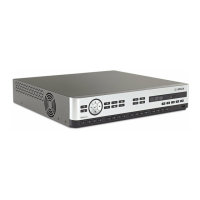
Description of the DVR's capabilities and typical use cases.
Information on different models available within the DVR series.
List of available manuals and their respective content.
Key functionalities and specifications of the DVR.
Instructions for safely unpacking the DVR and verifying package contents.
List of all items included in the DVR packaging.
Guidelines for selecting an appropriate installation location for the DVR.
Instructions for the physical installation and placement of the DVR.
Requirements for adequate airflow to prevent overheating.
Specifications for optimal operating and storage ambient temperatures.
Guidelines for ensuring a stable and correct power source for the DVR.
Recommended environmental conditions for reliable DVR operation.
List of typical external devices compatible with the DVR.
Information regarding product warranty terms and conditions.
Instructions for connecting cameras, monitors, and peripherals.
Essential connections for basic DVR setup and operation.
Additional connections for extending DVR functionality.
Procedure for safely powering on the DVR unit.
Initial setup process and configuration steps after first power-on.
Instructions to reset the DVR to its original factory default settings.
Interface for initial setup of language, time, and network settings.
Settings for language, time zone, and date/time formats.
Configuration settings for continuous video recording.
Initial network configuration for DVR connectivity.
Instructions for connecting surveillance cameras to the DVR.
How to connect audio input and output devices to the DVR.
Instructions for connecting video monitors to the DVR outputs.
Specifics on connecting VGA monitors to Monitor A and B outputs.
How to connect external keyboards for controlling the DVR.
Instructions for establishing network connectivity via Ethernet.
Details on connecting RS485 devices for camera control.
Information on connecting USB devices like mice and memory sticks.
How to connect external alarm inputs and outputs to the DVR.
Information about the DVR's external power adapter.
Guidelines for basic upkeep and servicing of the DVR unit.
Overview of the buttons and indicators on the DVR's front panel.
Description of the function of each key on the front panel.
Explanation of the status lights on the DVR's front panel.
How to operate the DVR using a connected USB mouse.
Instructions for using the infrared remote control for DVR operation.
How to display video feeds on connected monitors.
Details on configuring and using the primary monitor output.
Details on configuring and using the secondary monitor output.
Explanation of available display modes and resolutions.
Modes for viewing live video feeds and recorded footage.
The standard operating mode for viewing real-time camera feeds.
Mode for reviewing recorded video footage.
Navigation and structure of the DVR's on-screen menus.
How to navigate menus using the DVR's physical buttons.
How to navigate menus using a connected mouse.
The central menu structure for accessing DVR functions.
Functionality for locating and retrieving recorded video based on criteria.
How to search for recordings using specific date and time.
How to search for recordings based on specific events like alarms.
Advanced search capabilities based on motion or other criteria.
Process for saving recorded video and audio data to external storage.
Display of current DVR status, model, and software details.
Accessing and viewing system event logs for troubleshooting.
How the DVR reacts to different events and triggers.
Configuration and behavior of external alarm inputs.
How motion detection triggers events and alarms.
How the DVR handles and reports video signal loss.
Management of multiple simultaneous alarm events.
Settings related to video inputs, recording, and camera properties.
Enabling, naming, and configuring individual camera inputs.
Adjusting brightness, contrast, and color for camera feeds.
Configuration for Pan, Tilt, and Zoom control of compatible cameras.
Setting up parameters for continuous video recording.
Configuring recording triggered by external input events.
Configuring recording triggered by motion detection.
Settings for streaming video over a network.
Selecting video standards and monitor output resolution.
Setting up recording schedules based on time and day of the week.
Defining recording modes for different times and days.
Configuration options for monitor outputs and OSD elements.
Setting the user interface language for the DVR.
Configuring items displayed on the primary monitor output.
Configuring items displayed on the secondary monitor output.
Defining the DVR's response to various events.
Configuring behavior for external input events.
Configuring motion detection sensitivity and area.
Setting up automatic or manual acknowledgment of alarms.
Configuring responses to system-level events.
Settings for network connectivity and remote access.
Configuring network settings like IP address and ports.
Enabling and configuring video streaming for mobile viewing.
Steps to view live video on a smartphone.
Configuring Dynamic DNS services for remote access.
Setting up email notifications for various system events.
Configuring email server settings for sending notifications.
General system settings and parameters.
Setting the current date, time, and time zone.
Configuring NTP for automatic time synchronization.
Enabling or disabling audible beeps for system events.
Managing user accounts, levels, and passwords for DVR access.
Options for importing/exporting settings and resetting defaults.
Settings related to video retention, disk partitioning, and formatting.
Miscellaneous system settings like remote control ID.
Initial steps for connecting and using the DVR via a web browser.
PC specifications needed for the Web Client software.
Process for initial PC connection to the DVR using the Web Client.
Steps to log in to the DVR using the Web Client interface.
How Web Client menus may differ from the local interface.
Overview of the Web Client interface layout.
Viewing live video feeds through the Web Client.
Changing display layouts (single, quad, multi-screen) in Web Client.
Reviewing recorded footage using the Web Client.
Exporting video files remotely via the Web Client.
Configuring DVR settings through the Web Client interface.
Introduction to the Archive Player software and its purpose.
PC specifications required for running the Archive Player.
Information on how the Archive Player software is installed.
How to launch the Archive Player application.
Overview of the Archive Player's main interface.
How to open an archived video file for playback.
Changing display layouts (single, quad, multi-screen) in Archive Player.
Assigning camera feeds to display windows (cameos).
How to map camera feeds to specific display areas.
Operating playback functions like play, pause, and speed control.
Saving a single frame from playback as an image file.
Locating specific frames within an archive by date and time.
Navigating through video playback using a timeline.
Verifying the integrity and source of archived video.
How to close the Archive Player application.
Specifications related to power input, output, and internal battery.
Description of all physical input/output connectors on the DVR.
Operating and storage conditions for temperature and humidity.
Compliance with EMC standards and safety regulations.
List of tested DVD media for video export.
List of tested USB drives for firmware updates and video export.
Details on proprietary and open-source software licenses used.
Licensing terms for Bosch's proprietary software.
Information on third-party software licenses and copyrights.
Legal information regarding product warranties and disclaimers.
 General
| Operating System | Embedded Linux |
|---|---|
| Compression | H.264 |
| USB Interface | 2 x USB 2.0 |
| Channels | 4 |
| Video Inputs | 4 |
| Audio Inputs | 4 |
| Audio Outputs | 1 |
| Storage | 1 SATA HDD (up to 2TB) |
| Network Interface | Ethernet (RJ-45) |
| Control Interface | Front panel buttons |
| Power Supply | 12V DC |
| Operating Temperature | 0°C to +55°C |






 To Next Page