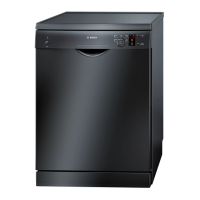
Why does my Bosch SMS53A12GB have dull glasses?
- Ddavid07Sep 8, 2025
Dull, discolored glasses with a film that cannot be washed off in your Bosch dishwasher may be due to unsuitable detergent or glasses that are not dishwasher-proof.
Why does my Bosch SMS53A12GB have dull glasses?
Dull, discolored glasses with a film that cannot be washed off in your Bosch dishwasher may be due to unsuitable detergent or glasses that are not dishwasher-proof.
What to do if the check water supply light is on in my Bosch SMS53A12GB?
If the check water supply light is illuminated on your Bosch dishwasher, it could be due to several reasons: the tap is turned off, the water supply is interrupted, the supply hose is kinked, or the filter in the water supply is blocked. Check these items to resolve the issue.
Why is my Bosch SMS53A12GB Dishwasher making knocking noises?
Knocking or rattling noises during rinsing in your Bosch dishwasher may occur because the spray arm is striking utensils or the utensils are not arranged correctly.
What to do if my Bosch SMS53A12GB door won't close?
If the door of your Bosch dishwasher cannot be closed, the door lock may have been activated. To reset it, close the door with greater force.
Why is there food residue on the utensils in my Bosch SMS53A12GB?
If you find food residue on utensils after running your Bosch dishwasher, several factors could be responsible: * Utensils placed too closely together or the utensil basket is overfilled. * Too little detergent was used. * The rinse program was too weak. * Spray arm rotation is obstructed or spray arm nozzles are blocked. * Filters are blocked or incorrectly inserted. * The waste water pump is blocked. * The top basket on right and left is not set to the same height.
Why does my Bosch SMS53A12GB Dishwasher have rust spots on the cutlery?
Rust spots on cutlery in your Bosch dishwasher can appear if the cutlery is not rust-resistant. It can also happen if the salt content in the rinsing water is too high because the salt dispenser lock isn't fastened firmly or salt was spilled while refilling.
Why are plastic parts discolored in my Bosch SMS53A12GB?
Discoloration of plastic parts in your Bosch dishwasher can be caused by using too little or unsuitable detergent or selecting too weak of a program.
Why is the refill indicator for salt and rinse aid not lit on my Bosch dishwasher?
The refill indicator for salt and/or rinse aid might not be lit on your Bosch dishwasher because the refill indicators are switched off or because there is adequate salt/rinse-aid available.
Why is there detergent residue in the dispenser of my Bosch SMS53A12GB Dishwasher?
If you find detergent residue in the dispenser of your Bosch dishwasher, it is likely because the dispenser was damp when filled.
Why is my Bosch SMS53A12GB door hard to open?
If the door of your Bosch dishwasher is difficult to open, the child-proof lock may be activated. Deactivation instructions are at the back in the envelope.
Read operating and installation instructions; retain documents.
Check for transit damage; dispose of packaging safely.
Refer to "Installation" chapter for correct setup.
Appliance for household use; intended purpose; supervision for children/impaired persons.
Use childproof lock; keep children away from detergents and appliance.
Description of childproof lock for safety.
Overview of buttons, indicators, and displays on the control panel.
Identification of components within the dishwasher interior.
Adjusting salt dispensing level based on water hardness.
Table correlating water hardness values to machine settings.
Refill salt before switching on; use only dishwasher salt.
Combined detergents may omit salt up to certain hardness.
Disable salt indicator when using combined detergents.
Adjusting rinse aid dosage for optimal drying and stain-free results.
Disable rinse aid indicator with combined detergents.
Items not dishwasher-safe (wood, delicate glass, plastic, etc.).
Causes of damage and recommendations for prevention.
Proper placement of utensils for effective washing and safety.
Correct placement of cutlery for safety and cleaning.
Utilizing the etagere for small items or cutlery.
How to fill the detergent dispenser with powder, liquid, or tablets.
Choosing the right programme based on utensil type and soiling.
Contact details for obtaining comparison test conditions.
Function to reduce running time, increasing water/energy consumption.
Option to increase temperature for enhanced hygiene.
Steps to turn on the appliance and start a programme.
Checking spray arms, seals, and cleaning the appliance.
Cleaning and re-installing the filter system.
Troubleshooting appliance not starting.
Troubleshooting settings not changing or programme starting.
Troubleshooting common appliance issues.
Causes for the appliance stopping mid-cycle.
Common reasons for food residue on dishes.
Crucial safety measures during installation.
Information regarding appliance check and initial state.
Key technical data like weight, voltage, load, fuse.
Guidance on disposing of packaging materials.
Instructions for disposing of old appliances according to WEEE.
Read operating and installation instructions; retain documents.
Check for transit damage; dispose of packaging safely.
Refer to "Installation" chapter for correct setup.
Appliance for household use; intended purpose; supervision for children/impaired persons.
Use childproof lock; keep children away from detergents and appliance.
Description of childproof lock for safety.
Overview of buttons, indicators, and displays on the control panel.
Identification of components within the dishwasher interior.
Adjusting salt dispensing level based on water hardness.
Table correlating water hardness values to machine settings.
Refill salt before switching on; use only dishwasher salt.
Combined detergents may omit salt up to certain hardness.
Disable salt indicator when using combined detergents.
Adjusting rinse aid dosage for optimal drying and stain-free results.
Disable rinse aid indicator with combined detergents.
Items not dishwasher-safe (wood, delicate glass, plastic, etc.).
Causes of damage and recommendations for prevention.
Proper placement of utensils for effective washing and safety.
Correct placement of cutlery for safety and cleaning.
Utilizing the etagere for small items or cutlery.
How to fill the detergent dispenser with powder, liquid, or tablets.
Choosing the right programme based on utensil type and soiling.
Contact details for obtaining comparison test conditions.
Function to reduce running time, increasing water/energy consumption.
Option to increase temperature for enhanced hygiene.
Steps to turn on the appliance and start a programme.
Checking spray arms, seals, and cleaning the appliance.
Cleaning and re-installing the filter system.
Troubleshooting appliance not starting.
Troubleshooting settings not changing or programme starting.
Troubleshooting common appliance issues.
Causes for the appliance stopping mid-cycle.
Common reasons for food residue on dishes.
Crucial safety measures during installation.
Information regarding appliance check and initial state.
Key technical data like weight, voltage, load, fuse.
Guidance on disposing of packaging materials.
Instructions for disposing of old appliances according to WEEE.
| Brand | Bosch |
|---|---|
| Model | SMS53A12GB |
| Category | Dishwasher |
| Language | English |