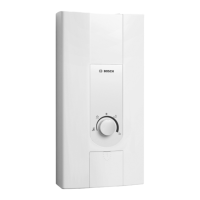
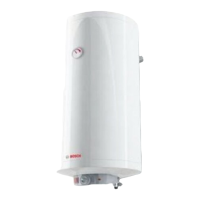
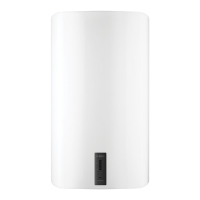
This document serves as an installation and maintenance manual for the Bosch Tronic 5000T Electric Water Heater, providing comprehensive instructions for safe and efficient operation.
Function Description
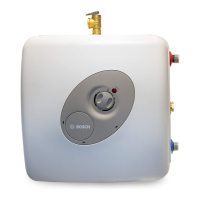
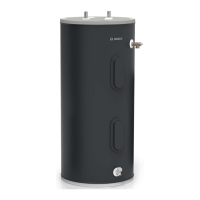
The Bosch Tronic 5000T is an electric water heater designed to provide hot water for residential use. It features automatic controls to regulate heating elements and surface-mounted thermostats to maintain a desired water temperature. The unit is designed for indoor installation only and is certified for use with specific voltage ratings, as indicated on its data plate. The water heater operates by heating water stored in its tank using electric elements. It incorporates safety features such as a temperature and pressure relief (TPR) valve and an Energy Cut Off (ECO) device to prevent excessive temperatures and pressures.
Usage Features
The water heater offers adjustable temperature regulation, allowing users to set the desired hot water temperature. The thermostats are pre-set at 125°F (51°C) from the factory to reduce the risk of scalding, but can be adjusted to higher temperatures if needed for specific appliances like dishwashers or clothes washers. However, users are cautioned about the increased risk of scalding at higher temperatures and the recommendation to install an ASME-approved mixing valve to reduce point-of-discharge temperatures. For extended periods of non-use, such as vacations, it is recommended to turn the thermostats to their lowest settings to conserve energy and prevent freezing.
The water heater is designed for use with potable water that meets specific chemistry requirements, including pH levels between 6.5 and 8.5, water hardness between 5 and 7 grains/gallon (85-120 mg/L), chloride concentration less than 100 ppm (mg/L), and total dissolved solids (TDS) less than 500 ppm (mg/L). Using water outside these parameters can affect efficiency and potentially damage the appliance, which may not be covered by the warranty.
Maintenance Features
Regular maintenance is crucial for the longevity and efficient operation of the Bosch Tronic 5000T. The manual outlines several key maintenance procedures:
- Draining the Heater: It is recommended to drain a few quarts of water from the heater after the first 6 months of operation, and then annually thereafter, to flush out accumulated sediment. In hard water areas (7 grains/gallon or above), this should be done monthly. Before draining, the power to the heater must be turned off to prevent damage to the elements. The drain valve should be connected to a suitable drain, and hot water faucets should be opened to vent the heater during draining.
- Testing the TPR Valve: The temperature and pressure relief valve should be manually operated at least once a year to ensure it is functioning correctly. This involves lifting the lever to allow water to discharge freely. If the valve fails to operate or continues to release water, it must be replaced by a new, properly rated relief valve.
- Inspecting Heating Elements: The electric heating elements should be checked at least once a year. If they are coated with calcium or mineral deposits, they should be cleaned using white vinegar and a stiff bristle brush. Replacement of heating elements, if necessary, requires disconnecting power, draining the tank, and should only be performed by a qualified service technician due to the involvement of electrical wiring.
- Anode Rod Inspection and Replacement: The anode rod is a sacrificial component designed to prevent corrosion and premature tank failure. It should be inspected after the first six months of operation when the tank is drained and flushed. If the rod is substantially worn out or depleted (less than ½ inch thick or heavily coated with calcium), it should be replaced. Thereafter, annual or more frequent inspections are recommended, especially if using a water softener, which can accelerate anode rod depletion.
- Troubleshooting: The manual includes a troubleshooting guide to help users identify and resolve common issues such as rumbling noises, relief valve discharge, rattling noises, insufficient hot water, or excessively hot water. This guide provides possible causes and recommended actions, including checking electrical supply, thermostat settings, and contacting a qualified service technician if necessary.
- Installation Checklist: An installation checklist is provided to ensure all aspects of the installation, including location, water supply, relief valve, and wiring, are correctly addressed. This helps confirm that the water heater is installed in accordance with instructions and local codes.
The manual emphasizes that installation and service must be performed by a qualified installer or service agency to ensure safe and proper operation, and to maintain warranty validity. Tampering with components or using unauthorized devices can cause damage, injury, or death, and will void all warranties.


 To Next Page
 General