This machine has manual cable feed. The cable must be
fed by hand and does not automatically extend or retract
into the machine.
This machine should not be operated in reverse under
normal operating conditions. Reverse should be used only
for a few seconds at a time to free a stuck cutting tool.
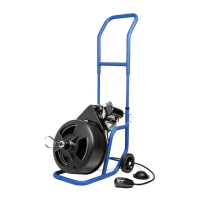
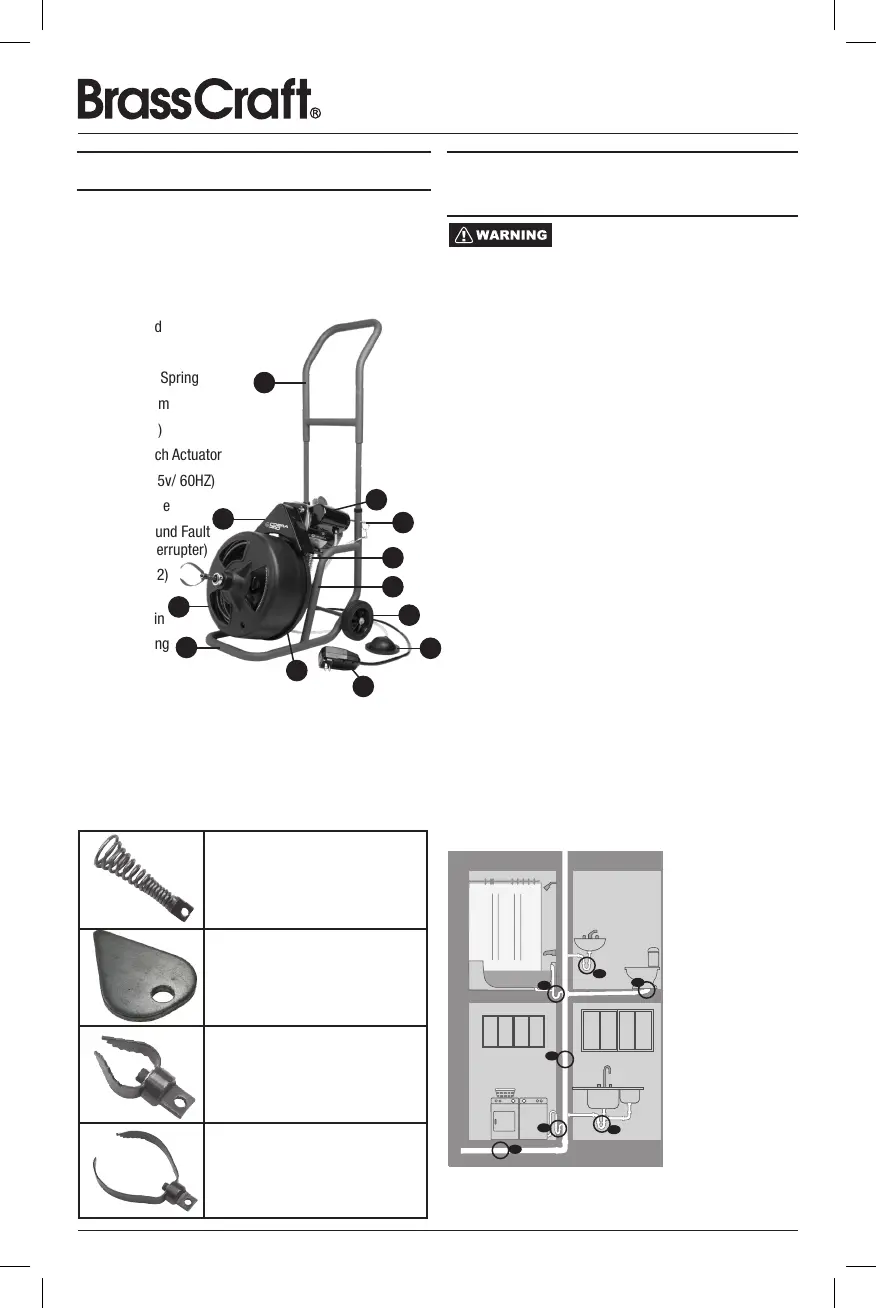
1. Belt Guard
2. Belt
3. Extension Spring
4. Cable Drum
5. Wheels (2)
6. Foot Switch Actuator
7. Motor (115v/ 60HZ)
8. Base Frame
9. GFCI (Ground Fault
Circuit Interrupter)
10. Uprights (2)
11. Frame
release pin
12. Telescoping
Handle
MACHINE DESCRIPTION
Tool Description
Your cable drum machine has four benecial tool
attachments to cope with a wide variety of obstructions.
As a general guideline, it is wise to use a tool that is at
least 1" smaller than the line to be cleared. The nature of
the job and the operator’s judgment should determine the
type of tool.
• ST-96205
• 3/4" x 5"
Straight Boring Head
for initial exploration of clog
• ST-96207
• 1-1/2" x 2"
Slotted Spear Head
for piercing clogs
• ST-96201
• 1-1/4" x 2"
Grease Cutter
for grease blockages
• ST-96208
• 2" x 4"
Side Cutter
for nishing pipe cleaning
PREPARATION
FOR OPERATION
Do not operate a machine that has the belt guard
removed, any absent or broken parts, or that is
incorrectly assembled. If your machine does not meet all
of the conditions in this section, do not operate until the
machine is properly repaired (See Repairing Your Drum
Machine). Failure to properly prepare for operation may
result in shock, re, and/or serious personal injury or death.
Check Your Personal Protective Equipment
Be sure your personal protective equipment (See
Personal Protection Equipment Section) is in good
condition. Before use, ensure gloves are not damaged.
Prepare the Work Area
• Make sure the work area has satisfactory lighting.
• Do not work in areas that have combustible liquids,
dust or vapors that may ignite. The drain machine is
not explosion resistant and can create sparks.
• Do not work in any area until all the amable
soruces have been identied and corrected.
• Never place the machine in water. If necessary
remove the water from the work area prior to use.
• Be sure the electrical outlet is properly grounded.
If unsure, have the outlet inspected by a licensed
electrician.
• Make sure the path for the power machine
transportation and power cord are clear of
obtsructions. Any potential sources of damage to the
power cord or machine should be relocated prior to use.
• Keep bystanders and childred away from the work area.
• Drain cleaning can be messy. If necessary, use
protective covers.
Inspect and Prepare the Drain
1
2
1
1
4
3
1
• Determine if
cleaning chemicals
have been used in
the drain. If
chemicals are
present, contact the
chemical
manufacture to
understand the
safety measures that
are necessary to
work around those
substances.
• Properly
inspect the drain.
Determine the best
access point to the
drain and the size of
the drain. If possible,
determine the distance to the blockage or the nature
of the clog. If necessary, remove the xture (toilet, sink,
etc.) to allow access to the drain.
4
7
5
3
1
6
8
2
10
12
11
9


 To Next Page
 Loading...