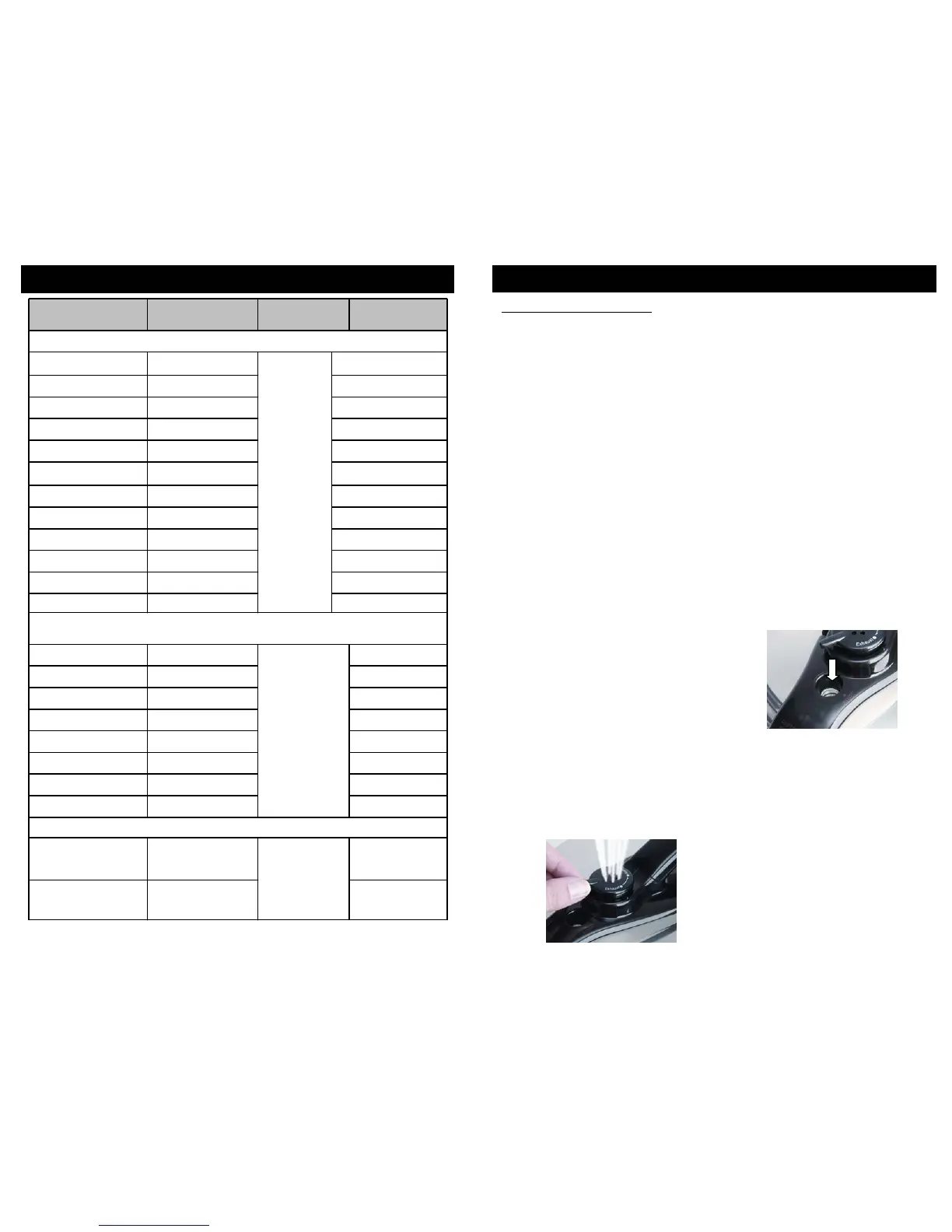
COOKING GUIDE
FOOD SETTING
COOKING
TIME
RELEASE
METHOD
VEGETABLES - Add 1-1/2 cups water
Artichoke Cook
Cook times
will range
from 15 to
40 minutes
on the Cook
Setting.
Quick
Asparagus Cook Quick
Beans (Green) Cook Quick
Beets Cook Quick
Broccoli Cook Quick
Cabbage Cook Combination
Carrots Cook Quick
Cauliflower Cook Quick
Corn Cook Quick
Potato Cook Combination
Spinach Cook Combination
Squash Cook Combination
BEANS, MEAT, POULTRY, AND FISH - When adapting standard recipes, use 1/2
amount of water used with conventional cooking
Beef Beef/Pork
Cook times will
range from:
40 to 70 minutes
on Beef/Pork
Setting,
30 to 50 minutes
on Chicken
Setting,
15 to 40 minutes
on Fish Setting.
Combination
Chicken Chicken Combination
Pork Beef/Pork Combination
Shellfish Fish Combination
Fish Fish Combination
Beans (Navy) Beef/Pork Combination
Beans (Kidney) Beef/Pork Combination
Split peas Fish Quick
RICE - To reduce foam add at least one tablespoon of oil or butter
Rice (White) - Use 1/3
to 1/2 less than normal
recipe
Cook
Cook times will
range from 15 to
40 minutes on
the Cook
Setting.
Combination
Rice (Brown) - Use 1/4
to 1/2 less than normal
recipe
Cook
Combination
Note: Cook times will vary as the pressure cooker will adjust the cooking times based
on the volume of ingredients and liquid added to the pot.
7 8
OPERATING INSTRUCTIONS
Releasing Steam Pressure
WARNING: Use extreme caution when
removing the cover after cooking. Serious
burns can result from steam inside.
After you have finished cooking in your
pressure cooker, you can release the
steam pressure in one of three (3) ways,
“Quick Release” , “Combination” and
“Normal”.
Quick Release Method:
1. After the cooking process has been
completed, press the “Keep
Warm/Cancel” button to stop the
pressure cooker from going into the
“Keep Warm” mode.
2. Turn the steam release valve to the
“Open” position to release the steam
fast. (Fig. 8)
3. Wait until the safety float valve has
gone down before removing the cover.
Always lift the cover away from you to
release any remaining steam so that
you do not get burned.
CAUTION: Escaping steam is very hot.
To avoid serious injuries or burns, keep
bare skin, face and eyes away from the
steam release valve.
CAUTION: Do not use the quick release
method for foods with a lot of liquid
such as soups and sauces. There could
be an overflow.
Combination Method:
1. After the cooking process has been
completed, press the “Keep
Warm/Cancel” button to stop the
pressure cooker from going into the
“Keep Warm” mode.
2. Let the unit cool down for approx. thirty
(30) minutes and then turn the steam
release valve to the “Open” position to
release the steam. (Fig. 8)
3. Wait until the safety float valve has
gone down before removing the cover.
Always lift the cover away from you to
release any remaining steam so that
you do not get burned.
Normal Method:
Allowing the steam to release naturally is
preferred when cooking foods like stocks,
sauces, and certain large cuts of meat
which will benefit from continuing to cook
in the pressure cooker. As the
temperature decreases so does the
pressure.
1. After the cooking process has been
completed, press the “Keep
Warm/Cancel” button to stop the
pressure cooker from going into the
“Keep Warm” mode.
2. Wait until the safety float valve has
gone down before removing the
cover. Always lift the cover away from
you to release any remaining steam
so that you do not get burned. (Fig. 9)
NOTE: Do not use this method with
foods that easily overcook.
CAUTION: Never attempt to force open
the pressure cooker cover until the
safety float valve has dropped.
NOTE: Since overcooked food cannot be
corrected, it is almost better to err on the
undercooked side by cooking an
unfamiliar food for a shorter period of
time than you may think necessary.
Fig. 8
Fig. 9
IMPORTANT: Do not use the “Quick
Release” method with foods such as
legumes, grain, or other foods that
froth or when the pressure cooker is
very full.


 To Next Page
 Loading...