EasyManua.ls Logo

Broan BWS1304SS - User Manual

Broan BWS1304SS
11 pages
Print Icon
To Next Page IconTo Next Page
Loading...
MODELS BWS1304SS • BWS1304BLS •
BWS2304SS • BWS2304BLS
Page 1
READ AND SAVE THESE INSTRUCTIONS
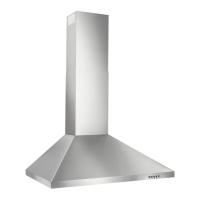
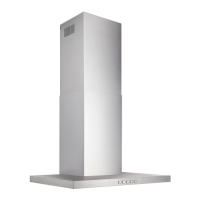
CHIMNEY
RANGE HOOD
!
INTENDED FOR DOMESTIC COOKING ONLY.
!
TO REDUCE THE RISK OF FIRE, ELECTRIC SHOCK, OR
INJURY TO PERSON(S) OBSERVE THE FOLLOWING:
1. Use this unit only in the manner intended by the manufacturer.
If you have questions, contact the manufacturer at the
address or telephone number listed in the warranty.
2. Before servicing or cleaning unit, switch power off at service
panel and lock service disconnecting means to prevent
power from being switch on accidentally. When the service
disconnecting means cannot be locked, securely fasten a
prominent warning device, such as a tag, to the service
panel.
3. Installation work and electrical wiring must be done by
qualified personnel in accordance with all applicable codes
and standards, including fire-rated construction codes and
standards.
4. Sufficient air is needed for proper combustion and exhausting
of gases through the flue (chimney) of fuel burning equipment
to prevent backdrafting. Follow the heating equipment
manufacturer’s guidelines and safety standards such as
those published by the National Fire Protection Association
(NFPA), the American Society for Heating, Refrigeration
and Air Conditioning Engineers (ASHRAE) and the local
code authorities.
5. This product may have sharp edges. Be carefule to avoid
cuts and abrasions during installation or cleaning.
6. When cutting or drilling into wall or ceiling, do not damage
electrical wiring and other hidden utilities.
7. Ducted fans must always be vented to the outdoors.
8. Do not use this unit with any other solid-state speed control
device.
9. Use only metal ductwork.
10. This unit must be grounded.
TO REDUCE THE RISK OF A RANGE TOP GREASE FIRE:
a) Never leave surface units unattended at high settings.
Boilovers cause smoking and greasy spillovers that may
ignite. Heat oils slowly on low or medium settings.
b) Always turn hood ON when cooking at high heat or when
cooking flaming foods (i.e. Crêpes Suzette, Cherries Jubilee,
Peppercorn Beef Flambé).
c) Clean ventilating fans frequently. Grease should not be
allowed to accumulate on fan or filters.
d) Use proper pan size. Always use cookware appropriate for
the size of the surface element.
WARNING
TO REDUCE THE RISK OF INJURY TO PERSON(S) IN THE
EVENT OF A RANGE TOP GREASE FIRE, OBSERVE THE
FOLLOWING*:
1. SMOTHER FLAMES with a close-fitting lid, cookie sheet, or
metal tray, then turn off the burner. BE CAREFUL TO PREVENT
BURNS. IF THE FLAMES DO NOT GO OUT IMMEDIATELY,
EVACUATE AND CALL THE FIRE DEPARTMENT.
2. NEVER PICK UP A FLAMING PAN – You may be burned.
3. DO NOT USE WATER, including wet dishcloths or towels –
This could cause a violent steam explosion.
4. Use an extinguisher ONLY if:
A. You know you have a Class ABC extinguisher and you
know how to operate it.
B. The fire is small and contained in the area where it
started.
C. The fire department has been called.
D. You can fight the fire with your back to an exit.
* Based on “Kitchen Fire Safety Tips” published by NFPA.
CAUTION
!
1. For indoor use only.
2. For general ventilating use only. Do not use to exhaust
hazardous or explosive materials and vapors.
3. To avoid motor bearing damage and noisy and/or
unbalanced impeller, keep drywall spray, construction dust,
etc. off power unit.
4. Do not use over cooking equipment greater than 60,000
BTU/hr. as the blower motor will shut down intermittently.
5. Your hood motor has a thermal overload which will
automatically shut off the motor if it becomes overheated.
The motor will restart when it cools down. If the motor
continues to shut off and restart, have the hood serviced.
6. The bottom of the hood MUST NOT BE LESS than 24” and
at a maximum of
36” above cooktop for best capture of
cooking impurities.
7. Two installers are recommended because of the size of
this hood.
8. To reduce risk of fire and to properly exhaust air, be sure
to duct air outside. Do not exhaust air into spaces within
walls or ceilings or into attics, crawl spaces, or garages.
9. Be careful when installing the decorative flue and hood,
they may have sharp edges.
10. Please read specification label on product for further
information and requirements.
INSTALLER: LEAVE THIS GUIDE WITH THE HOMEOWNER.
HOMEOWNER: OPERATION AND MAINTENANCE INFORMATION ON PAGE 2.
WARNING
To register this product visit:
www.broan.com or
www.broan.ca

Question and Answer IconNeed help?

Do you have a question about the Broan BWS1304SS and is the answer not in the manual?

Summary

General Safety Instructions

Fire, Electric Shock, and Injury Prevention

Observe safety guidelines to reduce risks of fire, electric shock, or injury during operation and installation.

Range Top Grease Fire Prevention

Follow precautions to minimize the risk of a range top grease fire and ensure safe cooking practices.

Grease Fire Injury Prevention

Specific steps and warnings for handling range top grease fires safely to prevent injury.

Cleaning and Maintenance

Installing Ductwork

Preparing the Hood for Installation

Wiring Installation

Installing the Hood Mounting Bracket

Installing Upper Flue Mounting Bracket

Installing Hood (Horizontally Ducted)

Connecting Ductwork to Hood

Installing Hood (Vertically Ducted)

Securing Hood to Wall

Non-Ducted Installation Preparation

Connecting Non-Ducted Components

Flue and Filter Assembly

Overview

This document describes a chimney range hood, designed for domestic cooking. It provides instructions for installation, operation, and maintenance, emphasizing safety precautions throughout.

Function Description

The chimney range hood is designed to ventilate cooking fumes and odors from the kitchen, ensuring a cleaner and more comfortable cooking environment. It features a motor/blower assembly that draws air through grease filters, which capture airborne grease particles. For ducted installations, the air is exhausted outdoors through a duct system. For non-ducted (recirculation) installations, the air passes through additional non-ducted recirculation filters before being returned to the kitchen. The hood also includes integrated lighting to illuminate the cooktop.

Usage Features

The hood is operated via push buttons located on the front panel.

  • Blower Controls: Users can select between low, medium, and high blower speeds. An indicator light illuminates for the selected speed. Pressing the button for the current speed will stop the blower.
  • Light Control: A dedicated light button turns the cooktop lights on and off.
  • 5-Minute Delay Function: While the blower is active, pressing the 5-minute delay button (indicated by a beaming light) will cause the hood to run for 5 minutes before automatically turning off. Changing the blower speed or pressing the 5-minute delay button again will cancel this function.

Safety Precautions for Use:

  • General Safety: The unit should only be used as intended by the manufacturer. Before servicing or cleaning, power must be switched off at the service panel and locked to prevent accidental power-on. Installation and electrical wiring must be performed by qualified personnel according to all applicable codes and standards, including fire-rated construction codes.
  • Airflow: Sufficient air is required for proper combustion and exhausting of gases from fuel-burning equipment to prevent backdrafting. Users should follow heating equipment manufacturer guidelines and safety standards.
  • Sharp Edges: The product may have sharp edges, so caution is advised during installation and cleaning to avoid cuts and abrasions.
  • Ducting: Ducted fans must always be vented outdoors. The unit should not be used with solid-state speed control devices. Only metal ductwork should be used. The unit must be grounded.
  • Range Top Grease Fire Prevention:
    • Never leave surface units unattended at high settings, as boilovers can cause smoking and greasy spills that may ignite. Heat oils slowly on low or medium settings.
    • Always turn the hood on when cooking at high heat or when cooking flaming foods (e.g., Crêpes Suzette, Cherries Jubilee, Peppercorn Beef Flambé).
    • Clean ventilating fans frequently to prevent grease accumulation on the fan or filters.
    • Use proper pan sizes appropriate for the surface element.
  • Responding to a Range Top Grease Fire:
    • Smother flames with a close-fitting lid, cookie sheet, or metal tray, then turn off the burner. Exercise caution to prevent burns. If flames do not extinguish immediately, evacuate and call the fire department.
    • Never pick up a flaming pan to avoid burns.
    • Do not use water, including wet dishcloths or towels, as this can cause a violent steam explosion.
    • Use an extinguisher only if you have a Class ABC extinguisher and know how to operate it, the fire is small and contained, the fire department has been called, and you can fight the fire with your back to an exit.
  • General Cautions:
    • For indoor use only.
    • For general ventilating use only; do not use to exhaust hazardous or explosive materials and vapors.
    • To prevent motor bearing damage and noisy/unbalanced impeller, keep drywall spray, construction dust, etc., off the power unit.
    • Do not use over cooking equipment greater than 60,000 BTU/hr, as the blower motor may shut down intermittently.
    • The hood motor has a thermal overload that will automatically shut off if it overheats. The motor will restart when it cools down. If it continues to shut off and restart, the hood should be serviced.
    • The bottom of the hood must be between 24" and 36" above the cooktop for optimal capture of cooking impurities.
    • Two installers are recommended due to the hood's size.
    • To reduce fire risk and ensure proper air exhaust, duct air outside. Do not exhaust air into walls, ceilings, attics, crawl spaces, or garages.
    • Exercise caution when installing the decorative flue and hood, as they may have sharp edges.
    • Refer to the product specification label for further information and requirements.

Maintenance Features

Proper maintenance ensures the range hood's optimal performance.

  • Motor: The motor is permanently lubricated and does not require oiling. If the motor bearings produce excessive or unusual noise, the blower should be replaced with an exact service blower.
  • Grease Filters: These filters should be cleaned frequently using a warm dishwashing detergent solution. They are dishwasher safe. For all-metal filters, use a non-phosphate detergent in the dishwasher. Discoloration may occur with phosphate detergents or local water conditions but does not affect performance and is not covered by warranty. To remove, pull down the metal latch tab, tilt downward, and remove. Reinstall by aligning rear filter tabs with slots, pulling down the latch tab, pushing the filter into position, and releasing.
  • Non-Ducted Recirculation Filters (for non-ducted models): These filters should be changed every 6 months, or more often if cooking generates extra grease (e.g., frying, wok cooking). To replace, turn the filter mounting tabs to remove and replace.
  • Stainless Steel Cleaning:
    • DO: Regularly wash with a clean cloth or rag soaked in warm water and mild soap or liquid dish detergent. Always clean in the direction of the original polish lines. Rinse well with clear water (2 or 3 times) after cleaning and wipe dry completely. Specialized household stainless steel cleaners may also be used.
    • DON'T: Use steel or stainless steel wool or any other scrapers to remove stubborn dirt. Avoid harsh or abrasive cleansers. Do not allow dirt to accumulate. Prevent plaster dust or other construction residues from reaching the hood; cover the range hood during construction/renovation.
    • Avoid (when choosing a detergent): Cleaners containing bleach will attack stainless steel. Products containing chloride, fluoride, iodide, or bromide will rapidly deteriorate surfaces. Combustible cleaning products such as acetone, alcohol, ether, or benzol are highly explosive and should never be used near a range.

Installation Considerations:

  • Ductwork (Ducted Hoods Only):
    • Plan the ductwork run between the hood and the outside. A straight, short duct run maximizes hood efficiency. Long runs, elbows, and transitions reduce performance; use as few as possible. Larger ducting may be required for longer runs.
    • Install a wall cap or roof cap. Connect round metal ductwork to the cap and work back towards the hood location. Seal all joints with duct tape.
    • Install damper flaps inside the blower exhaust opening, ensuring pins are top-oriented.
  • Wiring:
    • The appliance must be grounded. It is equipped with a cord having a grounding wire and plug, which must be plugged into a properly installed and grounded outlet. A recessed "clock" outlet is recommended.
    • Position the electrical outlet within the decorative flue area, ensuring it does not interfere with the round duct, mounting brackets, or where the decorative flue touches the wall.
  • Mounting:
    • Construct wood wall framing flush with the interior wall studs, centered over the installation location, and at a height that allows the mounting bracket to be secured within the specified dimensions.
    • After the wall surface is finished, center and level the hood mounting bracket and secure it to the wall framing with three no. 8 x 1½" mounting screws. Do not use drywall anchors.
    • For the upper flue mounting bracket, if no framing member is present, drill two 5/16" diameter holes and insert drywall anchors. Center the bracket over the hood location, flush with the ceiling, with slots at the bottom. Secure with two no. 8 x 1½" mounting screws.
    • The minimum hood distance above the cooktop must be 24". A maximum of 36" above the cooktop is highly recommended for best capture of cooking impurities. Distances over 36" are at the installer's and user's discretion, provided ceiling height permits.
  • Hood Installation (Horizontally Ducted):
    • Do not remove the protective plastic film from the decorative flue and hood yet.
    • Lay the hood flat on a table (using cardboard to prevent damage).
    • Remove grease filters.
    • Rotate the hood upright.
    • Ensure adequate clearance between the top of the hood and the lower flue mounting bracket for ductwork; the elbow must be below the lower flue mounting bracket.
    • Align and center the hood above the hood mounting bracket, gently lowering it until it securely engages.
    • With the hood hanging, drill through both holes in the inside lower back of the hood (5/16" drill bit). Insert drywall anchors, then install two washers and two no. 8 x 1½" mounting screws through the hood back into the anchors. Verify the hood is centered and leveled.
    • Reinstall grease filters.
    • Measure and install 6" round steel ductwork to the blower exhaust opening on top of the hood, using a 90° elbow. Seal all joints with duct tape.
    • Plug the hood power cord into the outlet.
    • Slide the upper flue upward until it aligns with its upper flue mounting bracket. Secure the upper flue to the bracket with two no. 8 x 3/8" mounting screws.
    • Remove protective plastic film.
  • Hood Installation (Vertically Ducted):
    • Follow the same initial steps as horizontally ducted installation (protective film, laying hood flat, removing filters, rotating upright).
    • Remove the upper flue from inside the lower flue. Install the lower flue bracket to the lower flue using two no. 8 x 3/8" flue bracket screws, ensuring the bracket is inside the lower flue flanges with slots on top. Carefully replace the upper flue inside the lower flue. Remove protective plastic film from the lower flue only.
    • Carefully place both flues into the recessed area of the hood top.
    • Measure and install 6" round steel ductwork to the blower exhaust opening on top of the hood. Seal all joints with duct tape.
    • Plug the hood power cord into the outlet.
    • Align and center the hood above the hood mounting bracket, ensuring ductwork lines up and attaches to ceiling ductwork. Gently lower the hood until it securely engages.
    • Use duct tape to seal all joints.
    • With the hood hanging, drill through both holes in the inside lower back of the hood (5/16" drill bit). Insert drywall anchors, then install two washers and two no. 8 x 1½" mounting screws through the hood back into the anchors. Verify the hood is centered and leveled.
    • Reinstall grease filters.
    • Slide the upper flue upward until it aligns with its upper flue mounting bracket. Secure the upper flue to the bracket with two no. 8 x 3/8" mounting screws.
    • Remove protective plastic film.
  • Hood Installation (Non-Ducted):
    • A Non-Duct Kit (Model ARKBWS) is required and purchased separately. Only the flexible duct provided with the kit should be used.
    • Do not remove the protective plastic film from the decorative flue and hood yet.
    • Lay the hood flat on a table (using cardboard to prevent damage).
    • Remove grease filters.
    • Attach the non-duct collar to the non-duct plenum using four no. 8 x 3/8" pan head screws.
    • Measure the length of the extended flexible duct needed.
    • Attach the aluminum flexible duct to the blower discharge opening with a tie wrap.
    • Attach the flexible duct to the non-duct plenum collar and secure with a tie wrap. Tape all joints with duct tape.
    • Hold the hood up close to the wall mounting location and plug the power cord into the wall outlet.
    • Align and center the hood above the hood mounting bracket. Gently lower the hood until it securely engages.
    • With the hood hanging, drill through both holes in the inside lower back of the hood (5/16" drill bit). Insert drywall anchors, then install two washers and two no. 8 x 1½" mounting screws through the hood back into the anchors. Verify the hood is centered and leveled.
    • Attach two non-duct recirculation filters to the sides of the blower by aligning the key lock slot and rotating until they lock into place.
    • Reinstall grease filters.
    • Remove the upper flue from inside the lower flue. Install the lower flue bracket to the lower flue using two no. 8 x 3/8" flue bracket screws, ensuring the bracket is inside the lower flue flanges with slots on top. Carefully replace the upper flue inside the lower flue. Remove protective plastic film from the lower flue only.
    • Carefully place both flues into the recessed area of the hood top.
    • Attach the non-duct plenum with collar to the upper flue using four no. 8 x 3/8" pan head screws.
    • Slide the upper flue upward until it aligns with its upper flue mounting bracket. Secure the upper flue to the bracket with two no. 8 x 3/8" mounting screws.
    • Remove protective plastic film.

Broan BWS1304SS Specifications

General IconGeneral
TypeUnder Cabinet
MaterialStainless Steel
Width30 inches
LightingYes
Filter TypeAluminum Mesh
Vent Size3.25 x 10 inches
Number of Fan Speeds3
Light TypeIncandescent
Number of Lights2
Voltage120V
Sound Level1.5 Sones

Related product manuals