
 Need help?
Do you have a question about the CALEFFI 508013A and is the answer not in the manual?
Details connection, materials, maximum working pressure for hot water and steam, maximum working temperature, and peak temperature.
Provides essential safety alert information, warnings about chemical exposure, and cautions for installation and operation.
Explains the manual discharge position for system filling and the automatic discharge position for venting air.
Details service instructions, cautions regarding corrosion, and the procedure for replacing the hygroscopic cartridge.
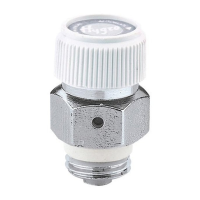
This document describes the Caleffi Automatic Hygroscopic Air Vent for radiators, a device designed to automatically release air from closed hydronic or steam heating systems.
The primary function of this air vent is to remove air from heating systems, which is crucial for efficient operation. Air trapped in radiators can cause cold spots, reduce heating efficiency, and lead to noise in the system. The hygroscopic air vent utilizes a special disc that reacts to the presence of water or air. When air is present, the disc allows it to escape. When water reaches the disc, it expands, sealing the vent and preventing water from leaking out. This automatic operation ensures continuous air removal without manual intervention once properly set.
The device can operate in two main modes: manual discharge and automatic discharge. In the manual discharge position, the knob is unscrewed counter-clockwise one turn. This position is primarily used when initially filling the system, allowing a rapid release of a large volume of air. For normal operation, the knob is turned clockwise until it seats completely, engaging the automatic discharge function. In this mode, the valve continuously vents air as it accumulates in the system.
The air vent is specifically designed for use in closed hydronic or steam systems. It is important to note that it is not intended for plumbing applications and does not meet the low-lead plumbing standards of the U.S. and Canada. This distinction is critical for ensuring proper application and compliance with relevant regulations.
Installation of the air vent should be performed by qualified personnel who are trained in the proper application, installation, and maintenance of such systems, in accordance with all applicable codes and ordinances. This ensures safe and effective operation. When installing, caution should be exercised with pipe joint compounds like Teflon® as their lubricity can lead to over-tightening and potential breakage. Over-tightening can cause property damage and/or personal injury.
Before any installation or maintenance work, it is crucial to ensure that system fluids are not under pressure and the system temperature is below 100°F (38°C). Failure to observe these precautions can result in property damage and/or personal injury due to hazardous pressure or temperature.
Regular maintenance is essential to ensure the continued effectiveness and longevity of the hygroscopic air vent. The device contains a hygroscopic disc within its cartridge (knob) portion. This disc is the core component responsible for the automatic air venting function. Over time, the hygroscopic disc will deteriorate, affecting its performance.
To maintain optimal function, it is necessary to replace the cartridge at least every two years. In systems with aluminum radiators, replacement may be required sooner. A significant advantage of this design is that the cartridge can be easily replaced without draining the entire system, simplifying maintenance and reducing downtime.
The replacement process involves allowing the system to cool down. Once cool, the old cartridge is removed by unscrewing the knob counter-clockwise. A small ball inside the body of the vent prevents water from escaping during this process, minimizing mess and further simplifying the replacement. The replacement cartridge has a specific part number, 508100A, which should be used to ensure compatibility.
Periodical inspection for signs of corrosion or leakage is also a critical maintenance step. Corrosion or leakage can indicate a problem with the vent and, if left unaddressed, can cause damage or injury. If any signs of corrosion or leakage are noted, the vent must be replaced promptly. This proactive approach to maintenance helps prevent more significant issues and ensures the system operates safely and efficiently.
The product also carries a warning regarding potential chemical exposure, specifically lead, which is known to the State of California to cause cancer and birth defects or other reproductive harm. Users are directed to www.P65Warnings.ca.gov for more information, highlighting the importance of being aware of potential hazards associated with the product's materials.
 General
| Product Type | Thermostatic Mixing Valve |
|---|---|
| Model Number | 508013A |
| Brand | CALEFFI |
| Material | Low-lead brass |
| Max Working Pressure | 150 psi |
| Maximum Pressure | 150 psi |
| Connection Size | 1/2 inch |
| Connection Type | NPT |

 To Next Page