appliance. You could injure yourself or damage
it. This appliance is not designed for stacking
with any other ones.
• The product is designed and built for domestic
household use only.
• Only original parts supplied by the
manufacturer may be used. The manufacturer
guarantees that only these parts satisfy the
safety requirements.
• Opening the door for long periods can cause a
significant increase of the temperature in the
compartments of the appliance.
- Clean regularly surfaces that can come in
contact with food and accessible drainage
systems.
- Clean water tanks if they have not been used for
48h; flush the water system connected to a
water supply if water has not been drawn for 5
days.
- Store raw meat and fish in suitable containers
in the refrigerator, so that it is not in contact
with or drip onto other food.
- Two-star frozen-food compartments(if they
are presented in the appliance) are suitable for
storing pre-frozen food, storing or making ice-
cream and making ice cubes.
- One-, two- and three -star compartments, if
present in the appliance, are not suitable for the
freezing of fresh food.
9
- If the appliance is left empty for long periods,
switch off, defrost, clean, dry and leave the door
open to prevent mould developing within the
appliance.
• FOR Wine Coolers: this appliance is intended to
be used exclusively for the storage of wine
• FOR a free standing appliance: this refrigerating
appliance is not intended to be used as a built-in
appliance
• FOR appliances without a 4-star compartment:
this refrigerating appliance is not suitable for
freezing foodstuffs.
Scrapping old appliances
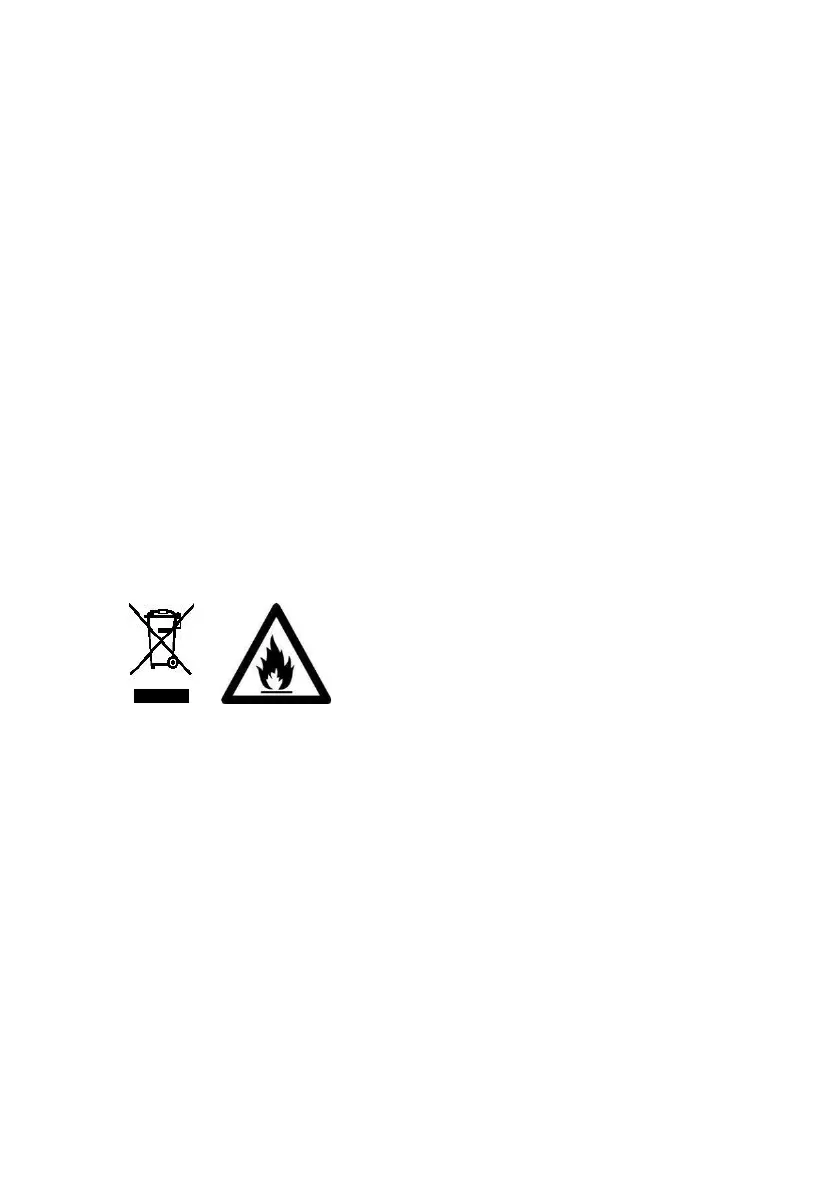
This appliance is marked according to the European directive 2012/19/EU on Waste Electrical
and Electronic Equipment (WEEE).
WEEE contains both polluting substances (which can cause negative consequences for the
environment) and basic components (which can be re-used). It is important to have WEEE
subjected to specific treatments, in order to remove and dispose properly all pollutants, and
recover and recycle all materials.
Individuals can play an important role in ensuring that WEEE does not become an
environmental issue; it is essential to follow some basic rules:
- WEEE should not be treated as household waste;
- WEEE should be handed over to the relevant collection points managed by the municipality
or by registered companies. In many countries, for large WEEE, home collection could be
present.
In many countries, when you buy a new appliance, the old one may be returned to the retailer
who has to collect it free of charge on a one-to-one basis, as long as the equipment is of
equivalent type and has the same functions as the supplied equipment.
9


 To Next Page