Need help?
Do you have a question about the Candy FIDC B676 and is the answer not in the manual?
This document provides comprehensive user instructions for Candy ovens, covering safety, operation, maintenance, and installation.
The Candy oven offers a variety of cooking modes to suit different culinary needs. The LAMP function simply turns on the oven light, allowing for better visibility of the food during cooking. For frozen items, the DEFROST mode circulates air at room temperature, enabling quick thawing without altering the food's protein content.
The CONVENTIONAL mode utilizes both top and bottom heating elements, ideal for traditional roasting and baking. It requires about ten minutes of preheating and is suitable for red meats, roast beef, lamb, game, bread, foil-wrapped foods, and flaky pastry. Food should be placed on a shelf in the mid-position.
For more versatile cooking, the MULTI-LEVEL mode is recommended for poultry, pastries, fish, and vegetables. This mode ensures better heat penetration, reducing both cooking and preheating times. It allows for cooking different foods simultaneously on multiple positions, as it provides even heat distribution and prevents smells from mixing. An additional ten minutes should be allowed when cooking multiple foods at once.
The GRILL function uses only the top heating element with the oven door closed. It requires five minutes of preheating to get the elements red-hot and is excellent for grills, kebabs, and gratin dishes. White meats should be placed further from the grill for a longer but tastier cook, while red meats and fish fillets can be placed on the shelf with a drip tray underneath.
The COOK LIGHT function promotes healthier cooking by reducing the need for fat or oil. It combines heating elements with a pulsating air cycle to achieve perfect baking results.
For powerful grilling, the SUPERGRILL mode is available, suitable for gratins, roasts, grilled meats, fish, and vegetables. This function offers five grill levels (L1 to L5) and is more intense than the standard grill, making it suitable for barbecuing. Food should be turned two-thirds of the way through cooking if necessary.
The oven also features PYROLYSIS for automatic cleaning, with two pre-set cycles: ECO PYROCLEAN for moderately stained ovens (90 minutes) and SUPER PYROCLEAN for heavily stained ovens (120 minutes).
The Aquactiva Function uses steam to help remove fat and food particles. This involves pouring 300 ml of water into the designated container at the bottom of the oven, setting the function to Static or Bottom heater, and selecting the Aquactiva icon for 30 minutes. After the cycle, the oven should be allowed to cool before cleaning.
The oven's display includes a Timer/automatic mode, Fan function, Defrost mode, Temperature or clock display, LCD display adjustment controls, Function selector knob, and Programme selector knob. The display indicates temperature, cooking time, and "HOT" when the oven is still warm after a program finishes.
The SILENCE MODE allows users to turn off the minute minder sound. The SET THE TIME function is used to set the current time, especially after installation or a power cut. COOKING DURATION enables presetting the cooking time for a recipe, with an alarm sounding when finished. The END OF COOKING function allows users to set a desired end time, and the oven will automatically calculate the start time and switch off when done. The MINUTE MINDER acts as an alarm, emitting an audible signal at a set time. A CHILD SAFETY LOCK can be activated to prevent unintended use of the oven.
To ensure optimal performance and safety, several usage features are highlighted. During cooking, moisture condensation is normal; preheating the oven for 10-15 minutes before placing food can reduce this. Using lidded containers for vegetables is also recommended. Food should not be left in the oven for more than 15-20 minutes after cooking.
The appliance and its accessible parts become hot during use, so caution is advised, especially with children. The oven should be disconnected from the mains before replacing the bulb or performing any maintenance. It should not be powered by external switching devices like timers to avoid accidental resetting of the thermal interruption device. Children under 8 should be supervised, and cleaning should not be carried out by unsupervised children.
A meat probe, if present, should only be used as recommended. Steam cleaners or high-pressure sprays should not be used for cleaning. The oven must be switched off before removing removable parts for cleaning.
For ovens with a plug, the socket must be suitable for the load indicated on the tag and have a connected and operational ground contact. If the power cable is damaged, it must be replaced by a qualified professional or customer service. The oven should not be installed behind a decorative door to prevent overheating. When placing shelves, ensure the stop is directed upwards and rearwards, and the shelf is fully inserted.
Regular cleaning extends the appliance's lifespan. The oven should be cooled before manual cleaning. Abrasive detergents, steel wool, or sharp objects should not be used on enamelled parts; instead, use water, soap, or bleach-based detergents.
The glass window should be cleaned with a damp soft cloth after each use. For stubborn stains, a detergent-soaked sponge, well wrung out, can be used, followed by rinsing. The oven window seal can be cleaned with a slightly damp sponge.
Accessories should be cleaned with a wet, soapy sponge, rinsed, and dried, avoiding abrasive detergents. The drip pan should be removed after grilling, hot fat poured out, and then washed with hot water, a sponge, and washing-up liquid. For greasy residues, soaking in water and detergent or using a commercial oven detergent is effective.
For pyrolytic cleaning, all accessories, including grids, side racks, and telescopic guides, must be removed as they cannot withstand high temperatures. In ovens with a meat probe, the hole must be closed with the provided nut. Large spillages or stains should be removed manually before the pyrolytic cycle to prevent them from igniting. The oven door must be closed, and the door cleaned, removing any large food residues with a damp sponge (no detergents). Tea towels should not be placed in the oven.
The pyrolytic cycle can be initiated by rotating the function selector to the designated position, with options for ECO or SUPER. The preset time can be adjusted. The cycle can be deferred by changing the END time. The oven door locks automatically once a high temperature is reached and remains locked until the cycle is finished and the oven has cooled down.
For touch control ovens, the pyrolytic cycle is activated by selecting "pyrolysis," and the time can be adjusted using the programmer keys.
To change the bulb, disconnect the oven from the mains supply, unscrew the glass cover, replace the bulb with one of the same type, and then replace the glass cover. The product contains light sources of energy efficiency class G (Lamp) / F (10 Led).
Troubleshooting tips include setting the clock if the oven does not heat up, ensuring correct function and temperature settings, and cleaning the user interface panel with a microfiber cloth to remove condensation if there is no reaction from the touch interface.
 General
| Oven type | Electric |
|---|---|
| Number of ovens | 1 |
| Built-in display | Yes |
| Timer type | Digital |
| Energy efficiency class | A |
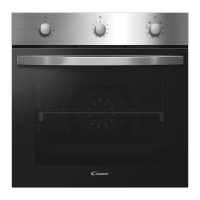
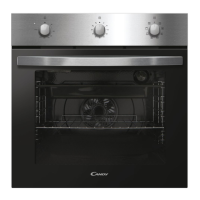
| Colour | Stainless steel |
| Type | Built-in |
| Number of Oven Functions | 8 |
| Color | Stainless steel |
| Width | 595 mm |
| Height | 595 mm |
| Depth | 568 mm |
| Dimensions (H x W x D) | 595 x 595 x 568 mm |


 To Next Page