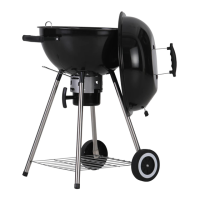
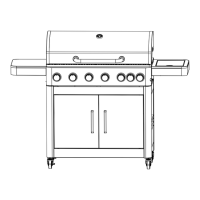
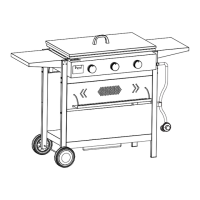
This document is a Use and Care Guide for the Captiva Designs E02GR010 outdoor cooking gas appliance, a portable gas grill designed for single-family/residential use.
Function Description:
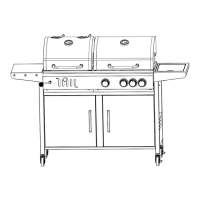
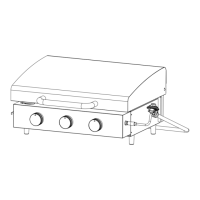
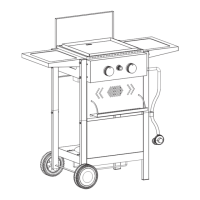
The Captiva Designs E02GR010 is a gas grill intended for outdoor cooking. It features two main burners, a cooking grill, and a griddle plate, allowing for versatile cooking options. The appliance is designed for use with a standard 20-lb LP (liquid propane) gas cylinder and includes an electronic ignition system for easy lighting. It is a self-contained LP system appliance, meaning the LP cylinder is directly connected to the grill.
Important Technical Specifications:
- Model No.: E02GR010
- BTU: 2x10000 BTU (total 20,000 BTU)
- Type of Gas: Propane
- Tank Capacity: 20 LB (standard 20-lb LP cylinder, 12 1/4"-diameter, 18"-tall, with right-handed connection threads and Overfill Prevention Device - OPD)
- Cooking Grill Area: 14.7" x 13.0"
- Griddle Plate Area: 13.7" x 13.1"
- Product Size: 36.5" x 19.9" x 35.1"
- Net/Gross Weight: 33 / 37.3 LBS
- Certification: Conforms to ANSI STD Z21.58-2018 and CSA STD 1.6-2018 for Outdoor Cooking Gas Appliances.
- Ignition: Electronic ignition requires one "AA" alkaline battery (not included).
Usage Features:
- Outdoor Use Only: This grill is strictly for outdoor use and must not be operated in buildings, garages, under overhangs, or any other enclosed areas to prevent carbon monoxide buildup and fire hazards.
- Clearance Requirements: A minimum clearance of 36 inches from sides and back to combustible construction is required.
- LP Cylinder Connection: The grill is designed for 20-pound LP cylinders equipped with an Overfill Prevention Device (OPD). The cylinder must be stored outdoors, out of reach of children, and not in temperatures exceeding 125°F. The manual provides detailed instructions for connecting and disconnecting the LP tank, emphasizing hand-tightening and avoiding tools for the coupling nut.
- Lighting Instructions: Both electronic and manual lighting procedures are provided. Users are instructed to open the lid, ensure control knobs are off, and if ignition doesn't occur within 5 seconds, turn off burners, wait 5 minutes, and repeat. Manual lighting involves pushing in and turning the control knob to Max, then holding the electronic igniter button for 15 seconds.
- Preheating: Before first use and before each cooking session, the grill should be preheated by running the main burners on Max for 5-10 minutes to burn off foreign matter and odors.
- Safety Warnings: The manual includes numerous safety warnings, including:
- Prop 65 Warning: Product may expose users to chemicals known to cause cancer and birth defects (Chromium hexavalent compounds).
- Gas Leaks: Instructions for leak testing with a soap-and-water solution are provided, emphasizing never using an open flame for testing.
- Flammable Materials: Do not store or use gasoline or other flammable liquids near the appliance.
- Spider/Insect Obstruction: Warnings about spiders and insects nesting in burner tubes, which can cause "flash-back" fires, necessitating frequent inspection and cleaning of burner tubes.
- Unattended Operation: Never leave a lit grill unattended and keep children and pets away.
- Windy Conditions: Avoid using the grill in windy conditions; a windbreak may be required in consistently windy areas.
- Accessories: Only use manufacturer-recommended accessories, regulators, or components.
- Battery Safety: Do not mix old and new batteries, different battery types, or dispose of batteries in fire.
Maintenance Features:
- Cleaning the Cooking Grate: Recommended to "burn-off" the grate after each use (approx. 15 minutes) by running burners on high, then cleaning with a wire brush. The chromium finish should be handled with care.
- General Cleaning: Mild liquid dish soap, warm water, and a nylon cleaning pad or wire brush are recommended for cleaning outside surfaces, the inside bottom pan of the grill body, flame tamers, and the grease cup. Avoid cleaners containing acid, mineral spirits, or abrasive substances.
- Grease Cup: Should be emptied and cleaned regularly to prevent flare-ups.
- Burner Assembly Cleaning: Detailed instructions are provided for removing, cleaning, and re-installing the burner assembly. This includes checking for clogs in burner ports and ensuring the burner end and primary air screen are clear of insect nests, dirt, or debris. Pliers or other tools should not be used to detach the ignition wire from the electrode to avoid damage.
- Flame Check: For optimal fuel efficiency, the flame should be a blue-yellow color and 1-2 inches high, visible through holes in the firebox.
- Ventilation: Ensure the flow of combustion and ventilation air is not obstructed, and ventilation openings of the cylinder enclosure are clear of debris.
- Regular Inspections: Visual checks of burner flames and overall appliance condition are recommended.
- Half-Year Maintenance: A general maintenance check is recommended once every six months.
- Troubleshooting Guide: A comprehensive table helps diagnose and solve common issues such as gas smell, burner not igniting, low temperature, strong flare-up, and popping/bubbling noises.
The warranty covers original owners for single-family/residential use for one year from the purchase date, requiring a sales slip or invoice. Installation, repair, and maintenance must be performed by an authorized service technician to maintain warranty validity. The warranty does not cover discoloration, surface rust, or rust unless there is a loss of structural integrity, and it is voided by improper maintenance, high cooking temperatures, or exposure to certain chemicals.


 To Next Page
 General