Carpigiani K 3 User’s guide
This manual is for the exclusive use of licensees and employees of McDonald’s Systems Inc Page 7 of 63
Version 5: October 2012
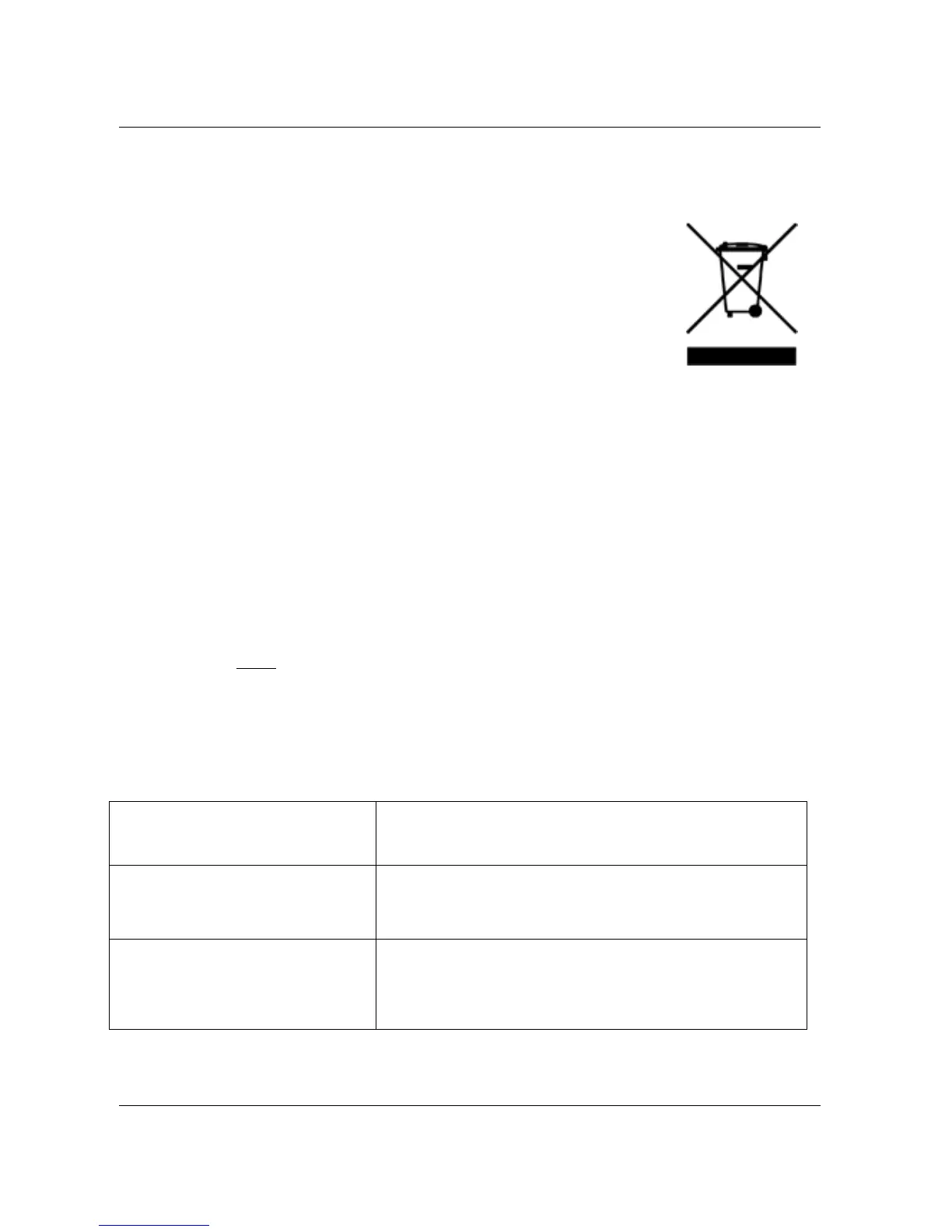
WEEE (Waste Electrical and Electronic Equipment)
In accordance with European Directives 2006/66CE on batteries and accumulators and waste batteries
and accumulators and with 2002/96/EC on WEEE (Waste Electrical and Electronic
Equipment), the presence of the above symbol on the product or on its packaging
indicates that this item must not be disposed of together with the other normal unsorted
municipal waste. Instead, it is the user’s responsibility to dispose of this product by
returning it to a collection point designated for the recycling of electrical and electronic
equipment waste. Separate collection of this waste helps to optimise the recovery and
recycling of any reclaimable materials and also reduces the impact on human health
and the environment.
For more information concerning the correct disposal of this product, please contact
your local authority or the retailer where this product was purchased.
Troubleshooting Bacteria Contamination
Product samples should be taken periodically by a qualified expert in order to asses the
bacteria count in the product. The bacteria count in the samples should be below the
figures given below:
Standard Plate Count (SPC)……………...50,000
Coliform …………………………………………10
Should the bacteria counts exceed the figures listed above then there is a source of bacterial
contamination. The source of contamination must be identified and corrected. High bacteria counts are
indicate that a product is not safe for consumption. You must inform the machine operator on how to
prevent bacterial contamination of the product.
Note: Soft serve yogurt
will generally have high bacteria counts – this is normal and helps define the
product. However, COLIFORM bacteria contamination is NOT ACCEPTABLE in any food product. The
information given below will help prevent coliform bacteria contamination problems.
The following is a list of possible bacteria contamination sources together with methods of
prevention.
SOURCE OF
CONTAMINATION
PREVENTION
1 - Operator contact.
1a - Wash hands and forearms thoroughly.
1b - Wear rubber gloves if cuts or skin conditions exist.
1c - Wash hands periodically throughout the day.
2 - Mix residue/deposits (milkstone
build-up).
2a - Provide the proper brushes.
2b - Thoroughly brush clean all parts and components to
prevent the formation of milkstone, a porous substance
which will house bacteria and contaminate fresh mix.



 To Next Page
 Loading...