Need help?
Do you have a question about the Carrier 06E and is the answer not in the manual?
Emphasizes the need for trained personnel and adherence to safety codes, including wearing safety glasses and gloves.
Warns of electrical shock hazard and the necessity of shutting off power before installation or servicing.
Describes the process for ensuring the refrigerant system is leak-free and properly dehydrated using specified methods.
Guidance on checking and adding approved compressor oil to the correct level in the crankcase.
Procedure for initiating the compressor start sequence, checking oil pressure, and verifying oil level after operation.
Explanation of the timer's role in compressor start delays, crankcase heater deactivation, and oil pressure switch bypass.
Details on how to check the high-pressure, low-pressure, and oil pressure switches and their settings.
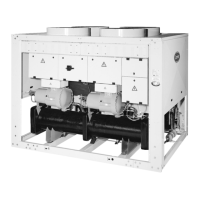
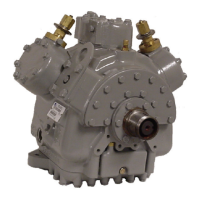
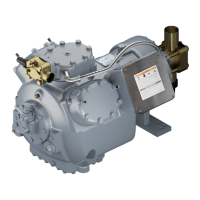
The Carrier 06E,07E Compressors and Condensing Units are designed for refrigeration and air conditioning applications, featuring hermetic, water-cooled operation. These units require careful installation, start-up, and regular service to ensure optimal performance and longevity.
The core function of these units is to compress refrigerant, facilitating heat transfer in refrigeration and air conditioning systems. The 06E and 07E models are hermetic, meaning the compressor and motor are sealed within a single housing, preventing refrigerant leaks and contamination. The water-cooled design utilizes water to dissipate heat from the condenser, making them suitable for applications where air-cooling is less efficient or impractical.
The compressors are equipped with a capacity control system, which allows for efficient operation under varying load conditions. This system typically involves capacity control valves that regulate the number of active cylinders, thereby adjusting the compressor's output. For instance, the suction cutoff unloader operation, as described, allows the compressor to run fully loaded when suction pressure is high and unload cylinders when suction pressure drops below a set point. This mechanism helps maintain system efficiency and prevents short cycling.
Protection devices are integrated to safeguard the compressor from abnormal operating conditions. These include high-pressure and low-pressure switches, which shut down the compressor if pressures exceed or fall below safe limits. An oil pressure switch (OPS) monitors the oil pressure differential, protecting against loss of lubrication. A discharge temperature sensor provides thermal protection, de-energizing the compressor if the discharge temperature becomes excessively high. The Time Guard® control prevents short cycling, further extending the life of the compressor.
Proper installation is crucial for the safe and efficient operation of the 06E,07E units. This involves carefully receiving and inspecting the unit for any shipping damage, and then positioning it in a well-ventilated area that allows sufficient space for refrigerant and water connections, as well as for future servicing. The unit must be leveled and bolted firmly to a foundation to minimize vibration and ensure stable operation. Compressor mounting bolts should be loosened to remove shipping blocks and then re-tightened to allow the compressor to float freely on its mounting springs, which helps absorb vibrations.
Piping connections for water supply and return lines, as well as refrigerant liquid and suction lines, must be made according to local codes and Carrier's System Design Manual. Special attention is required during soldering or brazing to prevent heat damage to valves. A solenoid valve is necessary for single pumpout control, and a filter drier of adequate size should be installed in the liquid line. Provision for draining and venting the condenser is essential, especially if the system is to be shut down in winter.
Electrical connections must comply with local and national codes. It is critical to ensure that the 3-phase supply voltage has an imbalance of no more than 2% to prevent motor damage and voiding the warranty. A branch circuit fused disconnect of adequate size must be installed within sight and readily accessible from the unit. Control circuit power supply (115 volts for 60 Hz units, 230 volts for 50 Hz units) is also required.
Before start-up, the entire refrigerant system must be evacuated, dehydrated, and leak tested using approved methods. The system should be charged to a clear sight glass, with additional refrigerant added for subcooler coils in air-cooled applications. The units are factory charged with oil, but the oil level must be checked and adjusted as needed to be within 1/8 to 3/8 of the bull's-eye during steady operation. Only Carrier-approved compressor oil should be used, and reused or atmosphere-exposed oil must be avoided.
Start-up procedures involve energizing the crankcase heater at least 24 hours prior to starting, checking oil level, opening water supply and liquid line valves, and starting the evaporator fan or chilled water pump. The compressor start is controlled by a timer, which introduces delays for time guard, part-winding start, oil pressure bypass, and low-pressure switch bypass, optimizing the start-up sequence and protecting the compressor.
Regular maintenance is essential for the long-term reliability of the 06E,07E units. This includes inspecting and servicing various components as described in the manual.
In the event of a motor burnout, the system becomes contaminated with carbon, water, and acid. A thorough clean-up procedure is necessary to prevent repeat failures:
For water-cooled condensers, regular maintenance is vital. This involves draining water, removing condenser heads, and inspecting tubes for refrigerant leaks. Tubes should be cleaned with a nylon brush, flushing water through them. If hard scale has formed, chemical cleaning may be necessary, consulting a water treatment firm for recommendations. Proper water treatment can minimize fouling and pitting. If ambient temperatures drop below 32°F during shutdown, the condenser must be protected from freezing by draining water or adding antifreeze.
 General
| Model | 06E |
|---|---|
| Type | Reciprocating |
| Power Source | Electric |
| Refrigerant | R-22 |
| Displacement | Varies by model |
| Maximum Pressure | 175 PSI |
| Voltage | 230V |
| Noise Level | Varies by model |
| Dimensions | Varies by model |

 To Next Page