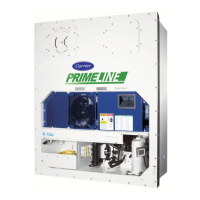
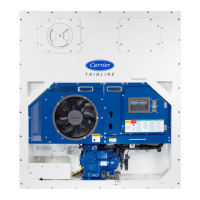
The Carrier Transicold EverFRESH® Controlled Atmosphere option is an advanced system designed to regulate the internal atmosphere of refrigerated containers, primarily to extend the shelf life of perishable cargo during transport. This system achieves precise control over oxygen (O2) and carbon dioxide (CO2) levels, which helps to slow down the ripening process of fruits and vegetables, making it suitable for longer voyages and a wider range of perishable commodities.
Function Description:
The EverFRESH system operates by actively managing the gas composition within the container. It utilizes an EverFRESH Air Compressor (EAC) to increase air pressure within the system. This compressed air, often warm and moisture-laden, is then directed through a condensing loop located above the fan deck in the refrigerated space. As the air cools, moisture condenses and is routed to a filter assembly.
The filter assembly, consisting of a water separator and two particulate filters, plays a crucial role in preparing the air. The water separator removes initial condensed moisture, followed by the first particulate filter which removes debris and any remaining moisture. A Water Drain Valve (WDV) periodically opens to expel accumulated condensate and solid material, which then drips onto the evaporator coil and into the defrost drain line.
After passing through the second particulate filter, the clean, dry air is directed to the EverFRESH Air Valve (EA) solenoid. The EA valve is responsible for maintaining desired O2 levels. When the controller detects that O2 levels are dropping below a preset threshold, the EA valve opens, injecting clean, dry, pressurized air (containing 21% oxygen) into the cargo space to increase O2 concentration for respiration.
A Membrane Pressure Transducer (MPT) monitors system pressure, ensuring proper flow through the Nitrogen Membrane Separator. When the EA valve is closed, clean, dry air enters the Nitrogen Membrane Separator. Inside, thousands of tiny hollow fibers separate oxygen and carbon dioxide molecules, which pass through the membrane walls and are exhausted to the atmosphere. Larger, slower nitrogen molecules remain trapped and exit the top of the separator.
The nitrogen then flows through nitrogen orifices, which restrict and regulate gas flow. The Nitrogen Supply orifice directs nitrogen into the cargo air stream via the evaporator fans, distributing it across the evaporator and into the t-slots. The Nitrogen Sampling orifice routes nitrogen to the sensor package for O2 testing.
For units equipped with an optional CO2 Injection System, a CO2 Injection Valve (CSV) actively controls CO2 levels. If CO2 levels fall below the setpoint, the CSV opens to inject CO2 from an external CO2 bottle (with a regulator maintaining 50-100 psig input pressure) into the cargo space, raising CO2 concentrations.
The system incorporates O2 and CO2 sensors that continuously monitor the container's atmosphere. These sensors provide data to the controller, which then calculates O2 and CO2 values and activates the necessary EverFRESH components to maintain the preset atmospheric conditions.
Important Technical Specifications:
- Air Compressor:
- Number of Cylinders: 2
- Type: Three Phase Induction
- Weight: 44 lbs
- Full Load Amps: 1.34 amps (50Hz) / 1.4 amps (60Hz)
- Voltage and Frequency: 360-460 VAC 50 Hz +/-2.5Hz; 400-500 VAC 60Hz +/-2.5 Hz
- Speed: 1425/50 Hz 1725/60Hz RPM
- Horsepower: 0.75
- Protection: Internal thermal protector
- Resistance: 16.7 ohms +/- 10%
- Solenoid Valves (EA, EN, CSV, WDV):
- Voltage and Frequency: 18 to 30 VDC 50/60HZ +/-2.5Hz
- Amperage: nominal 250mA @ 24 VAC
- Type: AC/DC coil
- Safety and Protective Devices:
- Compressor IP: Thermal
- Compressor Pressure Relief Valve: 147 psig +/- 3%
- Control Fuses: Auto Blade Type SAE J1284 (7.5 Amp)
- Motor Fuses: Ferraz Shawmut ATMR5 (5 Amp)
- CO2 Injection System (Optional):
- Input Pressure: 50 psig (not to exceed 100 psig)
- Connection: 1/4" flare fitting with Schrader valve
- Container Leak Rate Requirement:
- Pressure decay of 2 inch WG (50mm) to 1 inch WG (25mm) in four minutes or more for a 40-foot container.
Usage Features:
- Modes of Operation (Cd71):
- Fresh Mode: Enables all EverFRESH operations, allowing editing of CO2 and O2 setpoints. The display toggles between "FrESH ACtiV" and supply/return temperatures. If CO2 injection is active (Cd76 ON), it also shows "FrESH InJET".
- Off Mode: Disables all EverFRESH operations, closing solenoids. Automatically enabled if setpoint is below -1.0°C (30.2°F).
- Purge Mode: Suspends EverFRESH operations for pre-charging gas levels, allowing the container to reach desired gas concentrations. User-selectable duration (1-10 hours, default 5 hours). Alarm 929 is suspended during this mode.
- CO2 Injection Mode (Cd76 - Optional): Allows active CO2 injection when configured and in Fresh mode. Can be toggled "On" or "OFF".
- Display Cd44 Values: Provides real-time viewing of CO2 setpoint, CO2 percentage, O2 setpoint, O2 percentage, O2 voltage, and Membrane Pressure Transducer (MPT) pressure.
- Pre-Trip Inspection (PTI): Essential for testing mechanical components and calibrating sensors before cargo loading. Includes "AutCA" for full calibration and "P20" for mechanical component testing only.
- Container Venting Procedure: Outlines steps to safely ventilate the container to approximately 20% oxygen before entry, involving opening the manual fresh air vent and running the refrigeration unit's evaporator fans.
- Pre-Gassing Procedure: Details how to establish optimal atmospheric conditions using N2 and CO2 gas cylinders, including setting Purge mode and monitoring gas levels.
Maintenance Features:
- Maintenance Schedule:
- Pre-Trip: Verify container leak specification, replace poly sheet curtain, run "AutCA" for sensor calibration and component integrity check.
- Annually: Replace air compressor intake filter, inspect and clean water separator, replace particulate air filters, replace sensor air filter, check compressor for coating damage and repair.
- 5000 Hours: Perform minor rebuild of the air compressor.
- Air Compressor Service (EAC):
- Function Codes (Cd72, Cd73): Track hours since last service and total operational hours for the air compressor, prompting service when thresholds are met.
- Filter Replacement: Simple procedure involving rotating and pulling down the filter housing to replace the felt filter.
- Removal/Installation: Detailed steps for safely removing and reinstalling the air compressor, including disconnecting lines, bolts, and electrical connections.
- Minor Rebuild: Procedure for replacing internal components like piston rings and gaskets, performed after 5000 hours. Requires specific tools and torque specifications.
- Major Rebuild: Performed if cylinder walls or piston are damaged, involving more extensive disassembly and replacement of components like connecting rods and fan.
- Filter Assembly Service:
- Water Separator and Water Drain Valve (WDV) Removal: Steps for cleaning and inspection, including disconnecting air lines and manifold.
- Particulate Air Filter Replacement: Procedure for replacing both particulate filters, including removing housings and O-rings.
- EverFRESH Air Valve (EA) Service: Steps for removing and reinstalling the EA valve, emphasizing proper flow direction and fitting handling.
- EverFRESH Nitrogen Valve (EN) Service: Steps for removing and reinstalling the EN valve, also emphasizing proper flow direction and fitting handling.
- Sensor Assembly Service: Procedures for replacing the sensor air filter element, O2 sensor, and CO2 sensor, followed by "AutCA" calibration.
- Condensing Loop Replacement: Instructions for replacing the copper tubing condensing loop, involving removing panels, rivets, and fittings.
- Orifice Identification and Replacement: Guide for locating, cleaning, or replacing nitrogen supply and sampling orifices.
- Troubleshooting: Comprehensive section detailing alarm indications (AL907, AL909, AL910, AL929, AL962, AL976-AL983) and troubleshooting steps for various system conditions, including sensor faults, pressure issues, and component failures.

 Need help?
 General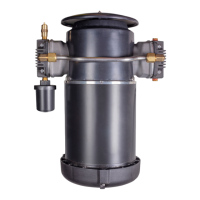

 To Next Page