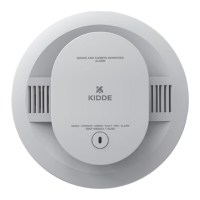
This user guide describes the Kidde Model 900-CUAR-V, a combination photoelectric smoke and carbon monoxide (CO) alarm with hardwire interconnect and voice features. This device is designed for residential use to detect the presence of both smoke and carbon monoxide, providing early warning to occupants.
Function Description
The alarm operates on 120V AC hardwire power and includes two replaceable AA backup batteries, ensuring continuous operation even during power outages. It features a voice message system that provides clear audible alerts, distinguishing between smoke and CO hazards. For smoke detection, the alarm sounds three long beeps with the voice message "Fire!" followed by a 1.5-second pause and repeating. For carbon monoxide detection, it emits four quick beeps with the voice message "Warning! Carbon Monoxide" repeating every 5 seconds. The red LED on the initiating alarm blinks in time with the alarm pattern for both smoke and CO events. In an interconnected system, when one hardwired unit sounds an alarm, all other compatible hardwired or interconnected units will also alarm, ensuring widespread notification throughout the residence. The alarm is equipped with internal self-testing components that continuously monitor its operational status, generating a fault signal if an issue is detected.
Usage Features
The alarm incorporates a HUSH™ mode, allowing users to temporarily silence nuisance alarms caused by known, non-life-threatening conditions like cooking smoke. Pressing the button on the initiating unit will silence the smoke alarm for 8-10 minutes, provided the smoke is not too dense. If smoke persists after the HUSH™ period, the alarm will reactivate. For CO alarms, a "RESET" function is available. Pressing the button during a CO alarm allows the unit to reset calculations and re-check for CO presence. If the unit re-alarms within six minutes, it indicates high and potentially dangerous levels of CO, prompting immediate action. The device is designed to be user-friendly, with clear visual and audible indicators for various operational modes, including normal standby, test mode, alarm memory, and end-of-unit life. The alarm memory feature retains information about past smoke or CO alarm events for 24 hours, indicated by blinking red LEDs.
Maintenance Features
Regular maintenance is crucial for the alarm's optimal performance. The manufacturer recommends replacing the alarm ten years from its date code. To aid in this, a "Replace by" date label is provided on the unit. Weekly manual testing is required to verify proper operation; this is done by pressing and releasing the test/hush button. The alarm should be cleaned at least once a year. The interior (sensing chamber) can be cleaned using compressed air or a vacuum cleaner hose to remove dust from the openings around the perimeter. The exterior can be wiped with a damp cloth, using only water to avoid damaging the unit. It is important to avoid using detergents, solvents, air fresheners, hair spray, or other aerosols near the alarm, as these can interfere with the sensors or cause false readings. Painting the unit is also not recommended as it can seal the vents and impair detection. If the alarm enters a fault mode after cleaning, it may need to be replaced. The device also features a low battery monitor circuit that provides a "Low Battery" warning when the backup batteries are nearing depletion, prompting replacement within seven days. Only specified AA battery brands (Energizer E91, Gold Peak 15A, or Golden Power GLR6A) should be used, and mixing old and new batteries or different types (alkaline, standard, rechargeable) is not advised. The alarm is sealed, and the cover is not removable, preventing users from attempting internal repairs that could void the warranty.


 To Next Page
 General